


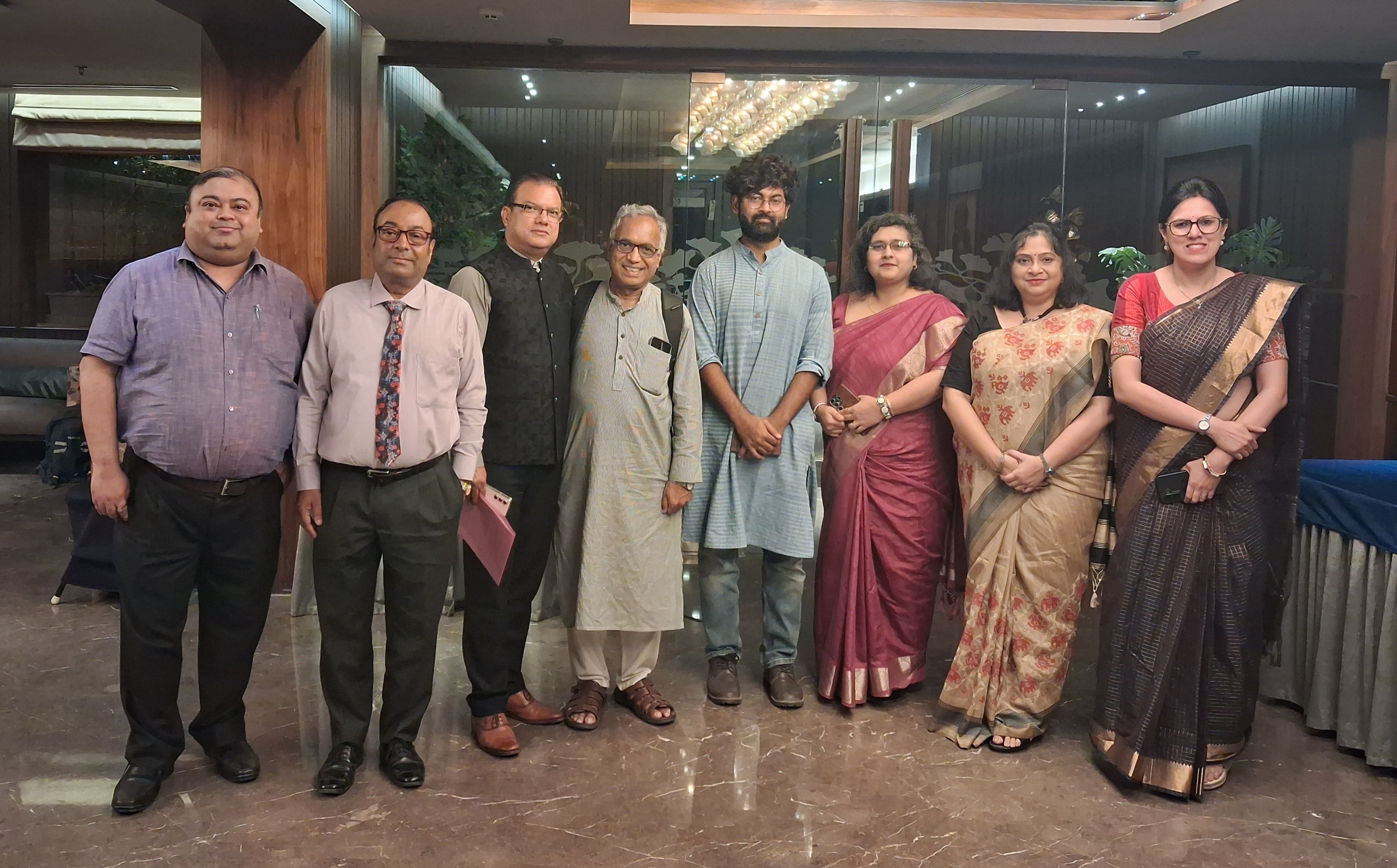
Kolkata, Apr 16: BML Munjal University, a Hero Group initiative, brought together leading school principals in Kolkata for a high-impact roundtable under its nationwide dialogue series, “Reclaiming the Soul of Education: A Principals’ Roundtable on AI, Pedagogy, Purpose & Well-being.” At a time when technology is rapidly reshaping classrooms and student needs are becoming increasingly complex, the forum served as a critical platform for education leaders to reimagine pedagogy, reaffirm purpose and place student well-being at the heart of the learning ecosystem.
The Kolkata roundtable, led by Dr Salil Misra of BML Munjal University, brought together eminent school academicians, including Ms. Satabdi Panigrahi and Ms. Sreeparna Mitra from Nopany High School; Mr. Craig Anthony Lucas from G.D. Birla Centre for Education; Ms. Meghna Ghoshal from Aditya Academy; and Mr. Clinton Sullivan from Albany Hall.
The discussion centred on the rapid integration of artificial intelligence into school ecosystems and the implications it holds for teaching, learning, and student development. Participants agreed that while AI has firmly established itself as an integral part of education, enhancing efficiency in areas such as administration, assessments and communication, its growing influence also raises concerns around misuse, overdependence and the erosion of foundational learning if introduced without adequate guidance.
A significant concern highlighted during the roundtable was the risk of early and unsupervised exposure to AI. Educators cautioned that introducing AI tools before children develop basic cognitive, language and ethical frameworks can be counterproductive, often leading to shallow learning and misuse. There was a shared view that AI integration must be age-appropriate with structured exposure beginning at the middle school level, supported by clear guidelines on responsible usage.
The conversation also brought into focus the shifting expectations from teachers in this new environment. With students increasingly accessing information independently, the traditional role of teachers as primary knowledge providers is diminishing. Instead, educators are now expected to be better prepared, more adaptive and capable of guiding students in analysing, questioning and contextualising information. While some teachers perceive AI as a challenge, others see it as an opportunity to enhance their effectiveness and optimise time through smarter workflows.
Another key issue discussed was the widening disconnect between schools and parents. Participants noted that while schools are attempting to instil values and responsible behaviour, excessive parental emphasis on academic performance and conventional career choices is often at odds with these efforts. This pressure, in some cases, is indirectly encouraging students to adopt unethical shortcuts, including misuse of technology, highlighting the need for stronger alignment and awareness among parents.
The discussion further underscored emerging concerns related to student well-being. Increased exposure to digital platforms and AI-driven environments is contributing to anxiety, insecurity and reduced interpersonal engagement among students. Instances of children relying on AI for emotional support or decision-making were cited as indicators of a growing gap in human interaction. Participants emphasised that consistent communication, both at home and in schools, is essential to address these challenges and support students’ mental and emotional health.
Speaking on the initiative, Dr Arindam Banerjee, Dean – School of Liberal Studies, BML Munjal University, said, “AI promises to be a disruptive force transforming the mechanics of learning. The real mandate before us is not to compete with technology but to use it intelligently with responsibility, integrity and uncompromising ethical judgement. As we navigate this paradigm shift, we must fiercely protect and reinforce the core of education – values, character and human connection. These are non-negotiable pillars that will determine whether we raise merely competent technocrats or truly conscious, responsible, and future-ready leaders.”
The Kolkata roundtable is part of BMU’s larger vision to build a dynamic, future-focused platform that brings together school and higher education leaders to collaboratively address emerging challenges and co-create resilient, ethical and future-ready education frameworks for the next generation.
