


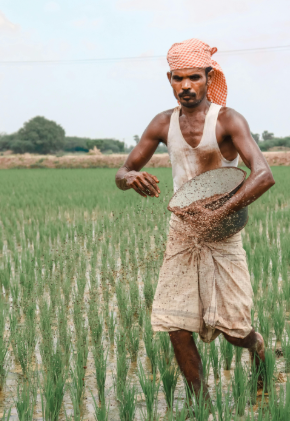
Across India’s vast rural landscape, a quiet transformation is taking root. For generations, farming followed a familiar rhythm—monsoon-dependent crops, seasonal incomes, and a deep reliance on nature’s unpredictability. But today, that rhythm is changing. Faced with climate volatility, fluctuating market prices, and rising costs, farmers are rethinking how they grow, earn, and survive.
What is emerging is not just a shift in technique, but a shift in mindset. Farming is no longer seen as a single-source livelihood. Instead, it is becoming a diversified, technology-enabled ecosystem—one that blends traditional knowledge with modern innovation to create stability and growth.
Beyond Crops: The Rise of Diversified Farming
One of the most visible changes is the move away from dependence on a single crop. Farmers are increasingly integrating allied activities such as dairy, poultry, fisheries, and even beekeeping into their daily operations. These additional income streams act as a buffer—when crops fail due to drought or prices fall, other sources help keep households afloat.
In many regions, agroforestry is gaining momentum. By planting trees alongside crops, farmers are not only improving soil fertility and biodiversity but also creating long-term financial assets. Timber, fruits, and medicinal plants offer returns that extend beyond a single harvest cycle.
At the same time, value addition is quietly boosting incomes. Small changes—like sorting, grading, packaging, or basic processing—are helping farmers capture better prices in the market. Instead of selling raw produce, many are beginning to think like entrepreneurs, exploring ways to increase the value of what they grow.
The Digital Turn in the Fields
Technology is no longer confined to urban industries—it is steadily making its way into India’s farms. Smartphones have become powerful tools in the hands of farmers, offering access to weather forecasts, market prices, and advisory services at the tap of a screen.
Precision agriculture is another emerging trend. With the help of soil sensors, satellite imagery, and data-driven insights, farmers can now make more informed decisions about when to irrigate, fertilise, or harvest. This not only improves yields but also reduces waste and input costs.
Solar-powered irrigation systems are also gaining traction, especially in areas where electricity supply is unreliable. These systems provide a steady, eco-friendly alternative, reducing both costs and environmental impact.
Water: The Most Valuable Resource
If there is one factor shaping the future of Indian agriculture, it is water. With rainfall patterns becoming increasingly erratic, efficient water management has become essential.
Micro-irrigation techniques such as drip and sprinkler systems are helping farmers use water more precisely, delivering it directly to plant roots and minimising loss. These methods are particularly valuable in drought-prone regions, where every drop counts.
Alongside this, farmers are investing in water conservation structures—farm ponds, check dams, and rainwater harvesting systems. These small but effective solutions ensure that water is available during critical stages of crop growth.
Crop choices are also evolving. Many farmers are shifting from water-intensive crops to more sustainable alternatives, including pulses, oilseeds, fruits, and vegetables. These crops often require less water while offering higher market value, creating a win-win situation.
Policy Support and Safety Nets
Government initiatives have played a supportive role in this transformation, offering both protection and opportunity. Schemes like the Pradhan Mantri Fasal Bima Yojana provide financial protection against crop losses, helping farmers recover from unexpected setbacks.
Efforts to improve irrigation through the Pradhan Mantri Krishi Sinchayee Yojana are encouraging better water management practices across the country. Meanwhile, direct income support under the PM Kisan Samman Nidhi offers immediate financial relief, especially for small and marginal farmers.
Equally important is the push toward better infrastructure—roads, storage facilities, and digital marketplaces—which helps farmers connect more directly with buyers and reduce post-harvest losses.
A New Farming Mindset
Perhaps the most significant change is not technological or financial, but psychological. Farmers are increasingly viewing themselves not just as cultivators, but as managers of a diversified enterprise. They are experimenting, adapting, and making decisions based on both tradition and data.
This new mindset is building resilience. It allows farmers to navigate uncertainty with greater confidence, knowing they are not dependent on a single variable—be it rainfall, crop yield, or market price.
Looking Ahead
The transformation of Indian agriculture is still unfolding. Challenges remain—access to technology, awareness, and financing are uneven across regions. Yet, the direction is clear.
By combining diversification, smart resource use, and supportive policies, India’s farmers are laying the groundwork for a more stable and sustainable future. It is a story of adaptation, innovation, and quiet determination—one that is reshaping not just agriculture, but the very fabric of rural India.
In these fields of change, the seeds being sown today are not just crops, but resilience itself.