


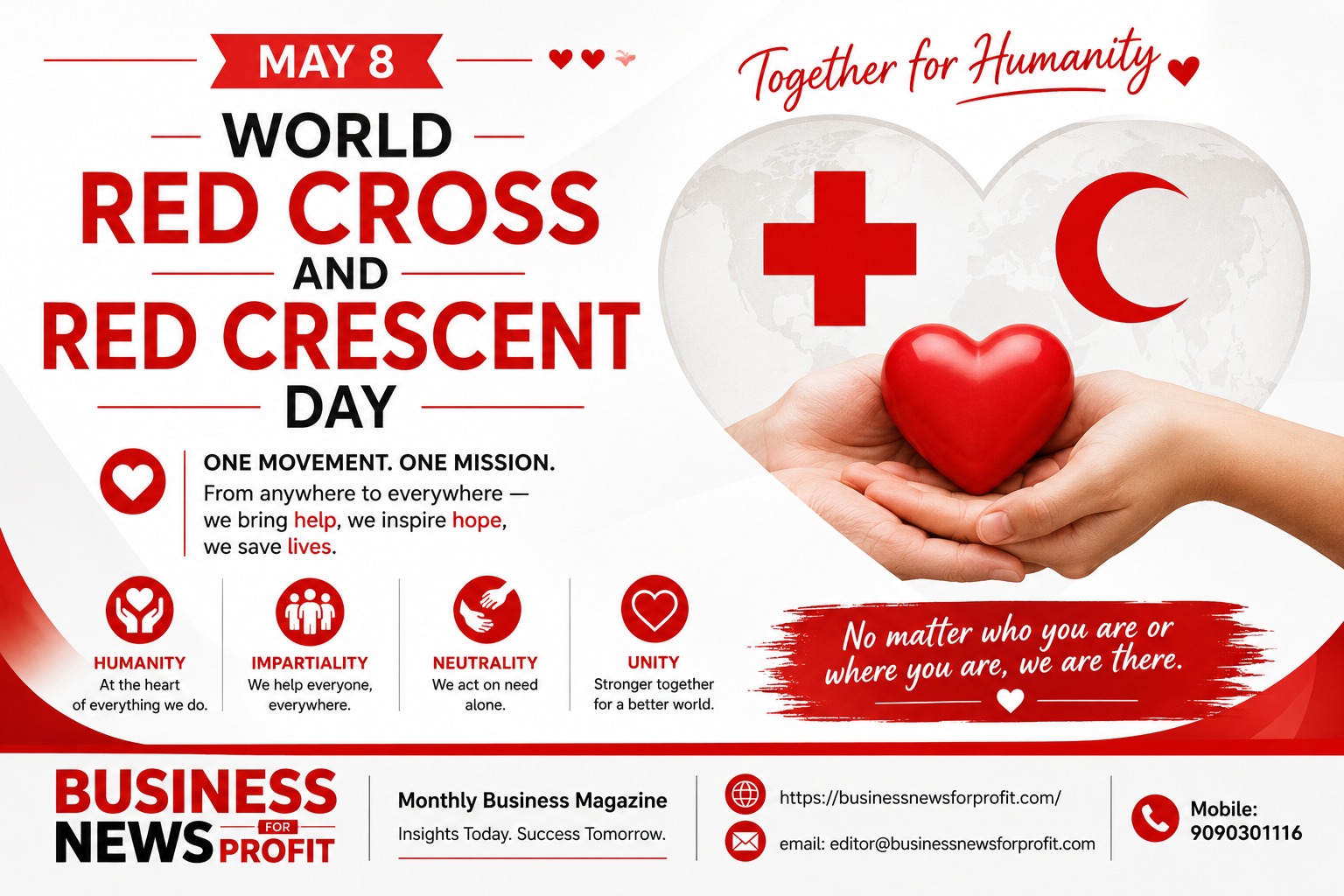
On the frontlines of war, floods, earthquakes, disease outbreaks, and refugee crises, there are always a few people who arrive first and leave last. They are not driven by fame or recognition. Most wear simple uniforms, carry medical kits, distribute food packets, comfort grieving families, and work through exhaustion without expecting anything in return.
They are the volunteers and humanitarian workers of the Red Cross and Red Crescent Movement — a global network built on one simple but powerful belief: humanity must come first.
Every year on May 8, the world observes World Red Cross and Red Crescent Day, a moment dedicated not only to celebrating humanitarian service, but also to recognising the millions of ordinary people who continue to stand beside communities during their most difficult moments.
In 2026, the theme “United in Humanity” feels especially relevant. At a time when the world appears increasingly divided by conflict, politics, climate disasters, and social tensions, the message is both timely and deeply moving — compassion still has the power to unite people.
The Man Who Changed Humanitarian History
The story of the Red Cross movement begins with one man witnessing unimaginable suffering.
In 1859, Swiss businessman Henry Dunant travelled to northern Italy and arrived near the battlefield of Solferino, where thousands of wounded soldiers had been abandoned without medical care after a brutal conflict. The scenes of pain and desperation shocked him.
Instead of turning away, Dunant gathered local villagers and organised emergency help for injured soldiers from both sides of the war. His guiding idea was radical for its time: every human life deserves care, regardless of nationality, religion, or political allegiance.
That experience would eventually inspire the creation of the International Committee of the Red Cross (ICRC), changing humanitarian work forever.
Dunant later became the recipient of the first Nobel Peace Prize in 1901, but his greatest legacy was building a movement that continues to save lives more than a century later.
Why May 8 Matters
World Red Cross and Red Crescent Day is observed on May 8 to honour Henry Dunant’s birth anniversary. The idea for a global observance emerged after the First World War, when international leaders began discussing the need for an annual day promoting peace, solidarity, and humanitarian values.
The first official celebration took place in 1948 under the name International Red Cross Day. Over the decades, the observance evolved into what is now known as World Red Cross and Red Crescent Day — reflecting the movement’s truly global identity.
Today, the network spans nearly every country in the world, powered by volunteers who respond to emergencies ranging from natural disasters and health crises to armed conflicts and displacement.
Humanity Beyond Borders
What makes the Red Cross and Red Crescent Movement unique is not just the scale of its work, but the spirit behind it.
Its volunteers are often local people helping their own communities through tragedy. They are neighbours rescuing neighbours during floods. Young volunteers organising blood donation camps. Medical teams walking into dangerous conflict zones to treat the injured. Counsellors comforting families who have lost everything.
The movement operates on principles that remain deeply relevant today: humanity, neutrality, independence, voluntary service, unity, and universality.
In a world increasingly shaped by division, these principles feel less like ideals and more like necessities.
“United in Humanity”: A Theme With Meaning
The 2026 theme, “United in Humanity,” celebrates the quiet strength of people who continue to serve others despite growing global challenges.
From climate disasters and migration crises to wars and public health emergencies, humanitarian workers are facing some of the toughest conditions in recent history. Yet they continue to show up — often risking their own safety to help strangers survive.
This year’s theme is also a tribute to those aid workers who lost their lives while serving communities in crisis. Behind every humanitarian mission are individuals who choose compassion over fear and service over comfort.
More importantly, the theme reminds the world that humanitarian action must remain protected. Neutral and independent aid organisations play a crucial role during conflicts and disasters, ensuring help reaches people who need it most.
The Power of Small Acts
Not every act of humanity makes headlines.
Sometimes it is a volunteer handing out blankets after a cyclone. A medic treating injured civilians during conflict. A teenager donating blood for the first time. Or a relief worker sitting quietly beside someone who has lost their family.
These moments may appear small, but together they form the foundation of humanitarian work.
World Red Cross and Red Crescent Day is ultimately a celebration of those everyday acts of kindness that restore dignity and hope during moments of despair.
Because even in the darkest times, humanity still survives through people willing to help one another.