


Sambalpur, Aug. 20 (UDN): A three-year study by Sambalpur University has raised concerns over the impact of coal mine pollution on male reproductive health, finding that workers exposed to coal dust showed lower sperm counts and structural abnormalities in sperm compared to the general population.
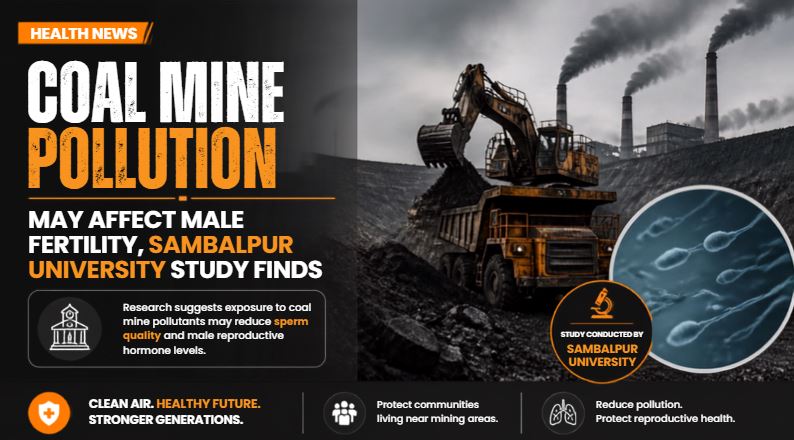
Representational Image
The research, conducted among coal mine workers in Jharsuguda, examined 215 workers aged 18 to 45 years and compared their health indicators with 95 men from the general population.
Study examined multiple health indicators
Researchers analysed sperm samples, hormone profiles, oxidative stress markers and heavy metal levels in participants’ blood to understand the effects of prolonged occupational exposure.
According to Malay Ranjan Mahanand, Head of the Department of Environmental Science at Sambalpur University, the findings indicated that coal-exposed workers had sperm counts below normal levels, along with several other reproductive abnormalities.
He said the findings underscore the importance of regular health screenings for mine workers and the use of protective equipment, including masks, to reduce exposure to harmful pollutants.
Heavy metals emerge as a key concern
The study also highlighted the potential role of toxic heavy metals commonly found in coal mining environments, including lead, cadmium, arsenic and mercury. Researchers said these substances can enter the body through contaminated dust and may contribute to oxidative stress and broader health complications.
Medical experts say prolonged exposure to such pollutants could have consequences beyond reproductive health.
Dr Shankar Ramchandani, Assistant Professor in the Department of Medicine at VIMSAR, said exposure to lead and mercury has been linked to reduced sperm count, while the high temperatures in mining environments may further increase health risks. He added that prolonged exposure can also affect the kidneys and lungs.
Call for stronger worker safety measures
The study involved the confidential health data of 310 participants and was carried out over three years.
Researchers said the findings highlight the need for stronger occupational safety measures, routine medical monitoring and early health screening for workers in coal mining areas. They also noted that the research raises broader questions about the long-term health impact of occupational exposure on workers and their families.