


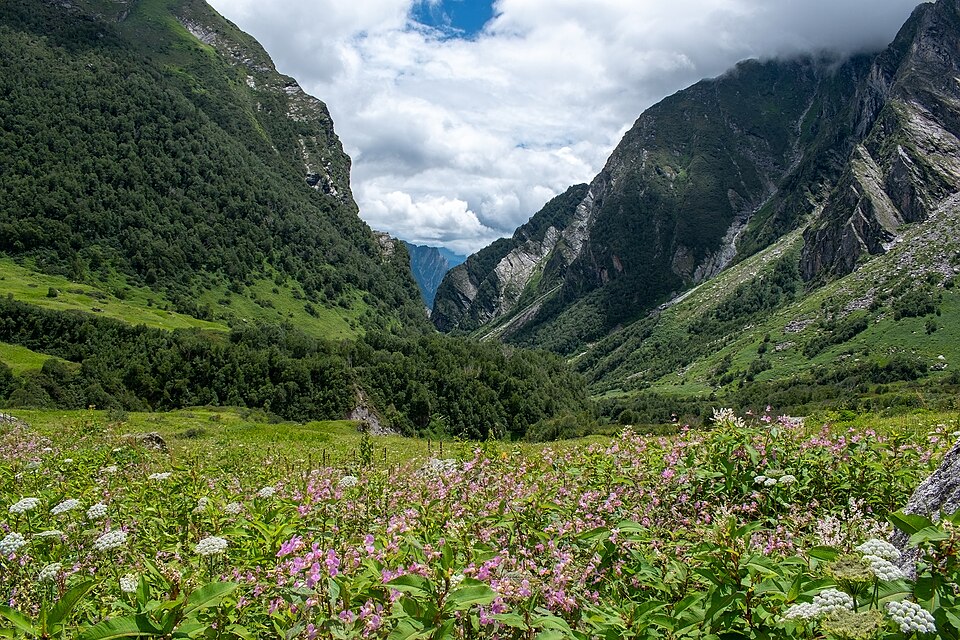
Pic credit: Wikipedia
July 17: Hidden amidst the majestic Himalayas, the Valley of Flowers National Park in Uttarakhand is one of India’s most enchanting natural destinations. Every year, as the monsoon rains breathe new life into the mountains, this alpine valley transforms into a vibrant landscape covered with thousands of blooming wildflowers. Recognized as a UNESCO World Heritage Site, the Valley of Flowers is a dream destination for trekkers, photographers, botanists, and nature lovers seeking an unforgettable Himalayan experience.
Accessible only for a few months each year, the valley offers visitors a rare opportunity to witness one of the world’s most spectacular floral displays against a backdrop of snow-capped peaks, cascading streams, and lush green meadows.
Why Visit the Valley of Flowers?
The Valley of Flowers is unlike any other destination in India. During the monsoon season, the valley comes alive with a dazzling display of colors as more than 500 species of alpine flowers bloom across the landscape. The ever-changing floral carpet includes orchids, poppies, primulas, daisies, marigolds, and several rare Himalayan plant species.
The valley stretches over approximately 87 square kilometers within the Nanda Devi Biosphere Reserve and remains protected for its extraordinary biodiversity. Besides flowers, visitors may also spot rare wildlife such as the Himalayan black bear, blue sheep, musk deer, snow leopard (rarely seen), and numerous species of butterflies and birds.
Best Time to Visit the Valley of Flowers
The Valley of Flowers remains open from June to October, but the best time to visit is between mid-July and late August. This period coincides with the peak monsoon season, when the valley is at its most colorful and vibrant.
The weather during these months is pleasant, with daytime temperatures ranging from 10°C to 20°C. While occasional rain showers are common, they enhance the valley’s beauty by keeping the flowers in full bloom and the surrounding mountains lush and green.
The Valley of Flowers Trek
One of the highlights of visiting the Valley of Flowers is the scenic trek that leads visitors through picturesque Himalayan landscapes. The journey begins from Govindghat, followed by a drive to Pulna Village and a trek to Ghangaria, the base camp for both the Valley of Flowers and Hemkund Sahib.
From Ghangaria, trekkers undertake an approximately 4-kilometre trek to reach the national park. The trail passes through dense forests, sparkling streams, wooden bridges, and breathtaking mountain views.
Although moderately challenging, the trek is suitable for beginners with a reasonable level of fitness. Every step rewards visitors with unforgettable views of nature at its finest.
Rich Biodiversity and Himalayan Flora
The Valley of Flowers is considered one of the richest biodiversity hotspots in the Himalayas. The region supports hundreds of flowering plants that bloom at different stages throughout the season, ensuring that no two visits are exactly alike.
Some of the most commonly found flowers include:
- Blue Poppy
- Cobra Lily
- Himalayan Bellflower
- Primulas
- Anemones
- Marsh Marigold
- Himalayan Geranium
- Brahma Kamal (found near Hemkund Sahib)
The valley also plays an important role in ecological conservation and scientific research due to its unique alpine ecosystem.
Hemkund Sahib: A Spiritual Journey
Many visitors combine their trip to the Valley of Flowers with a visit to Hemkund Sahib, one of the highest Sikh pilgrimage sites in the world.
Situated at an altitude of over 4,300 metres, Hemkund Sahib is surrounded by snow-covered mountains and a pristine glacial lake. The challenging trek offers spectacular panoramic views and attracts thousands of pilgrims and trekkers every year.
The peaceful atmosphere and stunning surroundings make it one of the most memorable experiences in Uttarakhand.
Photography Opportunities
The Valley of Flowers is a paradise for photographers. Every turn reveals breathtaking landscapes filled with colorful blossoms, flowing rivers, mist-covered mountains, and dramatic cloud formations.
Wildlife photographers also find the region rewarding, with opportunities to capture butterflies, birds, and unique Himalayan plant life in their natural habitat.
Early mornings often provide the best lighting conditions, while post-rain scenery creates vibrant colors and crystal-clear views.
Travel Tips
To make your journey enjoyable and safe, keep these tips in mind:
- Carry waterproof jackets and rain gear.
- Wear sturdy trekking shoes with good grip.
- Pack light but include warm clothing for cooler evenings.
- Carry reusable water bottles and basic medicines.
- Avoid littering and help preserve the fragile ecosystem.
- Book accommodation in Ghangaria well in advance during peak season.
- Check weather forecasts before beginning the trek.
Top Attractions Near the Valley of Flowers
While the Valley itself is the main attraction, the surrounding region offers several must-visit destinations.
Valley of Flowers National Park
The highlight of the trip, featuring vibrant alpine flowers, scenic trekking routes, and unmatched Himalayan beauty.
Hemkund Sahib
A revered Sikh pilgrimage site known for its serene glacial lake and spectacular mountain views.
Govindghat
The starting point for the Valley of Flowers and Hemkund Sahib treks, offering basic facilities for travelers.
Himalayan Trekking Trails
The surrounding Garhwal Himalayas feature numerous trekking routes that showcase pristine forests, rivers, waterfalls, and panoramic mountain landscapes.
Conclusion
The Valley of Flowers is much more than a trekking destination—it’s a celebration of nature’s beauty. Every monsoon, the valley transforms into a living canvas of colorful wildflowers framed by majestic Himalayan peaks. Whether you’re an adventure enthusiast, wildlife lover, photographer, or someone seeking peace in nature, this UNESCO World Heritage Site offers an unforgettable experience.
If you’re planning a monsoon getaway, few places can match the breathtaking beauty and tranquility of Uttarakhand’s Valley of Flowers.