


Hyderabad, May 26: BluJ Aerospace, a Hyderabad-based deep-tech aerospace company, today unveiled the Gen #2 prototype, the first aircraft developed on VANTIS, its platform-based architecture, after four years of in-house R&D. Following Gen #1, the company’s technology demonstrator and India’s first public flight demonstration of a 500 kg class eVTOL aircraft, Gen #2 is now in active flight testing.
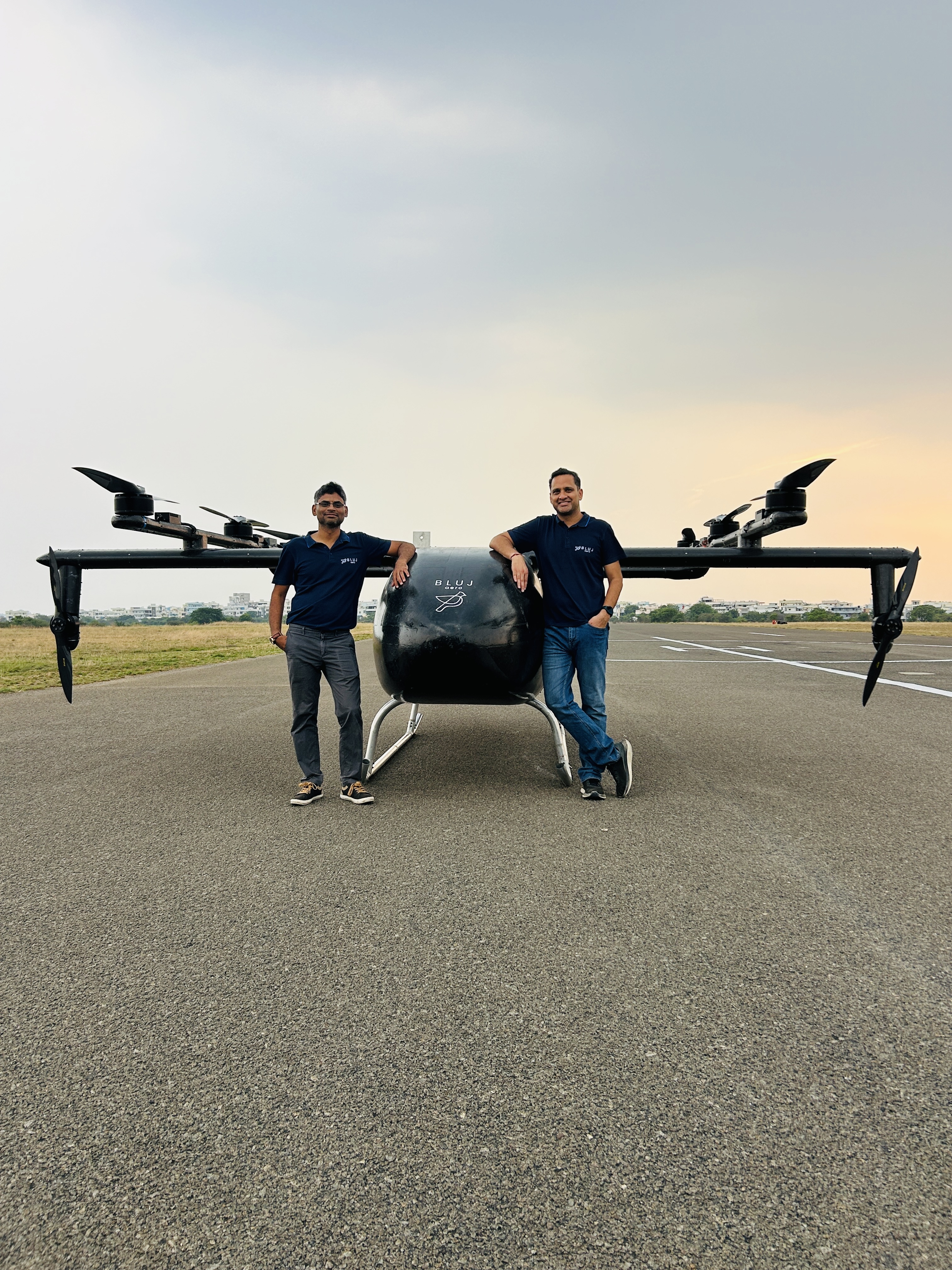
Gen #2 sits within BluJ’s broader roadmap, which spans different VTOL variants across urban and regional transportation, with passenger mobility as the long-term destination. VANTIS is the shared technology foundation behind every aircraft BluJ builds, spanning the airframe, propulsion, controls, and autonomy systems. Each new aircraft inherits subsystems already proven on the platform, which means every variant reaches the market faster, costs less to develop, and gets stronger with every flight hour the family accumulates.
Gen #2 is the first commercial-grade aircraft from VANTIS, purpose-built for heavy-payload logistics. It carries an active payload target of above 200 kg, operates under a 500 kg maximum take-off weight, and uses a lift plus cruise configuration.
Fully battery-powered, Gen #2 takes the platform from technology demonstrator to operational aircraft, with major subsystems built to the standards the certified commercial version of REACH will need. It is now being used for early customer pilots, payload testing, and real-world logistics mission evaluations as BluJ progressively expands the missions the aircraft can handle.
VANTIS is designed with scalability built in, extending to larger VTOL aircraft, including a one-ton payload class for heavy logistics and hydrogen-electric long-range passenger variants.
Amar Sri Vatsavaya, Founder and CEO of BluJ Aerospace, said,
“The next major shift in aviation is the move from single product programs to platform based architectures. Just as the automotive industry builds multiple vehicles on a common platform, Advanced Air Mobility will need adaptable architectures that scale across missions, payloads, and customer use cases. That is the advantage VANTIS gives BluJ. Our platform based approach lets us develop multiple AAM product classes efficiently and at scale.”
BluJ’s commercial pipeline spans infrastructure logistics, express cargo, energy, airports, and defence. The company has already completed a successful pilot deployment with a leading Power sector PSU for infrastructure logistics, and has active defence partnerships with a major Defence PSU and Indian defence primes..
On the hydrogen-electric propulsion front, BluJ has already developed a ground version of the system, including an in-house Type IV composite hydrogen tank, and is progressing toward a flight version. Hydrogen-electric long-range variants are targeted for 2027 to 2028, with BluJ collaborating with Bharat Petroleum Corporation Limited and Cochin International Airport Limited on hydrogen ecosystem development.
Sateesh Andra, Managing Director of Endiya Partners, added,
“India runs one of the largest logistics economies in the world, but it still moves on aircraft and infrastructure designed elsewhere. Aerial mobility is a rare category where Indian deep-tech can build globally relevant aerospace IP from the ground up, and that needs founders willing to bet years on getting the engineering right. BluJ Aerospace’s Gen 2 flight is proof that the hard work is paying off. From long-range cargo to the regional passenger mobility India needs next, they are building what comes after the runway.”
Naganand Doraswamy, Managing Partner of Ideaspring Capital, said,
“Deep-tech categories that compound, from semiconductors to robotics and now aerospace, are won by teams that build platforms, not single products. India has had the engineering talent for decades, but very few teams have applied that platform discipline to aircraft. That is what BluJ has done with VANTIS, and Gen #2 is the first commercial output of an architecture we expect will shape how India shows up in global aerospace over the next decade.”
BluJ operates from a 40,000 square foot facility in Hyderabad with a team of over 50 engineers and aerospace specialists, holds an issued design patent on its eVTOL architecture, has filed a utility patent on its airframe design, and has additional patents in process across propulsion and powertrain systems.