


Automation in 2026 has moved far beyond being a back-end efficiency tool. It is now at the centre of enterprise strategy, reshaping how organisations operate, compete, and innovate. From intelligent workflows to self-learning systems, automation is steadily redefining the structure of modern business and the future of work itself.
As artificial intelligence, data analytics, and cloud technologies converge, businesses are entering an era where processes are not only automated but continuously optimised in real time.
From Process Automation to Intelligent Ecosystems
Earlier generations of automation were primarily focused on reducing manual effort in repetitive tasks. Today, the landscape has evolved into intelligent digital ecosystems that can analyse, decide, and improve independently.
Modern automation integrates technologies such as artificial intelligence (AI), machine learning, robotic process automation (RPA), and advanced analytics to build systems that are adaptive and self-improving. This shift is enabling organisations to move from task automation to end-to-end business intelligence.
Core Technologies Shaping Automation in 2026
The acceleration of automation is being driven by several transformative technologies working together:
- Artificial Intelligence (AI): Powers predictive insights and decision-making capabilities
- Hyperautomation: Combines multiple automation technologies to streamline entire business functions
- No-code/Low-code platforms: Enable rapid development of automated systems without complex coding
- Cloud computing: Offers scalable infrastructure for connected digital operations
- Internet of Things (IoT): Creates real-time data flow between devices, systems, and platforms
Together, these innovations are forming the foundation of intelligent enterprises.
Industry-Wide Transformation
Automation is no longer confined to specific sectors—it is influencing nearly every industry:
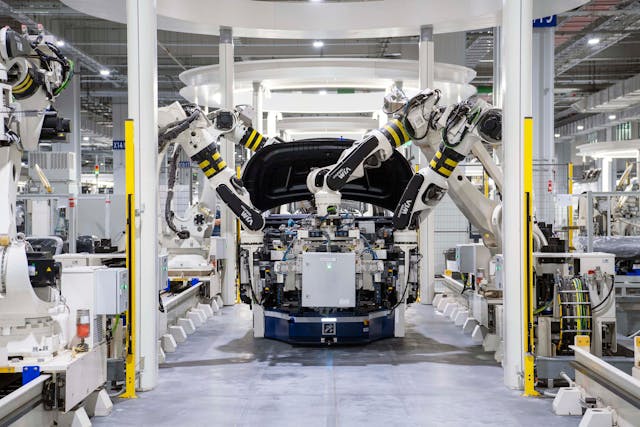
Manufacturing: Smart factories are using robotics, predictive maintenance, and AI-driven production systems to improve efficiency and reduce downtime.
Healthcare: Automation is enhancing diagnostics, managing patient data, and supporting real-time monitoring for better care delivery.
Finance: Financial institutions are leveraging automation for fraud detection, regulatory compliance, and faster transaction processing.
Retail & E-commerce: Businesses are improving customer experience through personalised recommendations, automated inventory systems, and intelligent supply chains.
IT & Digital Services: Automated infrastructure management and cybersecurity systems are reducing complexity and improving reliability.
Business Value: Beyond Efficiency
Automation is delivering far-reaching benefits that extend beyond operational speed:
- Improved accuracy and reduced human error
- Lower operational costs and optimized resource usage
- Faster decision-making through real-time data insights
- Enhanced customer engagement through personalization
- Greater scalability for expanding business operations
Rather than replacing human effort, automation is enhancing it—allowing teams to focus on creativity, strategy, and innovation.
Workforce Evolution in the Age of Automation
The rise of automation is reshaping the employment landscape. While repetitive roles are being reduced, new opportunities are emerging in areas such as artificial intelligence, data science, cybersecurity, and automation architecture.
This transition is placing greater importance on digital literacy, problem-solving skills, and continuous upskilling. The future workforce will be defined not by routine execution, but by adaptability and technical intelligence.
The Future: Autonomous Digital Enterprises
Looking ahead, automation is evolving toward fully autonomous enterprise systems. These systems will not only execute tasks but also monitor performance, learn from outcomes, and continuously refine operations without manual intervention.
Organisations adopting hyperautomation strategies are already building unified digital environments where data, applications, and workflows operate as a single intelligent network.
Conclusion
Automation in 2026 represents a fundamental shift in how business is conducted. It is no longer a supporting function but a core driver of transformation, innovation, and growth.
As enterprises move toward intelligent, self-optimising systems, the ability to integrate automation strategically will define competitiveness in the global digital economy.