


Keonjhar, Apr 29 (BNP): A shocking incident in Odisha’s Keonjhar district has triggered nationwide outrage after Jeetu Munda was allegedly forced to exhume and carry the remains of his deceased sister to a bank in order to access pending funds linked to her account.
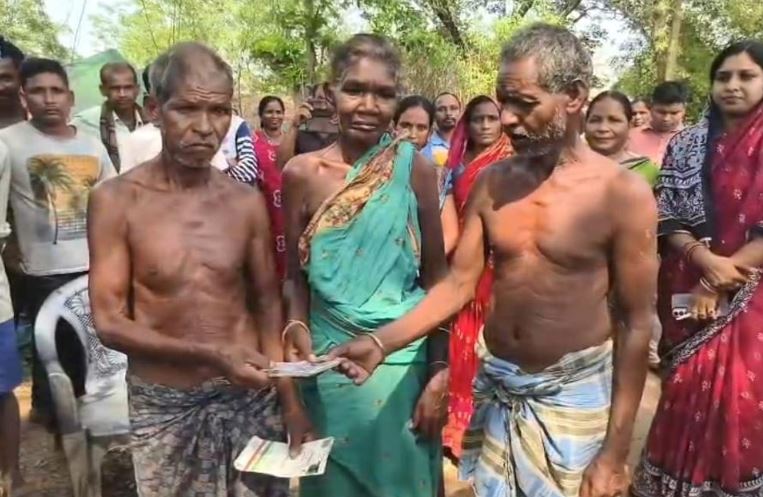
The incident took place at the Odisha Gramya Bank branch in Mallipashi, where Jeetu Munda, a resident of Dianali village under Patna police limits, arrived carrying the mummified remains of his sister Kala Munda in a plastic sack.
According to sources, Kala Munda had opened a savings account at the branch and regularly deposited money there. She passed away two months ago at the age of 48. As she was unmarried and had no direct heirs, Jeetu approached the bank with her passbook to withdraw the money.
However, after reportedly making three unsuccessful visits, Jeetu was allegedly told by a staff member that the money could only be withdrawn if the account holder was brought in person. Taking the statement literally, the grief-stricken man returned to his village, exhumed his sister’s buried remains, and carried them to the bank premises, leaving staff and customers stunned.
On noticing the remains outside the branch, the bank manager immediately informed local police. A team led by Patna Police Station IIC Kiran Prasad Sahu rushed to the spot and, along with bank officials, persuaded Jeetu to take the remains back to the village. Officials later assured him that the required documentation would be arranged to facilitate legal withdrawal of the money. Following the assurance, Jeetu reburied his sister’s remains at the same spot.
Following widespread criticism and public backlash, bank officials reportedly visited Jeetu Munda’s residence and facilitated the release of the money due to the family.
The disturbing episode has also drawn the attention of the National Human Rights Commission (NHRC), which has registered a case and sought details into the circumstances that led to such an inhumane situation.
The incident has revived painful memories of the 2016 Dana Majhi case, when a tribal man was forced to carry his wife’s body on his shoulders due to lack of transport facilities. Nearly a decade later, observers say little appears to have changed, with the latest episode once again exposing serious gaps in governance, administrative sensitivity, and public service delivery.
The state government has come under sharp criticism, with opposition parties and civil society groups condemning the systemic failure that pushed a grieving family into such desperation. The Keonjhar case has reignited debate over bureaucratic apathy, access to banking services in rural areas, and the urgent need for reforms to ensure dignity and justice for vulnerable citizens.