


New Delhi, April 21(BNP): A consultative seminar on “Navigating CBAM: Challenges, Readiness, and India’s Carbon Market Context” concluded successfully on 21 April 2026 at PHD House, New Delhi. The seminar brought together representatives from industry, government, export-oriented sectors, and the testing, inspection, and certification community to discuss the implications of the European Union’s Carbon Border Adjustment Mechanism (CBAM) for India, and to examine the country’s preparedness in the context of its evolving carbon market framework.
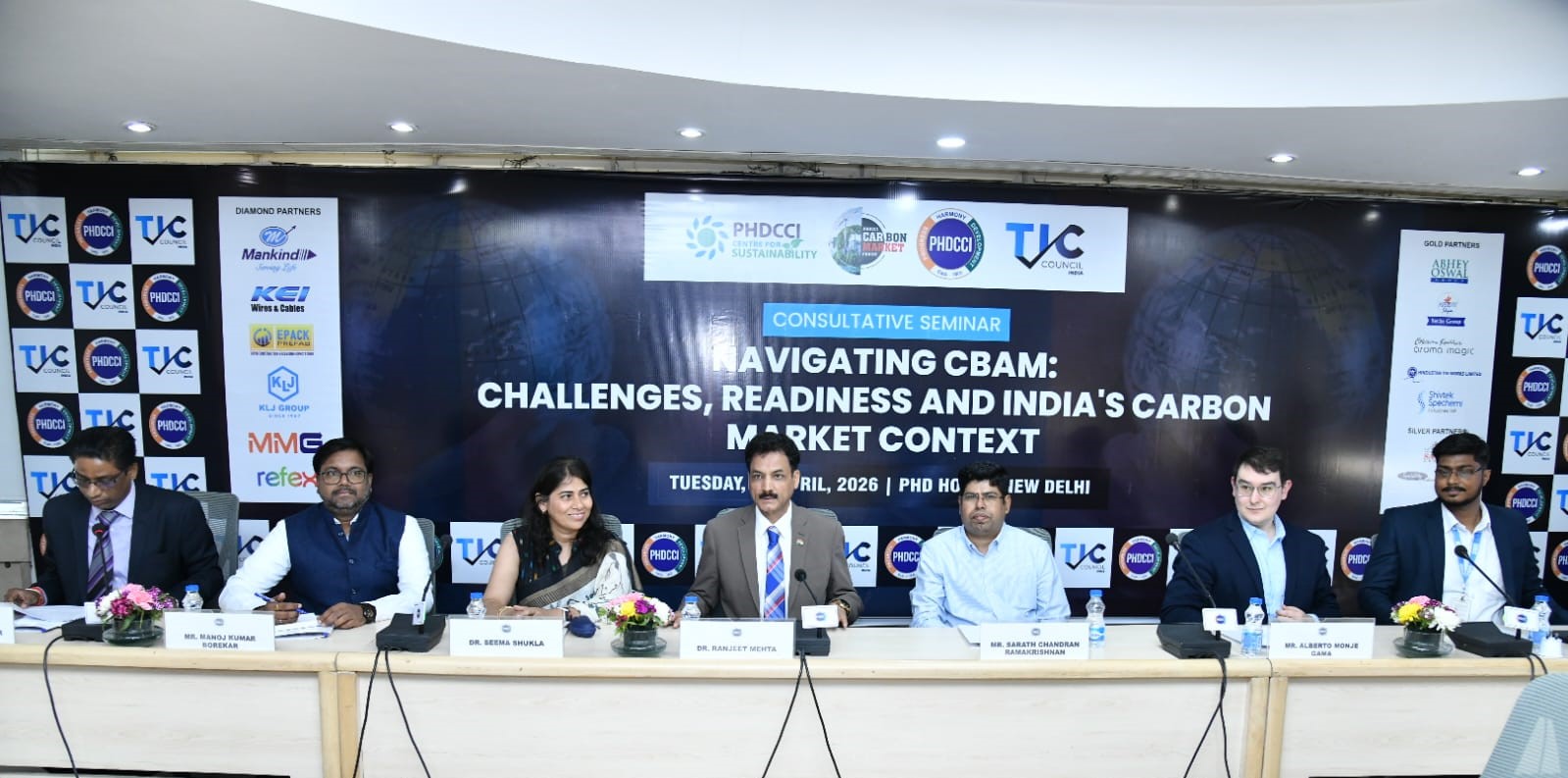
The session served as an important platform to build awareness and deepen practical understanding of CBAM, while highlighting the growing importance of credible emissions data, robust verification systems, and industry readiness in an increasingly carbon-conscious global trading environment. Discussions focused on compliance requirements, export competitiveness, sustainability process certification, and the wider policy and market developments shaping India’s carbon transition.
The programme opened with a welcome and overview by Dr Seema Shukla, Executive Director-India, TIC Council, who set the context for the discussion by underlining the strategic significance of carbon transparency in international trade. In her remarks, she noted that “CBAM is not only about pricing carbon, it is about trust in data.”
This was followed by the industry perspective from Dr Ranjeet Mehta, CEO and Secretary General, PHDCCI, on the question “Are we ready for CBAM?”, which highlighted the need for proactive engagement by industry and stronger policy alignment to support compliance readiness.
Dr. Ranjeet Mehta, CEO and Secretary General of PHDCCI, highlighted industry concerns regarding the increasing compliance burden and its associated cost implications. He emphasized that Indian exporters are facing a dual challenge—adapting to the complex requirements of CBAM while maintaining cost competitiveness in global markets. At the same time, India remains committed to achieving its Net Zero emissions target by 2070. He underscored that sustainability is the need of the hour and must be pursued through a strategic approach involving the combined efforts of all stakeholders.
The keynote address, delivered by Mr Sarath Chandran Ramakrishnan, Executive Director, RSJ Inspections, explored India-EU pathways on trade, carbon, and sustainability, placing the CBAM discussion within the broader context of evolving trade and sustainability expectations.
Adding an international and operational perspective, Mr Alberto Monje Gama, Sustainability Policy Manager, TIC Council, addressed both the implications of CBAM for Indian exports to the European Union and the importance of the Sustainability Process Certification Scheme in helping industry strengthen environmental data management and compliance readiness.
The seminar also examined India’s domestic carbon market trajectory. Mr Amit Kumar, Product Manager (Sustainability), Bureau Veritas, presented insights into India’s carbon market landscape and the road ahead, outlining the direction of market development and regulatory evolution. In the concluding reflections, Mr Manojkumar Borekar, Product Manager, Sustainability, TUV Nord, looked beyond CBAM to the wider relevance of the Carbon Credit Trading Scheme and the importance of long-term preparedness as India positions itself within a carbon-constrained global economy.
The seminar reinforced the importance of credible carbon data, robust verification mechanisms, and multi-stakeholder collaboration in helping Indian industry respond effectively to emerging global carbon regulations. It also underlined the important role of the TIC sector in enabling trust, transparency, and compliance as businesses adapt to a more sustainability-driven global trade environment.
