


July 27: After a failed angioplasty elsewhere, Model Town unit successfully performs OCT-guided Rotational Atherectomy and PTCA for the first time, giving a 70-year-old patient a new lease on life
The rising prevalence of uncontrolled diabetes, hypertension, smoking, high cholesterol, and unhealthy lifestyles has led to a significant increase in cases of coronary artery calcification, a condition in which calcium deposits harden the arteries supplying blood to the heart. According to experts, excessive calcium build-up makes the arteries rigid, making conventional angioplasty extremely difficult and, in some cases, impossible. Such patients also face a substantially higher risk of heart attacks and treatment-related complications.
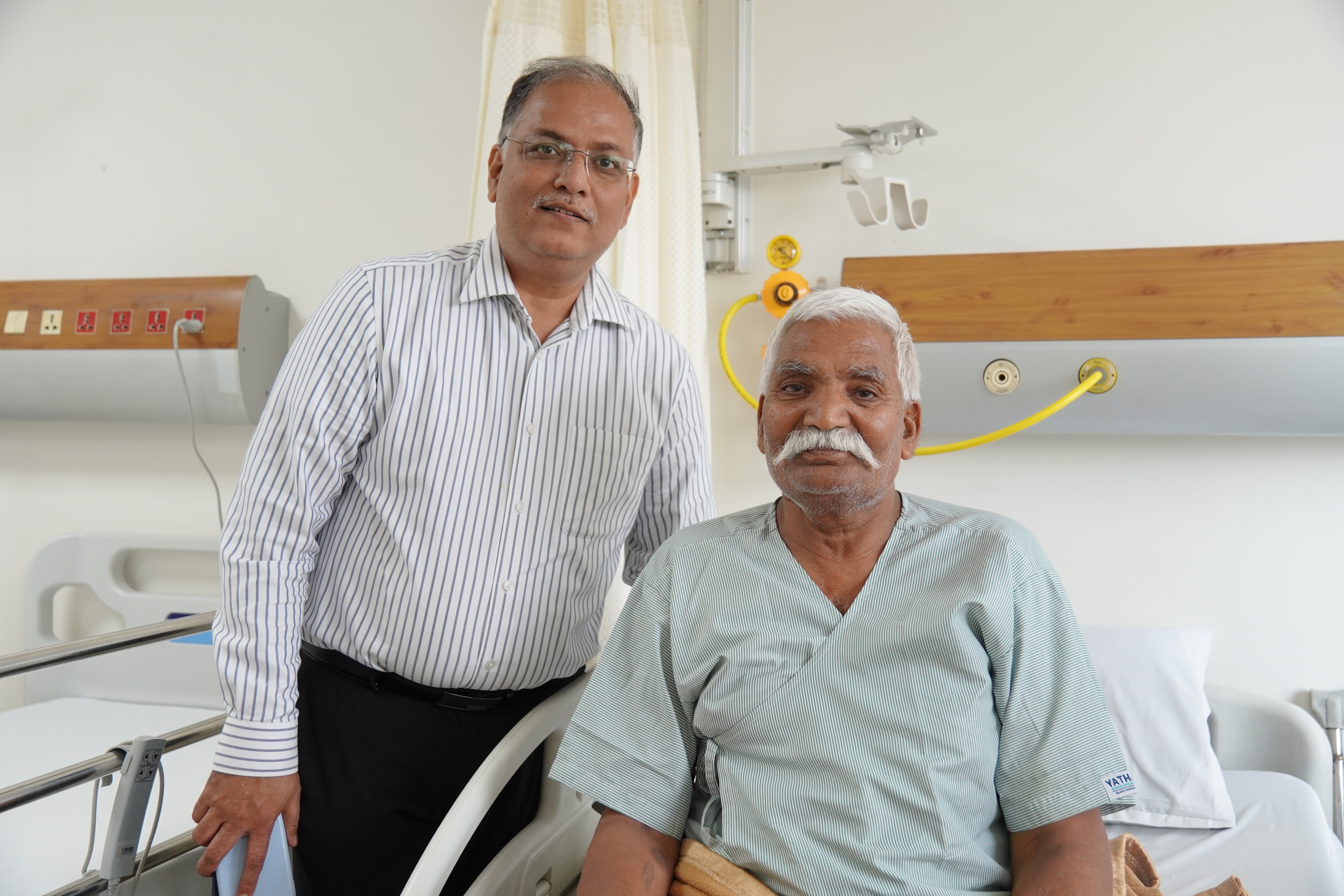
In one such complex case, the Department of Cardiology at Yatharth Super Speciality Hospital, Model Town, successfully treated a 70-year-old patient using Optical Coherence Tomography -guided Rotational Atherectomy followed by Percutaneous Transluminal Coronary Angioplasty . The patient had previously undergone an unsuccessful angioplasty at another hospital. However, with meticulous planning and advanced imaging-guided intervention, the specialists at Yatharth Hospital successfully cleared the heavily calcified blockage, giving the patient a new lease on life.
The patient, a resident of Bawana, was admitted with severe chest pain and Acute Coronary Syndrome . He had also undergone Coronary Artery Bypass Grafting in the past. During evaluation, OCT imaging revealed 360-degree severe calcification in the Right Coronary Artery, with the Minimum Lumen Areareduced to just 1.3 sq. mm, indicating critical narrowing.
The cardiology team first performed Rotational Atherectomy using a diamond-tipped burr to carefully pulverise the hardened calcium deposits into microscopic particles. This was followed by successful balloon angioplasty and stent implantation. Post-procedure OCT confirmed excellent stent expansion, with the patient’s MLA improving remarkably from 1.3 sq. mm to 7.9 sq. mm. The patient recovered well and was discharged in stable condition.
Dr. Chandrashekhar, Vice Chairman & Head, Department of Cardiology, Yatharth Super Speciality Hospital, Model Town, said,
“Calcium build-up in the coronary arteries is a silent yet serious condition. Among every 100 patients undergoing angioplasty, around 20–30 have some degree of coronary calcification, while 5–10 patients have such severe calcification that conventional angioplasty is not feasible. In these cases, advanced technologies such as ROTA and OCT make treatment significantly safer and more effective.”
He further added,
“Uncontrolled diabetes, high blood pressure, smoking, elevated cholesterol, chronic kidney disease, obesity, and advancing age are the major risk factors. Individuals at high risk should undergo regular cardiac evaluations to ensure early diagnosis and timely treatment.”
Dr. Shivesh, Consultant Cardiologist, said,
“Conventional angioplasty was not possible in this patient because of extensive calcification. OCT enabled us to precisely assess the depth and severity of the calcium deposits, while ROTA helped modify the calcified plaque, allowing safe and effective stent placement. This month alone, we have successfully performed several OCT-guided complex coronary interventions, highlighting the growing role of advanced intravascular imaging in managing challenging cardiac cases.”
Expressing his gratitude after recovery, the patient said,
“After my previous treatment failed, I had almost lost hope. The doctors at Yatharth Hospital reassured me and successfully treated my condition. Today, I am healthy and sincerely grateful to the entire cardiology team.”
The successful completion of this complex procedure at Yatharth Super Speciality Hospital, Model Town, marks another milestone in advanced interventional cardiology and demonstrates that even severely calcified coronary artery disease can be effectively treated with cutting-edge technology and experienced specialists.