


Pune, 21st September 2026: In a remarkable case of emergency critical care, DPU Super Specialty Hospital, Pimpri, Pune, successfully treated a 15-year–old girl who developed sudden and severe heart failure following suspected fulminant viral myocarditis, a life-threatening inflammation of the heart muscle. The young girl initially experienced weakness, which was followed by episodes of giddiness and vomiting on August 27 but proceeded to appear for her scheduled examination. As her condition continued to deteriorate and she developed refractory cardiogenic shock, the DPU ECMO team was urgently mobilised that same night for her retrieval and advanced life support. The team reached the hospital along with cardiac specialists and, as the patient’s condition continued to worsen, initiated ECMO support as part of the retrieval process before transporting her to DPU Super Specialty Hospital for advanced critical care.
By the time she reached DPU, she was in refractory cardiogenic shock — a condition in which the heart is unable to pump enough blood to support the body’s vital organs despite aggressive medication being used to support heart function and blood pressure..
A Race Against Time
With conventional medical treatment unable to stabilise her condition, the DPU ECMO team performed emergency cannulation and initiated VA-ECMO (Veno-Arterial Extracorporeal Membrane Oxygenation).
ECMO is an advanced life-support system in which blood is temporarily circulated outside the body, where it is oxygenated and then returned to the patient. VA-ECMO can temporarily support the heart’s pumping function and maintain blood flow to vital organs, giving a severely weakened heart time to recover.
The patient remained on ECMO for 8 days. During this period, her cardiac function gradually improved, allowing the medical team to progressively reduce the ECMO support.
On September 4, she was successfully weaned off ECMO and decannulated, marking a major turning point in her recovery. She subsequently underwent successful extubation and continued to recover under close medical supervision. After nearly three weeks of treatment and recovery, the young patient was discharged home on September 15. At the time of discharge, she was haemodynamically stable and neurologically intact.
A Multidisciplinary Approach to a Time-Critical Emergency
The successful outcome reflects the importance of a coordinated, multidisciplinary team comprising critical care specialists, cardiologists, cardiac surgeons, cardiac anaesthesiologists, ECMO specialists, perfusionists, nurses and allied healthcare professionals, working together in a time-critical emergency.
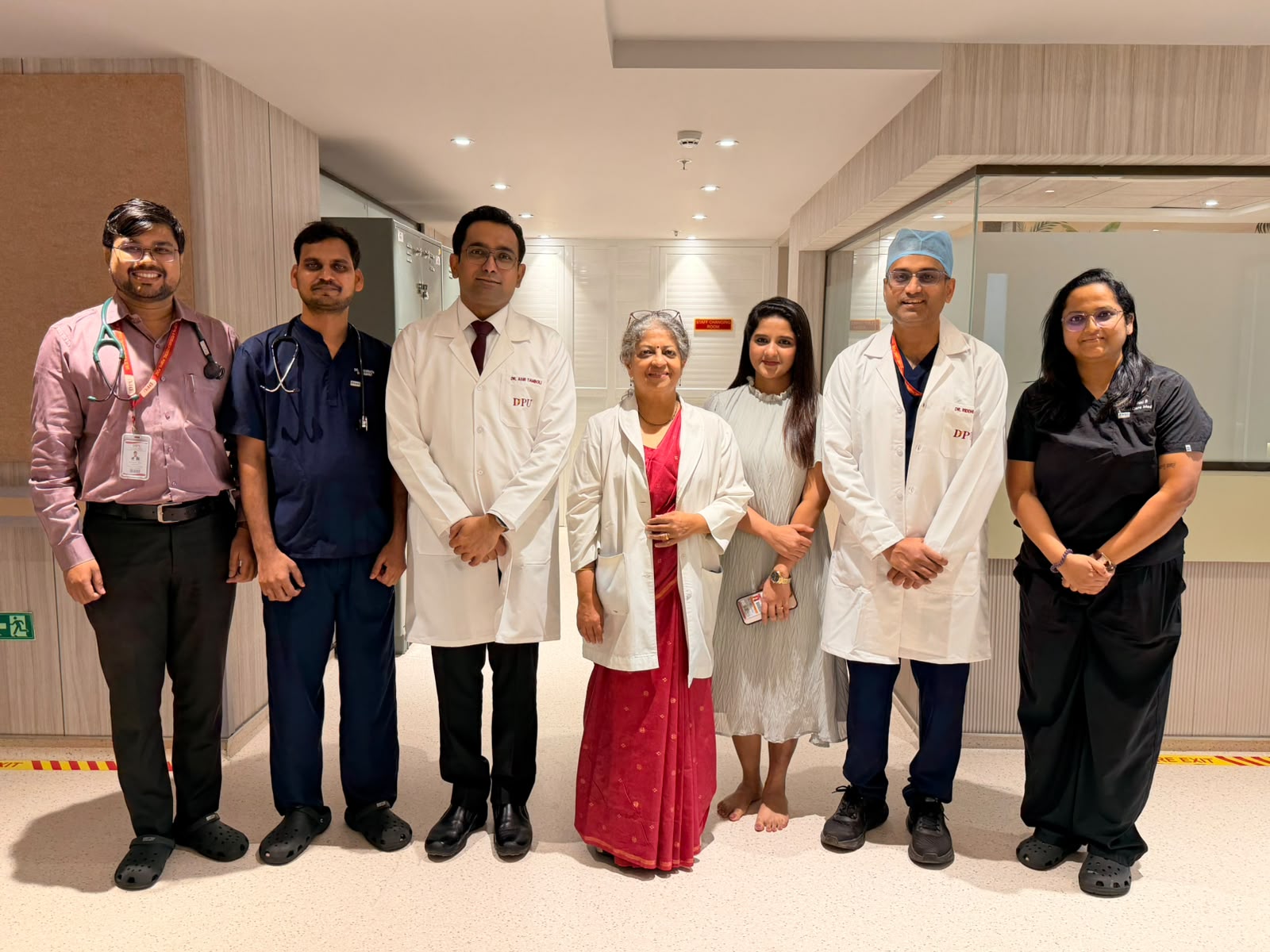
The patient was managed by a multidisciplinary team led by Dr. Prachee Sathe, Professor and Head, Department of Critical Care Medicine; Dr. Asir Tamboli, Associate Professor and In-charge, Department of Critical Care Medicine; and Dr. Riddhi Kundu, Assistant Professor, Department of Critical Care Medicine, along with the hospital’s ECMO, cardiac, nursing, perfusion, respiratory care and rehabilitation teams.
The case also involved close collaboration between the CVTS team, including Dr. Mahesh, Dr. Ashish Dolas and Dr. Ashish Baviskar.
The coordinated approach, from emergency assessment and VA-ECMO initiation and retrieval to intensive care, gradual reduction of ECMO support, decannulation, extubation and rehabilitation — was central to the patient’s recovery.
From experiencing what initially appeared to be stomach pain in the morning to facing a life-threatening cardiac crisis later that day, the young girl’s journey from critical illness to returning home underscores how timely advanced life support, specialised expertise and coordinated critical care can provide a crucial window for recovery when the heart is unable to function on its own.
Dr. Bhagyashree P. Patil, Pro-Chancellor, Dr. D. Y. Patil Vidyapeeth (Deemed to be University), Pimpri, Pune, said, “This case is a powerful reflection of what timely, advanced and coordinated healthcare can achieve in the face of a life-threatening emergency. To see a young patient arrive in such a critical condition and eventually return home stable is deeply encouraging. Our dedicated ECMO and Critical Care teams demonstrated expertise, preparedness and remarkable commitment at every stage of her treatment. Our focus remains on strengthening advanced healthcare capabilities so that patients requiring highly specialised interventions have access to timely and comprehensive care.”
Dr. Rekha Arcot, Dean, Dr. D. Y. Patil Medical College, Hospital & Research Centre, Pimpri, Pune, said, “This case highlights the critical role of rapid clinical decision-making and multidisciplinary teamwork in managing sudden and severe cardiac failure. VA-ECMO can provide crucial circulatory support when the heart is unable to maintain adequate blood flow, giving the treating team valuable time to address the underlying condition and allowing the heart an opportunity to recover. The successful recovery of this young patient reflects the expertise of our Critical Care, ECMO and multidisciplinary teams and reinforces our commitment to continuously strengthening advanced critical care services for complex and time-sensitive medical emergencies.”
Dr. Prachee Sathe, Professor and Head, Department of Critical Care Medicine said, “ECMO is not simply the deployment of a machine; it requires an entire system of care. The success of an ECMO case depends on rapid decision-making, skilled cannulation, continuous monitoring and the coordinated efforts of intensivists, perfusionists, nurses, respiratory care professionals and other specialists. Building awareness, expertise and readiness around ECMO is therefore essential to ensure that appropriate patients can receive this support when every minute matters.”