


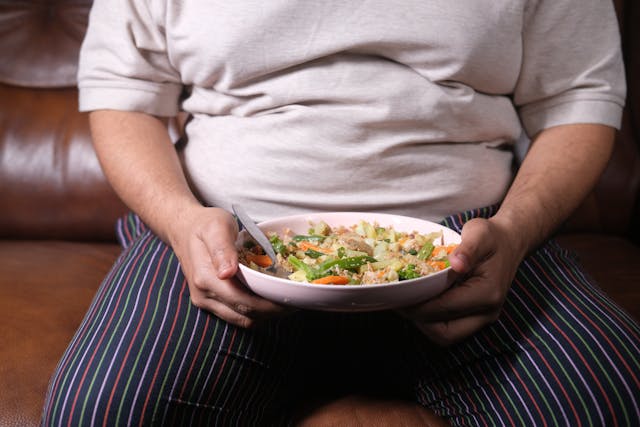
Pic Credit: Pexel
India is witnessing a fast-emerging health transition that is quietly reshaping its future—the rapid rise of obesity. Once seen as a concern limited to urban lifestyles, obesity is now spreading across cities, towns, and rural regions, cutting across income groups and age brackets. Health experts increasingly describe this as part of the “triple burden of malnutrition,” where undernutrition, micronutrient deficiency, and overnutrition coexist within the same population.
What makes the situation more alarming is the scale: nearly one in three adults in India is now affected by abdominal obesity, and the country ranks second globally in childhood obesity, with over 14 million children already impacted. This is no longer a distant warning—it is a present-day public health challenge unfolding in real time.
When Weight Becomes a Health Risk, Not Just a Number
Obesity in India is particularly dangerous due to a biological tendency toward central or visceral fat accumulation, where fat builds around vital organs such as the liver, heart, and pancreas. This type of fat is far more harmful than visible body weight and often goes unnoticed until serious health complications appear.
Medical research strongly links obesity to a range of chronic diseases, including:
- Type 2 diabetes
- Cardiovascular diseases and heart attacks
- High blood pressure (hypertension)
- Fatty liver disease
- Certain types of cancer
- Hormonal and metabolic disorders
Doctors warn that the combination of obesity and diabetes creates a “double acceleration effect,” where insulin resistance speeds up damage to the heart and blood vessels, significantly increasing the risk of early complications.
The Hidden Economic Shock: Trillions at Risk
Beyond hospitals and clinics, obesity is quietly draining India’s economy.
- In 2019, the economic burden of obesity was estimated at ₹2.5 trillion (around $29 billion)—nearly 1% of India’s GDP.
- A major share of this loss comes not from hospital bills alone, but from lost productivity, absenteeism, and early deaths.
- If the current trend continues unchecked, projections suggest costs could rise to nearly ₹72 trillion (over $830 billion) by 2060.
This means obesity is not just a health concern—it is becoming a long-term economic drag affecting families, employers, and national productivity.
Why Is Obesity Rising So Fast in India?
The rise is driven by a combination of lifestyle, environment, and food habits:
Modern diets increasingly rely on ultra-processed, high-calorie foods, while physical activity levels continue to decline due to sedentary jobs, screen-based entertainment, and limited urban spaces.
Other contributing factors include:
- Irregular sleep patterns and stress-heavy lifestyles
- Aggressive marketing of unhealthy foods
- Lack of nutrition awareness in children and adults
- Rapid urbanisation with reduced physical movement
At the same time, India still battles undernutrition in many regions, creating a paradox where overweight and underweight populations exist side by side—a unique but dangerous public health imbalance.
A National Response Is Now Urgent
Experts emphasize a critical shift: obesity must be treated as a chronic medical condition, not a lifestyle choice or cosmetic issue.
1. Changing Daily Habits
Public health campaigns such as “aaj se thoda kam” (a little less from today) encourage simple but powerful changes—reducing sugar, salt, and oil intake gradually rather than abruptly.
2. Stronger Food Regulation
The Food Safety and Standards Authority of India (FSSAI) is pushing reforms such as:
- Front-of-pack nutritional warning labels
- Restrictions on junk food in school environments
- Clearer ingredient transparency for consumers
3. Early Detection and Medical Care
Health experts recommend routine screening for obesity-related risks, especially in young adults, to prevent progression into diabetes or heart disease.
4. Lifestyle Reform at Community Level
- Daily physical activity as a habit, not an option
- School-based fitness and nutrition education
- Workplace wellness programmes
- Community awareness drives in both rural and urban areas
Reversing the Trend: A Matter of Small Choices, Big Impact
Unlike many diseases, obesity is largely preventable. The solution does not lie in drastic change, but in consistent, small decisions—walking more, eating less processed food, staying active, and making informed dietary choices.
The real challenge is not awareness, but sustained action.
Conclusion: A Turning Point for India’s Health Future
India’s obesity surge is not just a medical issue—it is a slow-moving national crisis affecting health, productivity, and future generations. With millions already impacted and many more at risk, the country stands at a critical turning point.
Yet, this crisis is still reversible. With timely policy action, stronger regulation, better awareness, and everyday lifestyle changes, India has the opportunity to shift from a rising epidemic to a model of preventive public health success.
The question is no longer whether obesity is a problem—but how quickly society is willing to act before the burden becomes irreversible.