


New Delhi, May 6: This Mother’s Day, Philips Home Appliances has launched a thought-provoking campaign that challenges a deeply ingrained phrase in Indian household, the concept of “helping your mother.”
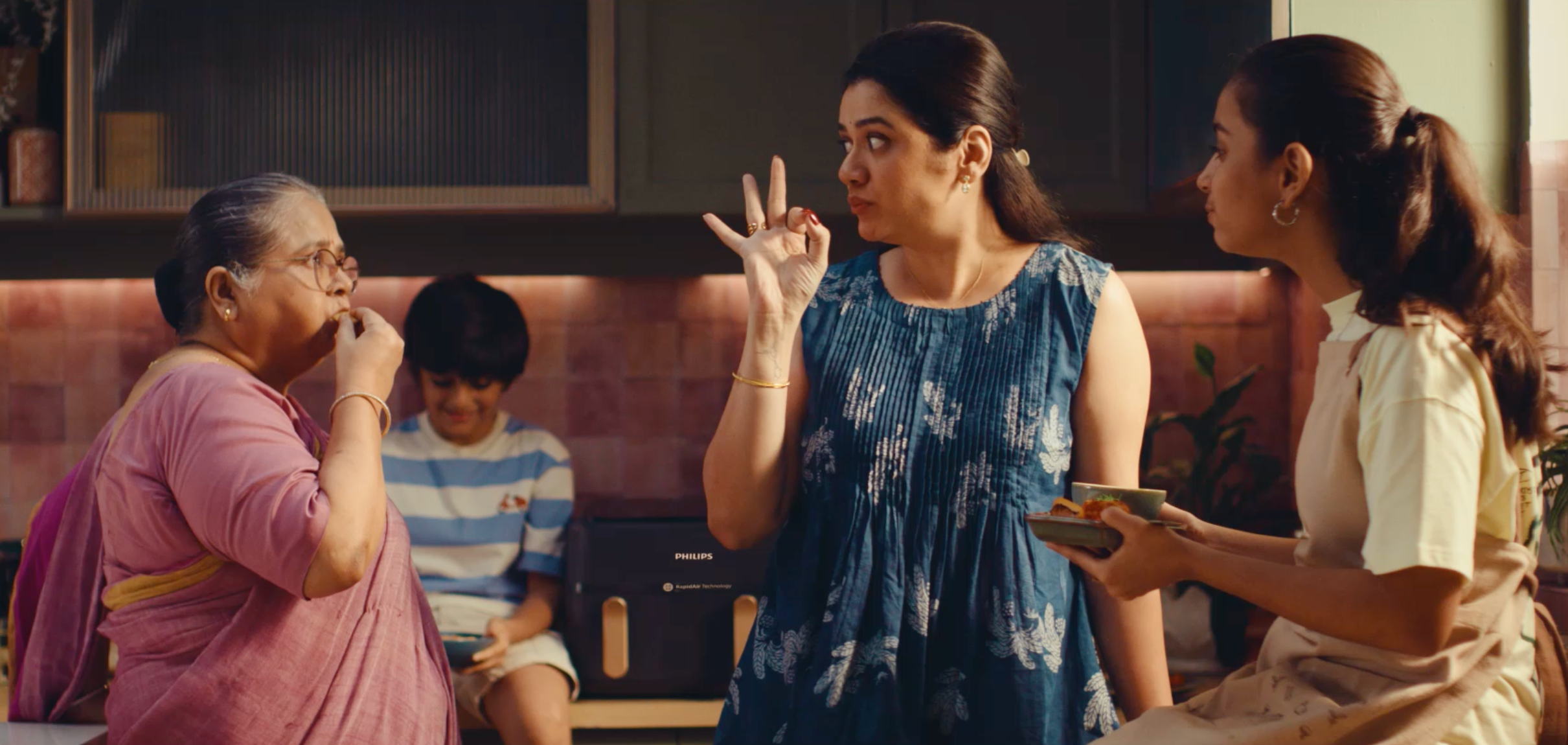
The gesture that quietly shapes most Indian homes: “helping out.” It sounds generous. Even progressive. But it carries an assumption that the responsibility for the home was never yours to begin with.
Philips’ latest Mother’s Day film leans into this discomfort. Instead of tribute, it offers introspection. Instead of celebration, it sparks a cultural reflection. Titled “Ghar ka kaam sabka kaam”, the campaign shifts the narrative from viewing household chores as a mother’s responsibility to recognizing them as a shared duty among all family members.
At the heart of the film is an everyday, multi-generational moment. As children prepare a meal for their mother, a grandmother smiles and praises them for “helping.” What follows is an unexpected but powerful response from the mother: “Why do we call it help? Isn’t it their home too?”
The film gently reveals how language, passed down casually across generations, subtly shapes behaviour and reinforces ownership of the home as the mother’s domain, often without conscious intent. Language doesn’t explain imbalance. It disguises it. Crafted with restraint rather than rhetoric, the film is Conceptualised by Restless @ MagicCircle, and directed by Amrit Raj Gupta and features nuanced performances by Girija Oak and Yamini Das, bringing authenticity to a truth most families recognise but rarely question.
“This campaign is not about telling families to do something new. It is about asking a simple question we’ve stopped asking over time: when did the home quietly become one person’s responsibility? When we say someone is ‘helping’ at home, we unintentionally signal that the ownership lies elsewhere.” said Pooja Baid, CMO, Versuni India. “As a brand that sits inside kitchens and homes every day, we felt it was important to move beyond celebration this Mother’s Day and start a more honest reflection. Because real change in homes doesn’t begin with grand gestures. It begins with small shifts in how we think, speak, and behave.” she added.
“The idea that one person is accountable for the home, while everyone else opts in and out, is fundamentally flawed,” says Angira Lahiri – Head of strategy (Restless @ magiccircle). “We don’t realise how much language shapes behaviour. This film tries to hold that mirror up.”
“From the outset, we knew this idea would only work if it felt real, not rhetorical. That’s where storytelling becomes critical and you need restraint, not drama. Amrit Raj Gupta (of Gullak fame) was a great choice because he captures the ordinary with honesty, and with Girija Oak and Yamini Das, we had performers who could bring that precision without overplaying it. For us, the goal was to make it land as a lived truth, not a brand message,” says Dheeraj Renganath CCO (Restless @ magiccircle)
Building a cultural conversation beyond Mother’s Day, the campaign is being amplified by parents, creators, and cultural commentators across social media, many sharing personal reflections on how they were raised, and how they are choosing to raise their children differently.
Rather than positioning itself as a one-day message, Philips hopes this becomes an ongoing reflection on how small shifts in language can lead to meaningful behavioural change within families. Beyond celebration. Towards introspection. In a category that often leans into emotional tributes on Mother’s Day, Philips Home Appliances takes a different route. Because sometimes, the most meaningful way to honour mothers is not by celebrating what they do, but by questioning why they are expected to do it alone.
