May 09: For a city that never sleeps, breathing easy is increasingly becoming a luxury. With air quality levels in Mumbai witnessing periodic spikes and concerns around long-term health risks growing, a new trend is quietly reshaping the residential real estate landscape; homebuyers are willing to trade a longer commute for cleaner air, open spaces, and a better quality of life.
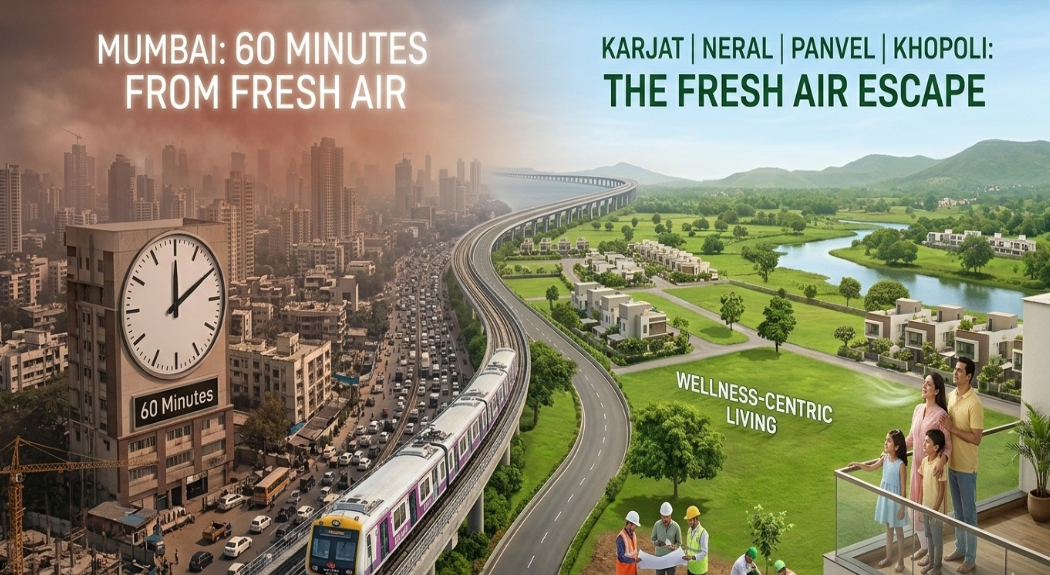
What’s driving this shift is a simple yet powerful proposition: within 60 minutes from Mumbai, one can access locations that offer significantly better air quality, lower population density, and a closer connection to nature. As a result, peripheral micro-markets such as Karjat, Neral, Panvel, and Khopoli are emerging as strong contenders for both end-users and investors.
These locations, once considered weekend getaway destinations, are now evolving into viable residential and second-home hubs. Improved infrastructure, including enhanced road connectivity, upcoming rail upgrades, and transformative projects like the Mumbai Trans Harbour Link (MTHL), have drastically reduced travel time, making these areas more accessible than ever before.
Developers are also aligning with this demand shift, offering projects that emphasize wellness-centric living—larger homes, green landscapes, better ventilation, and amenities that cater to a healthier lifestyle. The pandemic has further accelerated this mindset change, pushing homebuyers to prioritize well-being over proximity to business districts.
Commenting on the trend, Ms. Unnati Varma, Director, ORA Land (by ORA Group), said,
“Today’s homebuyer is far more conscious about the quality of life than ever before. Peripheral locations within 60-minutes radius of Mumbai are gaining traction not just for end-use but also as smart investment opportunities, given their high appreciation potential. At ORA Land, we are seeing a strong demand for plotted developments and second homes in Karjat and surrounding regions, especially from Mumbai-based buyers looking for a quick escape from urban pollution.”
Echoing similar sentiments, Mr. Ram Naik, Co-founder & CEO, The Guardians Real Estate Advisory noted,
“The definition of real estate value is gradually evolving. While proximity to workplaces was traditionally the primary consideration, homebuyers today are placing increasing importance on health, wellness, and overall quality of life. Clean air, lower-density living, and access to open spaces are becoming important decision-making factors, particularly among families and hybrid-working professionals. As infrastructure connectivity improves, locations such as Karjat, Panvel, and Neral are emerging as viable residential alternatives that offer a healthier and more balanced living environment. What began as a second-home trend is now gradually evolving into a more mainstream residential choice for many buyers.
Adding a regional perspective, Mr. Gautam Thacker, Founder President & Chairman, NAREDCO Raigad said,
“Raigad district is fast emerging as a preferred real estate destination due to its natural advantages and rapidly improving infrastructure. Locations such as Karjat, Neral, Panvel and surroundings benefit from excellent connectivity through major highways, railway networks and the Navi Mumbai International Airport, which is expected to significantly boost accessibility and regional growth. Additionally, the presence of natural water sources such as rivers, lakes, and dams across the region enhances the quality of life and makes these destinations highly attractive for homebuyers seeking a healthier and more sustainable living environment. With cleaner air, scenic surroundings, and strong future growth potential, these markets are witnessing rising buyer interest as well as increased developer activity.”
The rising inclination toward these greener pastures is also supported by a growing awareness around environmental sustainability and lifestyle upgrades. For many, owning a home in these locations is no longer just a luxury, it’s a necessity driven by health considerations.
As Mumbai continues to grapple with urban challenges, the idea of “60 minutes to fresh air” is no longer aspirational, it’s actionable. And for a growing segment of homebuyers, the road to better living quite literally begins just beyond the city’s edge.