


The next travel experience may not be found inside a monument or at a crowded beach. It could be hidden in a crater, a cave, a mountain or a rock formation that has been telling its story for millions of years.
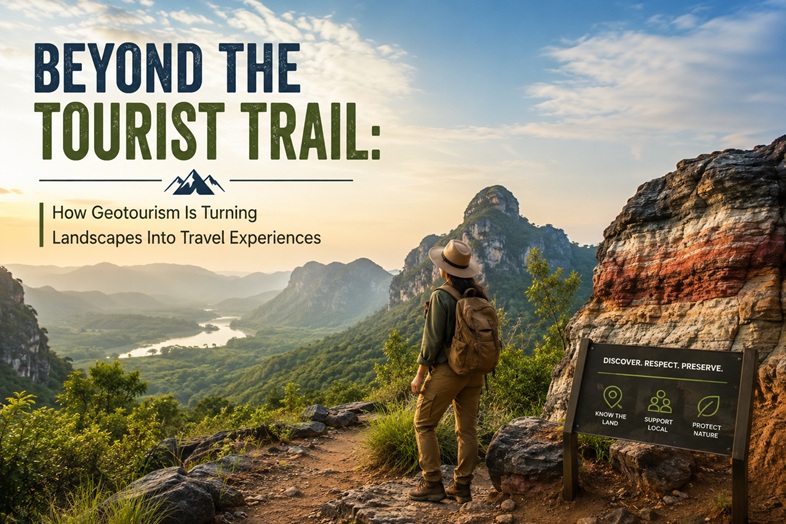
When the Landscape Becomes the Destination
Travel has traditionally been about seeing places. But a new kind of traveller is becoming interested in understanding them. Mountains, caves, cliffs, craters and unusual rock formations are attracting attention not just for their beauty, but for the stories they reveal about the Earth.
This is where geotourism comes in. It takes travellers beyond conventional sightseeing and introduces them to the geological character of a destination — how its landscapes were formed, changed and continue to evolve.
It is travel with a sense of curiosity. Instead of simply asking what a place looks like, travellers begin wondering what happened there.
A Journey Through Millions of Years
There is something humbling about standing in front of a landscape that existed long before human civilisation. A mountain range can represent millions of years of tectonic activity. A cave can be the result of water slowly working its way through rock. A volcanic landscape can preserve evidence of eruptions from a distant geological past.
Geotourism turns these processes into part of the travel experience.
A walk through a geological landscape can therefore become more than an outdoor activity. It becomes a journey through time.
A Global Interest in Geological Heritage
The idea is gaining recognition around the world. UNESCO published its Geotourism for UNESCO Global Geoparks toolkit in 2024 to help destinations develop tourism around geological heritage while balancing conservation, education and sustainable development. UNESCO’s Global Geoparks network now includes 241 geoparks across 51 countries, showing how geological heritage has moved beyond a specialist scientific interest and into the wider tourism conversation.
The appeal is easy to understand. Geological sites offer something many modern travellers are looking for — experiences that feel distinctive, educational and closely connected to nature.
India Has a Story Written in Stone
India is particularly well placed for this emerging form of travel. Its geological history has produced everything from volcanic plateaus and meteorite craters to dramatic mountain ranges, limestone caves and unusual coastal rock formations.
For travellers, that means geotourism does not necessarily require going somewhere remote or unfamiliar. Some of India’s most interesting geological stories are already part of established travel destinations.
From a Meteorite Crater to Ancient Volcanic Rocks
Take Lonar Crater in Maharashtra. Created by a meteorite impact, the crater is one of India’s most unusual landscapes. Its distinctive lake and surrounding terrain offer visitors a glimpse into the consequences of an extraordinary event that happened long before modern civilisation.
On the Karnataka coast, the St. Mary’s Islands near Malpe present a completely different geological spectacle. Their distinctive columnar basalt formations were created by ancient volcanic activity and rise in striking geometric patterns along the shoreline.
Then there are the Marble Rocks of Bhedaghat in Madhya Pradesh, where the Narmada River flows between towering marble cliffs. The landscape is visually spectacular, but its real appeal for geotourism lies in understanding how the river and geological formations have interacted over time.
Caves, Mountains and Landscapes Shaped by Time
In Meghalaya, the story moves underground. The state’s limestone landscapes have created extensive cave systems, particularly around Cherrapunji and Mawsynram. Exploring these caves offers a close look at how water, rock and time can work together to create extraordinary underground environments.
The Deccan Plateau tells an even larger story. Its vast basalt landscapes are linked to enormous volcanic activity millions of years ago. What may appear to be an ordinary stretch of rocky terrain is actually part of one of the most significant volcanic chapters in the planet’s geological history.
And then there are the Himalayas. Few landscapes demonstrate the power of geological change as dramatically. The world’s highest mountain system was created by the collision of tectonic plates and continues to evolve. Travelling through Himalayan valleys and mountain passes is, in many ways, travelling through a landscape still being shaped by the forces of the Earth.
The Story Makes the Destination
The success of geotourism depends on how these stories are told. A dramatic rock formation can make a great photograph, but understanding its origin can make the experience much more memorable.
This is where local guides, museums, interpretation centres, walking trails and digital storytelling can make a difference. Complex geological processes can be explained through simple, engaging stories about volcanoes, oceans, erosion, glaciers and shifting continents.
For local communities, this can also create new opportunities. A geological attraction can support guides, homestays, transport providers, restaurants, artisans and other small businesses around it.
A More Responsible Way to Explore
Geotourism also comes with an important responsibility. Geological landscapes may have survived for millions of years, but that does not mean they are immune to damage from modern tourism.
Poorly managed visitor numbers, littering, construction and careless exploration can threaten fragile sites. Sustainable tourism therefore needs to be part of the geotourism model from the beginning.
UNESCO’s approach to Global Geoparks places geological heritage alongside conservation, education and sustainable development, with local communities playing an important role. The idea is simple: the people who live around these landscapes should benefit from tourism while also becoming part of their protection.
When Social Media Discovers the Rocks
Social media is giving geological destinations another advantage. A dramatic crater, unusual rock formation or colourful cave can attract enormous attention once it appears in a short video or photograph.
For lesser-known destinations, that visibility can be transformative. But viral popularity can also create problems. A location that suddenly becomes an online sensation can quickly face overcrowding and environmental pressure.
The future of geotourism will therefore depend not just on attracting travellers, but on managing their impact.
The Traveller Who Wants More Than a Photograph
At its heart, geotourism reflects a broader change in the way people travel. Travellers are increasingly looking for experiences that give them a deeper connection with the places they visit.
They want to know the story behind the landscape. They want to walk a different trail, discover something unusual and come home with knowledge as well as photographs.
Geotourism meets that demand naturally. It brings together travel, nature, science, adventure and storytelling without taking away the sense of discovery that makes travel exciting.
Technology Could Bring Ancient Landscapes to Life
Technology could make these experiences even more engaging. Imagine standing beside a geological formation and using an augmented-reality application to see how the landscape may have looked millions of years ago.
Interactive maps, audio guides and digital trails could help visitors understand geological features without needing a scientific background. For younger travellers in particular, these tools could turn a geology lesson into an adventure.
The Earth Becomes the Guide
Geotourism ultimately changes the way we look at the world. A crater is no longer just a crater. A mountain is no longer simply a mountain. A cave becomes evidence of the patient work of water, while a stretch of volcanic rock becomes a reminder of Earth’s turbulent past.
That is what makes this form of travel so compelling. It encourages us to slow down, look closer and appreciate destinations for what lies beneath their surface.
The next great travel experience may not be about finding a place nobody has visited before. It may simply be about seeing a familiar place differently.
And sometimes, the most fascinating travel story is the one that has been written in stone all along.