


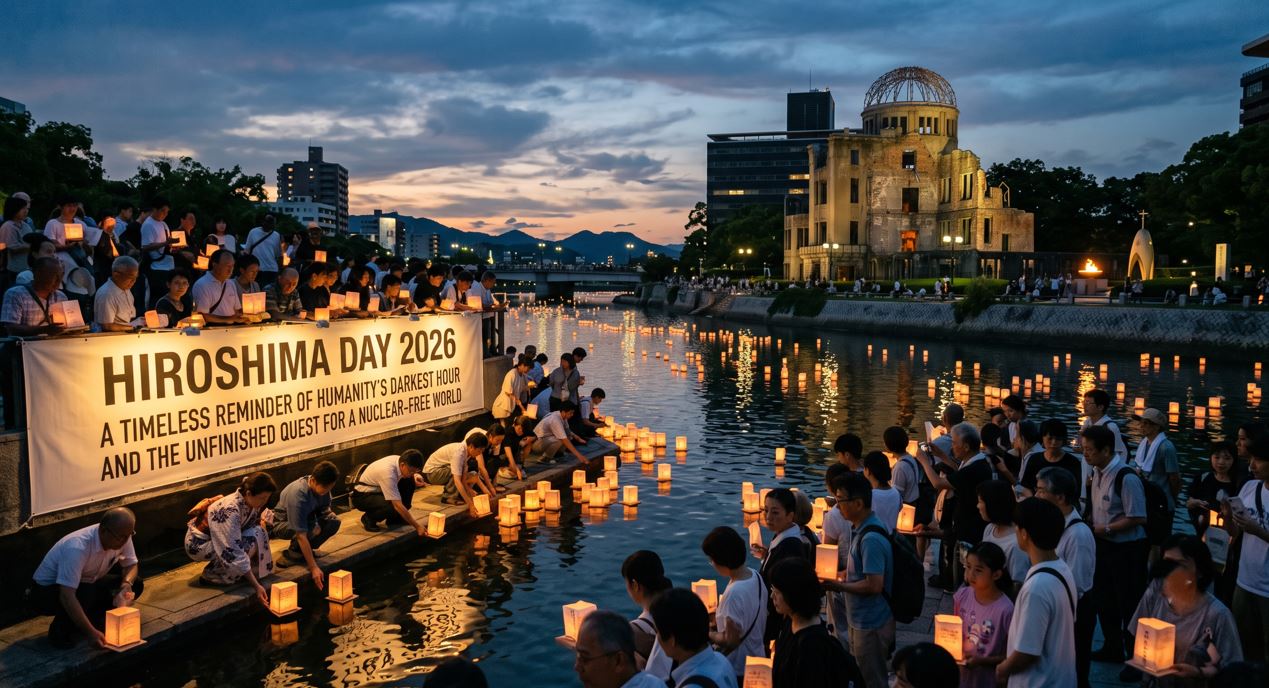
Representational Image
Aug. 6: At 8:15 a.m. on August 6, 1945, the course of human history changed forever. In a matter of seconds, the Japanese city of Hiroshima was engulfed by the world’s first atomic bomb used in warfare, unleashing unprecedented destruction and introducing an era in which humanity gained the power to annihilate itself. More than 80 years later, the haunting memories of that day continue to echo across generations, making Hiroshima Day not only a commemoration of one of history’s greatest tragedies but also a powerful reminder of the urgent need for peace, restraint and nuclear disarmament.
Every year, Hiroshima Day is observed around the world to honour the victims of the atomic bombing, pay tribute to the resilience of the survivors and reinforce the global commitment to ensuring that such devastation is never repeated. In today’s increasingly volatile geopolitical landscape, marked by armed conflicts, strategic rivalries and renewed nuclear rhetoric, the significance of the day has become even more profound.
The Day That Changed the World
On the morning of August 6, 1945, a U.S. B-29 bomber dropped the uranium-based atomic bomb, code-named “Little Boy,” over Hiroshima. Within moments, the explosion flattened nearly five square miles of the city, instantly killing an estimated 70,000 people. By the end of the year, the combined death toll from the bombings of Hiroshima and Nagasaki had reached around 120,000, while thousands more later succumbed to radiation-related illnesses, cancers and lifelong health complications.
Entire neighbourhoods vanished in an instant. Families were torn apart, infrastructure was obliterated and generations were left to cope with the physical and psychological scars of the world’s first nuclear attack.
The Voices That Refused to Fade
The survivors, known as Hibakusha, emerged as living witnesses to one of humanity’s darkest moments. Despite enduring unimaginable loss, many dedicated their lives to sharing their experiences, transforming personal suffering into a universal message against war and nuclear weapons.
Their testimonies continue to educate younger generations, reminding the world that the true cost of nuclear conflict extends far beyond the battlefield. Through their resilience, Hiroshima has become a global symbol of remembrance, reconciliation and hope.
A Global Call for Peace
Across the world, Hiroshima Day is marked with memorial services, peace marches, educational programmes and moments of silence. At Hiroshima Peace Memorial Park, thousands of people—including survivors, students, diplomats and international leaders—gather every year to pay tribute to the victims and renew their commitment to lasting peace.
The annual observance serves as more than a memorial. It is a collective appeal for dialogue over conflict, diplomacy over hostility and cooperation over confrontation. It reminds nations that peace is built not through military might, but through mutual trust and understanding.
Nuclear Risks in a Changing World
More than eight decades after the bombing, the threat posed by nuclear weapons remains a major global concern. International organisations and disarmament advocates have repeatedly warned that escalating geopolitical tensions, regional wars and the continued modernisation of nuclear arsenals have increased the risk of nuclear confrontation.
While nuclear weapons continue to be viewed by some countries as instruments of deterrence, experts caution that their existence poses an enduring threat to global security. Peace groups have therefore renewed calls for stronger international agreements on arms control and have urged governments to move steadily towards the complete elimination of nuclear weapons.
Many campaigners have also proposed that Hiroshima Day receive wider recognition as a global “Disarmament Day,” reinforcing the world’s collective responsibility to prevent another nuclear catastrophe.
Hope That Rose from the Ashes
Despite experiencing unimaginable devastation, Hiroshima rebuilt itself into a vibrant city dedicated to promoting peace and reconciliation. Today, it stands as living proof that even after the darkest chapters of history, humanity possesses the strength to rebuild and heal.
Among the city’s enduring symbols of hope are persimmon trees that survived the atomic blast. Saplings grown from these resilient trees have since been planted in countries around the world, representing renewal, endurance and the triumph of life over destruction.
Another universally recognised symbol is the paper crane, inspired by the story of Sadako Sasaki, who developed leukemia after being exposed to radiation as a child. Her dream of folding one thousand paper cranes has inspired millions worldwide, turning the origami crane into an enduring emblem of peace and a future free from war.
The Enduring Legacy of Hiroshima
As the world observes Hiroshima Day 2026, the occasion serves not only to remember those who lost their lives but also to reflect on humanity’s shared responsibility to preserve peace for future generations.
Hiroshima’s story is not merely about destruction—it is about resilience, remembrance and hope. It reminds the world that technological progress without humanity can have devastating consequences, and that lasting security can never be achieved through fear or the threat of nuclear annihilation.
More than eighty years after that fateful morning, Hiroshima’s message remains timeless: the future of humanity depends not on the power of nuclear weapons, but on the strength of peace, dialogue and international cooperation.