


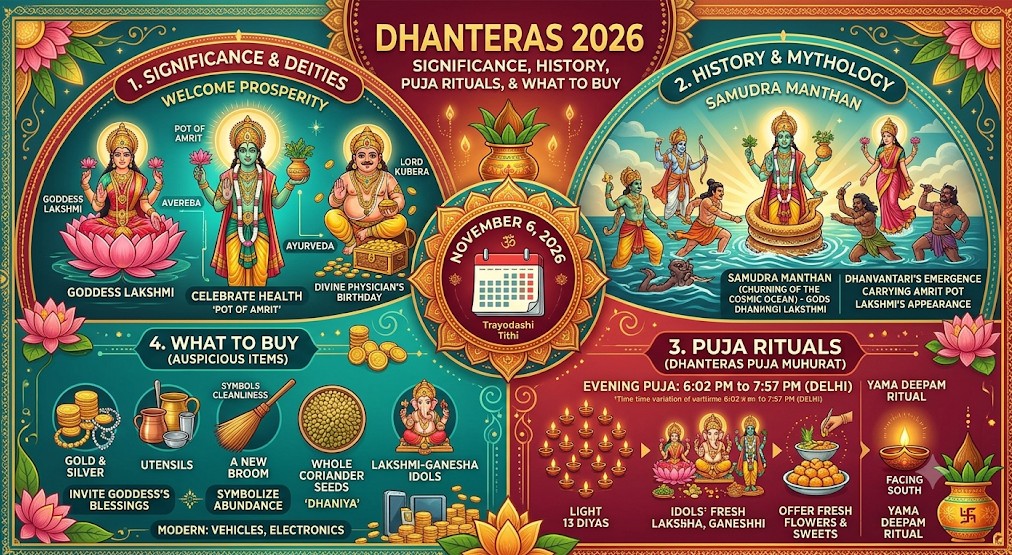
Nov 6: Dhanteras, also known as Dhantrayodashi, marks the beginning of the five-day Diwali festival and holds immense religious significance in Hindu tradition. Celebrated on the thirteenth lunar day (Trayodashi Tithi) of the Krishna Paksha in the Hindu month of Kartik, the festival is associated with wealth, good health, prosperity and protection from misfortune.
While buying gold, silver and new utensils remains one of the most popular Dhanteras traditions, the festival has a deeper spiritual meaning. Devotees worship Goddess Lakshmi, Lord Kubera, Lord Dhanvantari and Lord Yama, seeking blessings for financial stability, good health, happiness and longevity.
The word Dhanteras is derived from two Sanskrit terms: ‘Dhan’, meaning wealth, and ‘Teras’, referring to the thirteenth lunar day. The occasion is therefore not merely about acquiring material wealth but also about welcoming abundance, well-being and positive energy into the household.
Dhanteras 2026: Religious Significance and Importance
Dhanteras is considered an auspicious occasion to begin new purchases, clean and decorate homes, perform religious rituals and pray for prosperity.
According to Hindu mythology, the festival is closely associated with the Samudra Manthan, or the churning of the cosmic ocean. During this event, Lord Dhanvantari emerged carrying a pot of Amrit, the divine nectar of immortality, symbolising health, healing and longevity.
The occasion also honours Goddess Lakshmi, who represents wealth and fortune, and Lord Kubera, the celestial treasurer associated with riches and financial prosperity.
Another important tradition involves worshipping Lord Yama, the god of death. Devotees light an earthen lamp outside their homes in the evening, seeking protection from untimely death and misfortune.
Four Deities Worshipped on Dhanteras
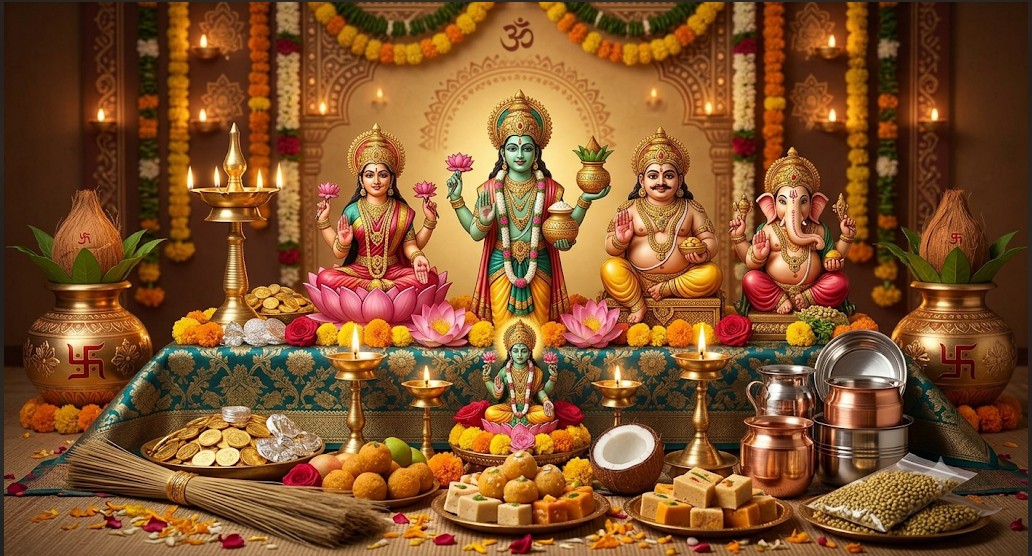
Dhanteras is associated with four important Hindu deities, each representing a different aspect of a prosperous and fulfilling life.
1. Lord Dhanvantari – The God of Health and Ayurveda
Lord Dhanvantari is regarded as the divine physician and the originator of Ayurveda. According to Hindu mythology, he appeared during the Samudra Manthan carrying the Amrit Kalash. Devotees worship him on Dhanteras to seek good health, healing and a long life.
2. Goddess Lakshmi – The Goddess of Wealth and Prosperity
Goddess Lakshmi represents wealth, fortune, abundance and happiness. On Dhanteras, devotees clean and decorate their homes, light diyas and perform Lakshmi Puja to invite prosperity and good fortune.
3. Lord Kubera – The Guardian of Wealth
Lord Kubera is regarded as the celestial treasurer and guardian of wealth. Devotees worship him alongside Goddess Lakshmi, seeking financial stability, success and abundance.
4. Lord Yama – The God of Death
Lord Yama is worshipped through the tradition of Yamadeep Daan. Lighting a special diya in his honour is believed to protect family members from untimely death and negative influences.
Dhanteras 2026: Important Rituals and Traditions
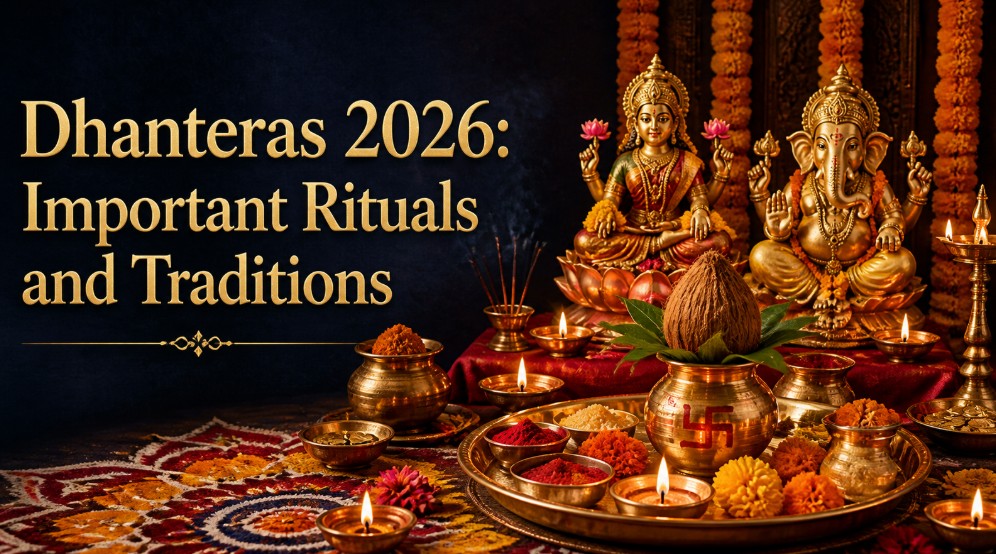
Several religious and cultural traditions are followed on Dhanteras. These rituals are believed to bring peace, prosperity and positive energy into the household.
1. Cleaning and Decorating the House
Cleaning homes is one of the most important Dhanteras preparations. Devotees believe that Goddess Lakshmi visits clean, well-maintained and illuminated homes.
Entrances are decorated with colourful rangoli, flowers and traditional designs. Many families also create small footprints using rice flour or vermilion to symbolise the arrival of Goddess Lakshmi.
2. Buying Gold, Silver and New Utensils
Purchasing gold and silver is among the most widely followed Dhanteras traditions. Many families buy jewellery, coins or precious metals, believing that such purchases bring wealth and good fortune.
Buying new utensils made of brass, copper or steel is also considered auspicious in several Hindu traditions.
Apart from precious metals, people purchase household essentials and other items associated with prosperity.
3. Performing Lakshmi-Kuber and Dhanvantari Puja
Evening prayers form an important part of Dhanteras celebrations. Families prepare their prayer spaces and worship Goddess Lakshmi, Lord Kubera and Lord Dhanvantari.
The puja generally involves offering flowers, incense sticks, diyas, roli, akshat, sweets and other traditional offerings.
Devotees chant prayers and seek blessings for good health, financial stability, peace and happiness.
4. Yamadeep Daan: Why Is a Diya Lit on Dhanteras?
Yamadeep Daan is one of the significant rituals observed on Dhanteras.
According to tradition, a special earthen lamp filled with mustard oil is lit after sunset and placed outside the main entrance of the house, generally facing south, the direction associated with Lord Yama.
This ritual is performed to seek protection from untimely death and misfortune. In many households, 13 diyas are also lit and placed at different locations, including the entrance, prayer room and near the Tulsi plant.
What Should You Buy on Dhanteras 2026?
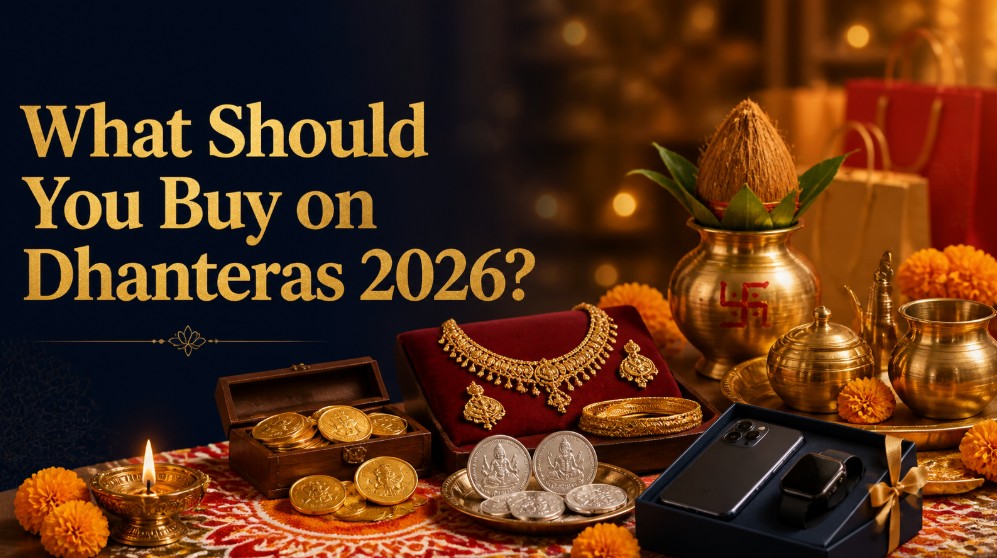
Buying something new on Dhanteras is considered auspicious. Although gold and silver are traditional favourites, several other items are also associated with prosperity.
Some commonly purchased items include:
Gold and silver: Precious metals traditionally symbolise wealth and prosperity.
Brass, copper and steel utensils: New household utensils are considered auspicious purchases.
Broom (Jhadu): Symbolically associated with removing poverty, negativity and impurities from the home.
Turmeric (Haldi): Traditionally represents purity, auspiciousness and good fortune.
Rice and salt: Essential household items associated with abundance.
Whole coriander seeds: Considered a symbol of prosperity in certain regional traditions.
Religious idols: Idols or pictures of Goddess Lakshmi, Lord Ganesha, Lord Narayana and Lord Kubera are also purchased by devotees.
These customs may vary across regions and families, but the underlying belief remains centred on welcoming prosperity and positivity.
What Should You Avoid Buying on Dhanteras?
According to certain traditional astrological beliefs, devotees should avoid purchasing some items on Dhanteras.
These commonly include:
Iron objects
Aluminium utensils
Glass items
Some traditions also recommend avoiding borrowing or lending money on this day.
However, these are customary religious and astrological recommendations rather than universal rules, and practices may differ between communities.
Dhanteras: A Festival Celebrating Wealth, Health and Happiness
Although Dhanteras is widely associated with buying gold and silver, its significance extends far beyond material possessions. The worship of Lord Dhanvantari highlights the importance of health, while prayers to Goddess Lakshmi and Lord Kubera reflect aspirations for wealth and financial security.
The tradition of Yamadeep Daan further emphasises the importance of protection and longevity.
As families prepare for Diwali, Dhanteras serves as a reminder that true prosperity lies in maintaining a balance between wealth, good health, happiness and spiritual well-being.
For millions of devotees, the festival is an opportunity to begin the Diwali celebrations with prayers, traditional rituals and hope for a prosperous year ahead.
Disclaimer: Religious practices, rituals and auspicious buying traditions may vary according to regional customs, family traditions and individual beliefs.