


For many travellers, Janmashtami is becoming more than a festival to celebrate at home. It is becoming a reason to travel.
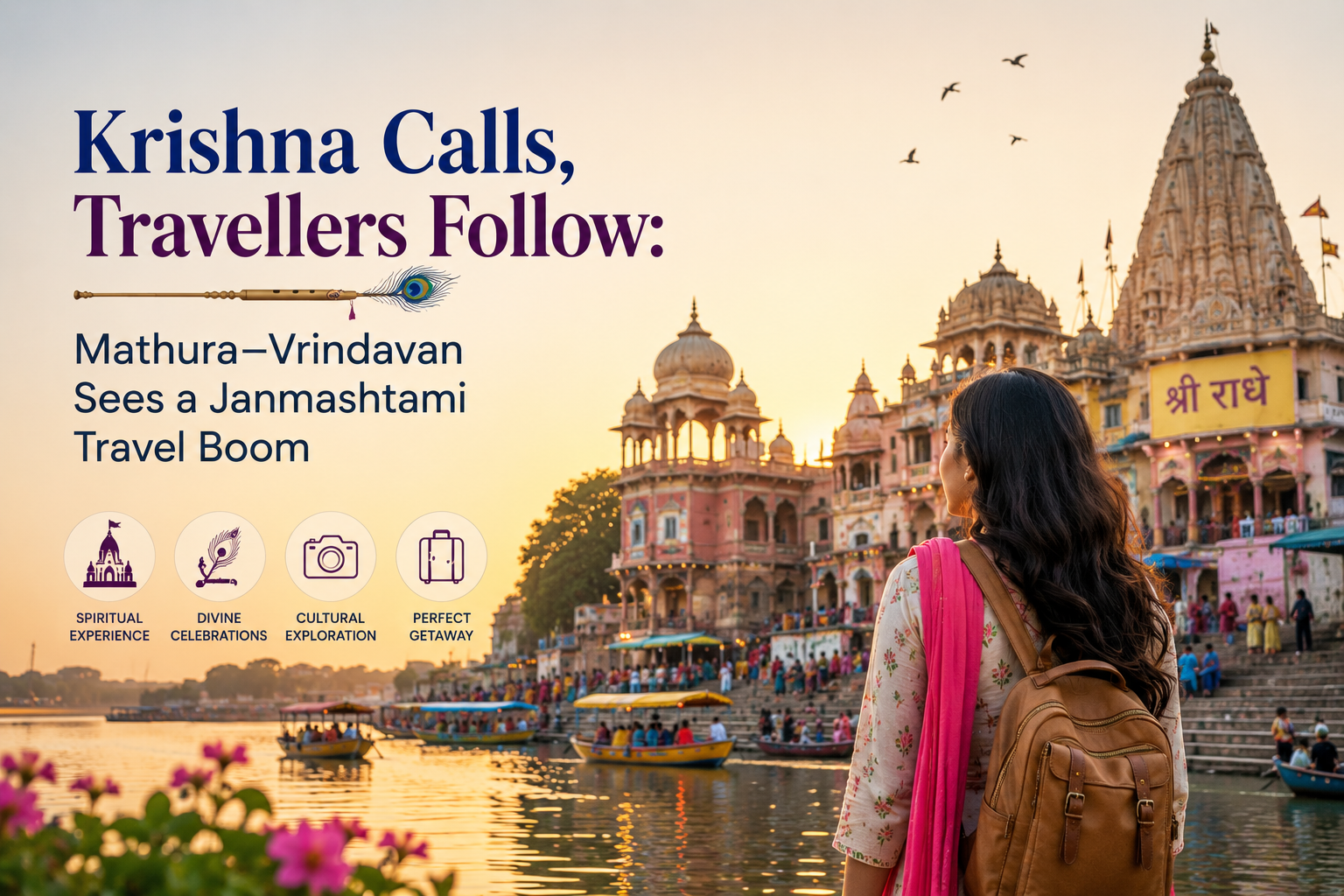
Today, on Janmashtami, Mathura and Vrindavan are witnessing a noticeable surge in travel interest, as devotees and travellers make plans around temple celebrations, accommodation, local transport and the vibrant atmosphere of Braj. According to a Justdial analysis of search trends covering September 2025 to August 2026, compared with the corresponding period of the previous year, searches for Mathura–Vrindavan tour packages rose 49% across India. Delhi recorded an impressive 87% increase, while Jaipur saw searches climb 81%.
The trend offers a glimpse into how India’s domestic travel habits are changing. Religious festivals are increasingly becoming travel occasions, turning traditional pilgrimage into planned short breaks and cultural experiences.
When Janmashtami Becomes a Travel Trigger
Mathura and Vrindavan have always attracted devotees, but the modern pilgrimage is becoming more organised.
Travellers are now planning where they will stay, how they will move around, which places they want to visit and how they can experience the celebrations without trying to fit everything into a few hours.
That is where tour packages are gaining relevance. The 49% increase in Mathura–Vrindavan tour-package searches, reported by Justdial, suggests that more travellers are looking for convenience alongside the spiritual experience.
For visitors from Delhi, Jaipur and other cities, Janmashtami can easily become a two- or three-day escape — combining temple visits with food, culture, sightseeing and the festive energy of Braj.
The Festive Atmosphere Is Part of the Attraction
During Janmashtami, Mathura and Vrindavan take on a different character.
Temples become centres of elaborate celebrations, streets fill with devotees and the wider Braj region comes alive with music, decorations and religious activity. The experience extends beyond individual places of worship.
For travellers, this creates the appeal of an immersive cultural journey rather than a conventional sightseeing trip.
A visit can include exploring the lanes of Vrindavan, experiencing the atmosphere around Mathura’s temples, tasting local sweets and traditional food, and travelling onwards to places associated with Krishna’s life and stories.
The Stay Boom Behind the Festival Rush
The travel surge is also visible in accommodation-related searches.
Justdial’s analysis found that Hotel Services searches increased 47% nationally, while Guest House searches grew 46% across India.
The numbers from Mathura and Vrindavan are particularly striking. Guest House searches increased 69% in Mathura and 62% in Vrindavan.
The growth suggests that visitors are not simply searching for information about the destination. They are actively considering where they will stay.
For local hotels, guest houses and homestays, that creates an important opportunity. A rise in overnight visitors can translate into demand for restaurants, local transport, shopping and other tourism services as well.
Dharamshalas Remain Part of the Pilgrimage Economy
The traditional side of pilgrimage accommodation continues to have a role too.
According to the Justdial search analysis, Dharamshala searches rose 14% nationally, with growth of 52% in Kanpur and 46% in Jaipur.
This reflects the diversity of India’s religious tourism audience. Not every traveller is looking for the same type of stay. Some prioritise comfort and location, while others prefer affordable, simple accommodation closer to places of worship.
The growing search activity across hotels, guest houses and dharamshalas shows that the Janmashtami travel market is catering to different budgets and travel styles.
The Cab Economy Moves With the Traveller
A pilgrimage does not end when a traveller reaches the destination.
Getting between Mathura and Vrindavan, visiting surrounding attractions and navigating busy festive areas makes local transportation an important part of the experience.
Justdial reported a 28% increase in Cab Services searches across India, with Mumbai registering a 62% rise.
For families and groups, dependable local transport can make a significant difference, particularly during a major festival when demand and crowds are expected to increase.
The numbers also highlight how a rise in tourism creates opportunities far beyond hotels and tour operators.
Delhi and Jaipur Reveal the Short-Trip Opportunity
The sharp rise in searches from Delhi and Jaipur deserves particular attention.
Delhi recorded an 87% increase in searches for Mathura–Vrindavan tour packages, while Jaipur saw an 81% rise, according to Justdial.
The figures point towards the growing appeal of religious destinations as short-break options. Travellers no longer necessarily need a long holiday to make a pilgrimage. A weekend or extended festive break can be enough to experience the destination.
For regional tourism, this is significant. Destinations with strong cultural identities can attract repeat and seasonal visitors by making short trips easier to plan and more experiential.
Digital Search Is Now Part of the Pilgrimage
The journey increasingly begins before travellers leave home.
People can discover tour packages, compare accommodation options, search for cabs and explore destinations online. Digital platforms have therefore become part of the travel-planning process even for traditional pilgrimage destinations.
This creates opportunities for smaller local businesses as well.
A guest house with a strong digital presence, a local cab operator that is easy to discover online or a tour company offering a clearly structured itinerary can potentially reach travellers much earlier in their decision-making process.
The rise in search activity suggests that digital discovery and traditional pilgrimage are becoming increasingly intertwined.
Beyond Mathura and Vrindavan
One of the biggest opportunities for the region may be encouraging travellers to explore beyond the two headline destinations.
The wider Braj region offers a deeper cultural journey, with places such as Gokul, Govardhan, Barsana and Nandgaon adding different dimensions to the Krishna narrative.
For tourism operators, this creates room for multi-destination itineraries rather than single-location visits.
Instead of simply selling a hotel room or a temple tour, the destination can be presented as a complete cultural experience — one that brings together spirituality, heritage, food, local traditions and festive celebrations.
Festivals Are Becoming Tourism Drivers
The Janmashtami trend also reflects a wider change in Indian domestic tourism.
Festivals are powerful travel triggers because they give people a reason to visit at a particular time. The destination is not experienced in isolation; it becomes part of a larger cultural moment.
For Mathura and Vrindavan, that connection is especially strong.
The appeal lies not only in seeing a temple but in experiencing the destination when its spiritual and cultural identity is at its most visible.
The New Pilgrimage Traveller
Today’s pilgrimage traveller is increasingly looking for three things: faith, convenience and experience.
They want the spiritual connection of visiting an important destination, but they also want comfortable accommodation, convenient transport and a trip that feels worth remembering.
The Justdial data reflects this changing behaviour. Rising interest in tour packages, hotels, guest houses, dharamshalas and cabs shows that religious travel is becoming increasingly planned and experience-oriented.
Janmashtami is simply bringing that transformation into sharper focus.
A Festival That Could Strengthen Year-Round Tourism
The opportunity for Mathura and Vrindavan extends beyond the Janmashtami rush.
If visitors discover the region through the festival, they can potentially be encouraged to return at other times of the year for its temples, heritage, cuisine and cultural experiences.
That makes festive tourism more than a seasonal opportunity. It can become an entry point into a broader destination strategy.
For local businesses, the challenge will be turning a temporary spike in demand into lasting visitor interest.
From Faith to a New Travel Economy
The 49% rise in Mathura–Vrindavan tour-package searches, highlighted in Justdial’s analysis, offers a clear indication that Janmashtami is influencing travel decisions across India.
At the same time, rising searches for hotels, guest houses, dharamshalas and cabs show how a festival can create demand across an entire tourism ecosystem.
For travellers, Mathura and Vrindavan offer an opportunity to experience Krishna’s land at one of its most vibrant times of the year.
For the tourism industry, the message is equally clear: India’s festivals are no longer just occasions to celebrate — they are becoming occasions to travel.