


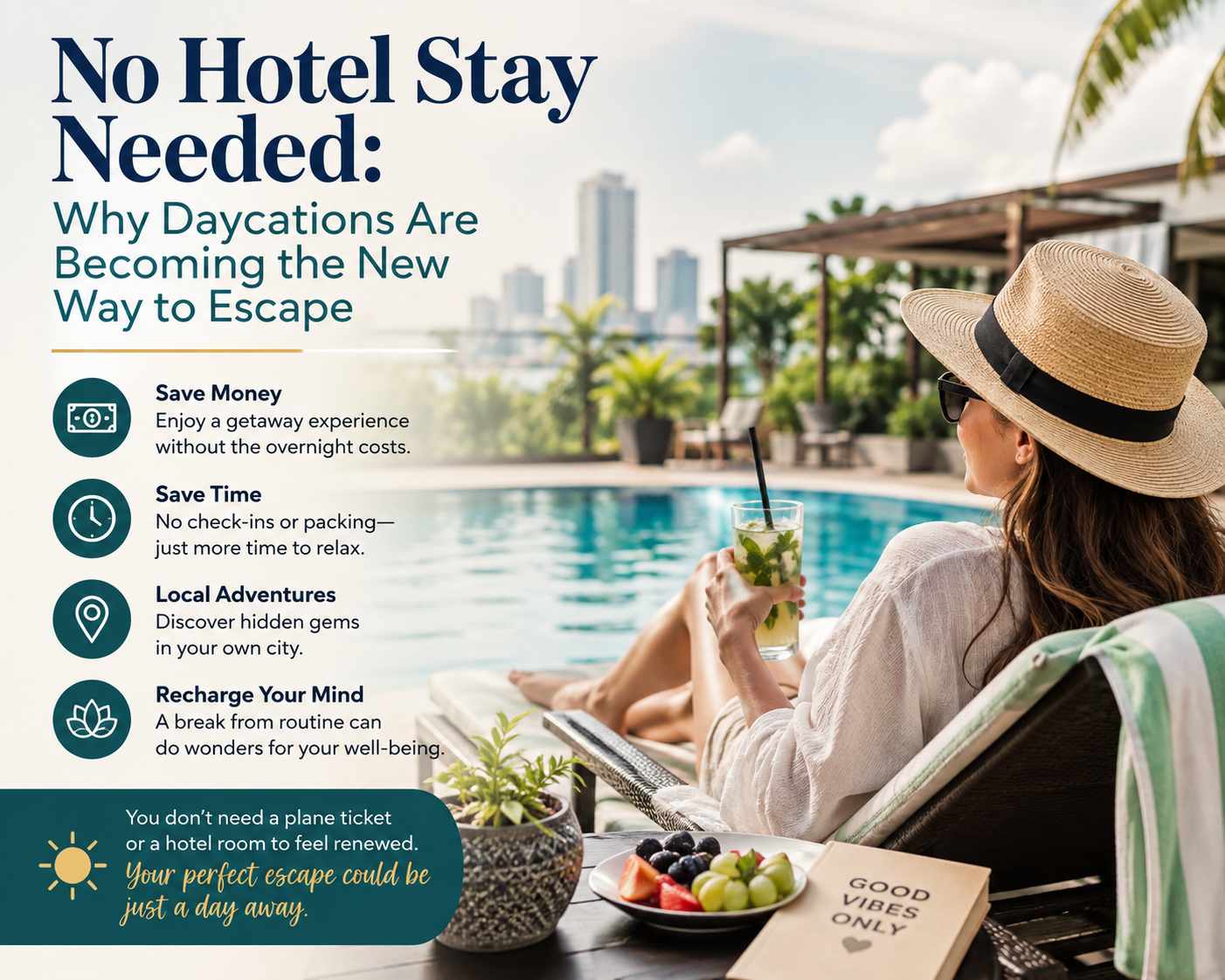
Sept 01: Hotel daycations are emerging as a flexible new way to travel, allowing people to enjoy luxury, wellness, dining and resort experiences without booking an overnight stay. For consumers with busy schedules, limited time or simply a desire to break away from routine, a few hours at a hotel can feel like a mini holiday.
Not every escape needs a suitcase. Sometimes, all it takes is a swimming pool, a good meal, a spa treatment and a few hours away from everyday life. That is the appeal behind hotel daycations, where guests enjoy a property’s facilities during the day and return home before nightfall.
Why Hotel Daycations Are Becoming Popular
Time and convenience are becoming increasingly important to modern travellers. A traditional holiday often involves planning transportation, packing, arranging accommodation and taking several days away from work. A daycation removes much of that effort.
Guests can leave home in the morning, spend the day at a hotel or resort and return the same evening. They can also choose experiences based on their interests, whether that means a spa session, pool access, fine dining or simply relaxing in a luxurious environment.
The concept builds on the popularity of staycations but takes it a step further. Travellers do not even need to spend the night.
India’s Tourism Growth Creates an Opportunity
India’s expanding domestic tourism market provides a strong foundation for shorter travel experiences such as hotel daycations.
The Ministry of Tourism received an allocation of ₹2,541.06 crore for 2025–26, while the government’s tourism strategy has included plans to develop 50 top tourist destinations in partnership with states.
The domestic market is equally important. According to the World Travel & Tourism Council, domestic travel spending in India reached ₹15.5 trillion in 2024, around 22% above 2019 levels. India’s Travel & Tourism sector contributed nearly ₹21 trillion to the economy in 2024.
These figures do not represent daycation spending specifically, but they demonstrate the scale of India’s travel market and the opportunity for hotels to attract consumers looking for shorter, experience-led leisure options.
Wellness Is Giving Daycations a Push
Wellness is another major reason the concept is gaining attention. Not everyone has the time or budget for a multi-day wellness retreat, but spending an afternoon at a hotel spa, joining a yoga session or enjoying a healthy meal can be much easier.
The Global Wellness Institute estimates that the global wellness economy reached $6.8 trillion in 2024, while wellness tourism expenditure reached $893.9 billion. Asia-Pacific accounted for approximately $215 billion in wellness tourism expenditure during the same year.
Hotel daycations are only one part of this wider trend, but they fit naturally into it. Hotels can combine spa treatments, wellness activities, healthy dining and leisure facilities into convenient packages.
5 Indian Destinations Perfect for Hotel Daycations
India’s mix of beaches, heritage, wellness destinations and major cities creates several natural markets for daycations.
Goa is an obvious choice, with its beach resorts, pools, spas and restaurants. A daycation can allow visitors to enjoy the resort lifestyle without adding another night to their itinerary.
Jaipur offers a different experience. Its heritage hotels and palaces can combine traditional architecture, Rajasthani cuisine, wellness treatments and luxury facilities into memorable daytime experiences.
Kerala is particularly suited to wellness daycations. Resorts around Kumarakom, Kovalam and Alleppey can combine Ayurveda, spa treatments, backwater views and local cuisine for travellers seeking relaxation.
Udaipur brings a royal setting to the concept. Lake views, heritage properties and luxury hospitality can turn a simple daytime visit into a premium experience.
Mumbai shows that daycations do not have to be limited to traditional tourist destinations. City residents can use luxury hotels, spas, restaurants and rooftop venues as convenient escapes from urban life.
Hotels Are Selling Experiences, Not Just Rooms
For decades, hotel revenue revolved largely around room bookings. The daycation trend encourages properties to think differently.
A swimming pool, restaurant, spa, gym, garden or lounge can become part of a bookable experience even when the customer is not staying overnight.
Hotels can offer pool-and-lunch packages, spa experiences, family day passes, couple packages, brunch experiences and private day-use rooms.
This is closely connected to the growth of the experience economy, where consumers increasingly value memorable activities over simply purchasing products or accommodation.
Daycations Fit Modern Lifestyles
Busy professionals, families, couples and groups of friends can all find different uses for a daycation.
A professional may want a quiet place to work before spending the afternoon relaxing. A family can enjoy a resort pool without planning a full weekend trip. Couples can turn a birthday or anniversary into a spa-and-dining experience.
Social media is also adding to the appeal. Attractive pools, rooftop restaurants, heritage interiors and wellness spaces can become experiences worth photographing and sharing, giving hotels additional organic visibility.
The Challenge for Hotels
The growth of day visitors also brings challenges. Hotels must ensure that daycation guests do not negatively affect overnight customers.
Crowded pools, busy restaurants or limited spa availability can reduce the quality of the experience. Hotels will therefore need effective capacity management, timed access and packages designed for specific audiences.
The objective should not simply be to sell more day passes, but to create a premium experience that encourages customers to return.
The Future of Hotel Daycations
Hotel daycations are unlikely to replace traditional holidays. Instead, they are becoming another way for consumers to experience leisure.
A major vacation may still happen once or twice a year, but smaller day escapes can fill the gaps in between.
For India’s hospitality industry, the opportunity is significant. Rising domestic travel, investment in tourism destinations and growing interest in wellness are creating an environment where hotels can look beyond overnight accommodation.
For travellers, the attraction is simple: no airport, no suitcase and no long itinerary—just a few hours somewhere that feels different.
As the meaning of travel continues to evolve, the perfect getaway may no longer require a week away. Sometimes, one good day is enough.