


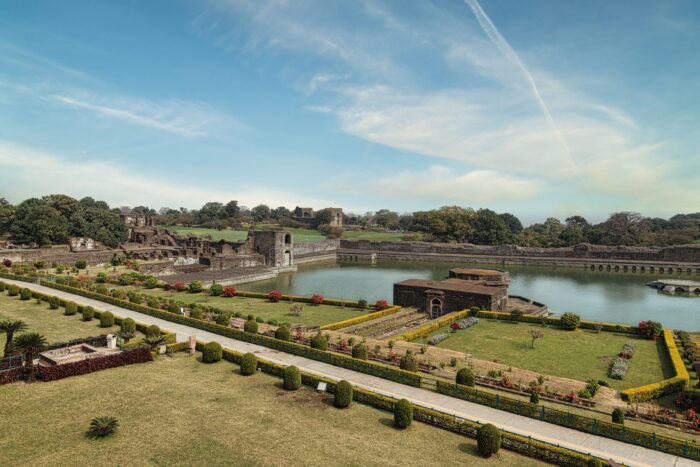
Nestled in the heart of Madhya Pradesh, the ancient city of Mandu is a treasure trove of history, romance, and architectural brilliance. Perched atop the Vindhya Hills, this fortified city is renowned for its magnificent palaces, grand gateways, serene lakes, and timeless monuments that transport visitors back to the glory of the Malwa Sultanate.
Among Mandu’s many attractions, Jahaz Mahal, Hindola Mahal, and Roopmati Pavilion stand out as iconic historical landmarks that captivate history enthusiasts, architecture lovers, and photographers alike. Each monument tells a fascinating story of royal grandeur, engineering excellence, and enduring romance, making Mandu one of India’s most enchanting heritage destinations.
Why Visit Mandu?
Often referred to as the “City of Joy,” Mandu boasts over 60 historical monuments spread across a scenic plateau surrounded by lush greenery. During the monsoon and winter seasons, the landscape becomes even more picturesque, with mist-covered hills, overflowing lakes, and pleasant weather creating the perfect setting for exploring its architectural wonders.
Whether you’re planning a weekend getaway or a heritage tour, Mandu offers an unforgettable journey into India’s glorious past.
Jahaz Mahal: The Magnificent Ship Palace
The most famous monument in Mandu, Jahaz Mahal, literally translates to “Ship Palace.” Built during the reign of Sultan Ghiyas-ud-din Khilji in the 15th century, this extraordinary structure appears to float gracefully between the Munj Talao and Kapur Talao lakes, giving it the appearance of a majestic ship sailing on water.
Stretching over 100 meters in length, Jahaz Mahal showcases the brilliance of Indo-Islamic architecture. Its elegant arches, spacious terraces, intricate balconies, and beautiful water channels demonstrate the advanced engineering techniques of medieval India.
Originally designed as a royal retreat for the Sultan’s extensive royal household, the palace offered luxurious living spaces while maintaining natural ventilation and cooling through its sophisticated water management system.
Highlights of Jahaz Mahal
- Stunning reflection over surrounding lakes
- Beautiful rooftop terraces
- Intricate arches and balconies
- Historic water conservation system
- Spectacular sunrise and sunset views
Its unique architecture and scenic surroundings make Jahaz Mahal one of the most photographed monuments in Madhya Pradesh.
Hindola Mahal: The Palace of Swinging Walls
Located within the Royal Enclave of Mandu, Hindola Mahal, or the “Swing Palace,” is famous for its dramatically sloping walls that create the illusion of movement, resembling a giant swing.
Constructed during the late 15th century, this T-shaped audience hall served as a venue for royal ceremonies and court gatherings. Its massive buttressed walls not only provided structural strength but also showcased innovative architectural design that distinguished it from other palaces of the era.
The palace’s lofty ceilings, elegant arches, and minimalistic yet imposing interiors reflect the grandeur of the Malwa Sultanate.
Must-See Features
- Unique slanting walls
- Massive audience hall
- Persian-inspired architecture
- Elegant stone carvings
- Beautiful surrounding gardens
Despite its simplicity, Hindola Mahal remains one of Mandu’s finest examples of medieval engineering and architectural creativity.
Roopmati Pavilion: A Monument of Love and Beauty
No visit to Mandu is complete without exploring the romantic Roopmati Pavilion, one of India’s most picturesque heritage sites.
Situated on the southern edge of the plateau, this pavilion offers breathtaking panoramic views of the Narmada Valley and the Vindhya ranges. Originally built as a military observation post, it later became closely associated with the legendary love story of Sultan Baz Bahadur and Queen Roopmati.
According to local folklore, Roopmati wished to see the sacred Narmada River every day before eating her meals. The pavilion’s elevated location allowed her to fulfill this wish while enjoying magnificent views of the surrounding countryside.
Today, the monument continues to captivate visitors with its romantic atmosphere and spectacular sunsets.
Top Attractions
- Panoramic valley views
- Historic royal architecture
- Stunning sunset photography
- Connection to Baz Bahadur and Roopmati’s love story
- Peaceful surroundings
Its timeless beauty has made Roopmati Pavilion one of Mandu’s most iconic landmarks.
Best Time to Visit Mandu
The ideal time to explore Mandu is between July and March.
- Monsoon (July–September): The city comes alive with lush greenery, overflowing lakes, and misty landscapes, making it one of the most scenic heritage destinations in India.
- Winter (October–March): Pleasant temperatures make sightseeing comfortable and enjoyable.
Early mornings and late afternoons provide the best lighting for photography while allowing visitors to avoid the midday heat.
Travel Tips for Exploring Mandu
To make your visit memorable:
- Wear comfortable walking shoes.
- Carry drinking water and sunscreen.
- Hire a local guide to understand the fascinating history behind each monument.
- Allocate at least one full day to explore Mandu’s major attractions.
- Visit during the monsoon for the most picturesque landscapes.
Nearby Attractions
While exploring Mandu, don’t miss these nearby heritage sites:
- Baz Bahadur Palace
- Jami Masjid
- Hoshang Shah’s Tomb
- Rewa Kund
- Ashrafi Mahal
- Nilkanth Temple
Together, these monuments offer a deeper understanding of Mandu’s glorious past and architectural heritage.
Why Mandu Should Be on Every Traveler’s Bucket List
Mandu is far more than a collection of ancient ruins. It is a living museum that beautifully preserves stories of romance, royalty, artistic excellence, and architectural innovation. Every palace, pavilion, and gateway reflects centuries of history while offering visitors breathtaking natural beauty.
Whether you’re fascinated by medieval architecture, intrigued by India’s royal history, or simply seeking an offbeat travel destination, Mandu promises an unforgettable experience.
Conclusion
The timeless charm of Jahaz Mahal, Hindola Mahal, and Roopmati Pavilion makes Mandu one of India’s most captivating heritage destinations. These architectural masterpieces showcase the brilliance of the Malwa Sultanate while narrating stories of love, power, and artistic excellence that continue to inspire travelers from around the world.
From the floating elegance of Jahaz Mahal and the striking design of Hindola Mahal to the romantic vistas of Roopmati Pavilion, every monument offers a unique glimpse into India’s rich cultural legacy. If you’re planning your next historical getaway, add Mandu to your travel itinerary and discover why these magnificent landmarks remain among the country’s most treasured architectural marvels.