


Mumbai, May 07: NMIMS University hosted Sui Generis, a multi-speaker event focused on creativity, individuality, and human relevance in the age of artificial intelligence, bringing together researchers, entrepreneurs, mental health experts, creators, and students for a day of reflection and dialogue.
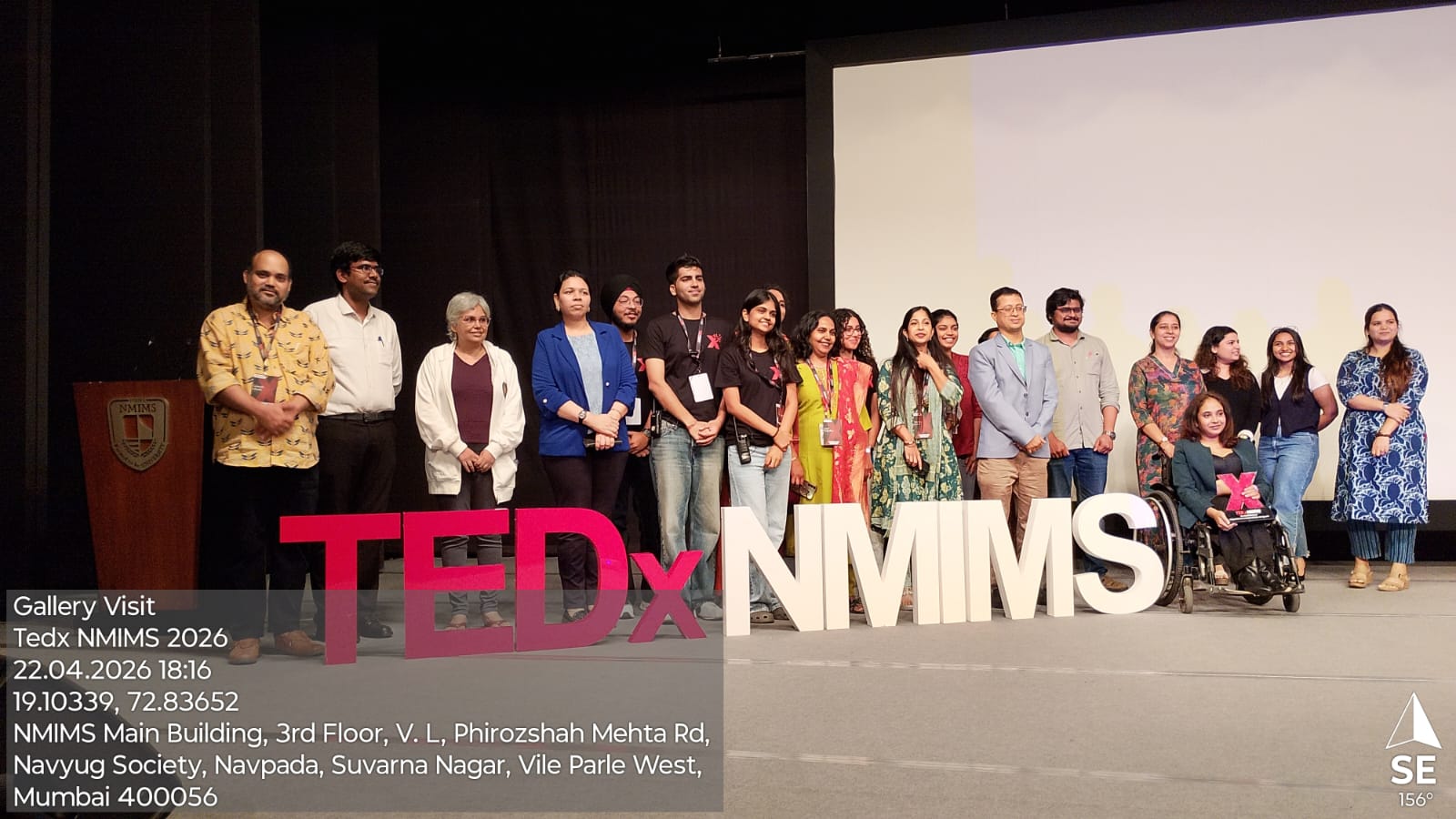
Held at the Mumbai campus auditorium, the event opened with the Saraswati Vandana and the university anthem before introducing the central theme — Sui Generis, a Latin phrase meaning “one of a kind.” The discussions centered on a defining modern question: as artificial intelligence increasingly generates content, designs, and decisions, what remains uniquely human?
The speaker sessions began with Dr Arjun Ghosh, who explored the relationship between language, technology, and historical archives. Speaking about linguistic representation in AI systems, he emphasized the need for inclusive technological development.
“The question is no longer whether machines can understand language. The question is: whose language will they choose to understand?” he said.
Entrepreneur and sustainability founder Ayush Bagga highlighted the growing importance of curiosity and original thinking in an AI-driven world. Referring to innovators including Albert Einstein, Nikola Tesla, Nandan Nilekani, and Richa Kar, he argued that transformative innovation begins with asking unconventional questions.
“In a world where every answer is one prompt away, the person who wins is the one who asks questions no one else thought to ask,” he said.
Writer and entrepreneur Namrata Chawla spoke about adapting to AI-driven workplaces and emphasized the continued importance of human perspective and creativity.
“AI has no taste. It has no lived experience. You are the tastemaker,” she said.
Mental health expert Dr Rashi Agarwal addressed the psychological and cognitive implications of overdependence on AI tools, introducing the idea of “cognitive debt” and encouraging audiences to seek technologies that challenge rather than merely validate human thinking.
One of the most impactful moments of the event came from Maahi Rudawat, a 21-year-old wheelchair user born with Spina Bifida, who highlighted the empowering role of AI-enabled assistive technologies.
“For many, this is innovation. For us, this is independence,” she said, referring to AI-powered mobility and accessibility solutions.
The event concluded with an address by Joel James, who encouraged students to embrace their individual experiences and unique strengths that cannot be replicated by algorithms.
“Play where only you can win,” he told the audience.
Reflecting on the initiative, Niharika Dusi, who secured the license to organize TEDx NMIMS 2026, said the event created a meaningful space for dialogue around AI, creativity, and the human mind.
The speakers were felicitated by Dr Meena Chintamaneni and Dr Tanmoy Chakraborty.
Closing the event, Dr Meena Chintamaneni encouraged students and organizers to expand the initiative further and continue fostering conversations around innovation, creativity, and the evolving relationship between humans and technology.
