


Chennai, June 1: Indian Institute of Technology Madras researchers have released a new report outlining a roadmap to position India as a global leader in Extended Reality (XR) technologies and innovation.
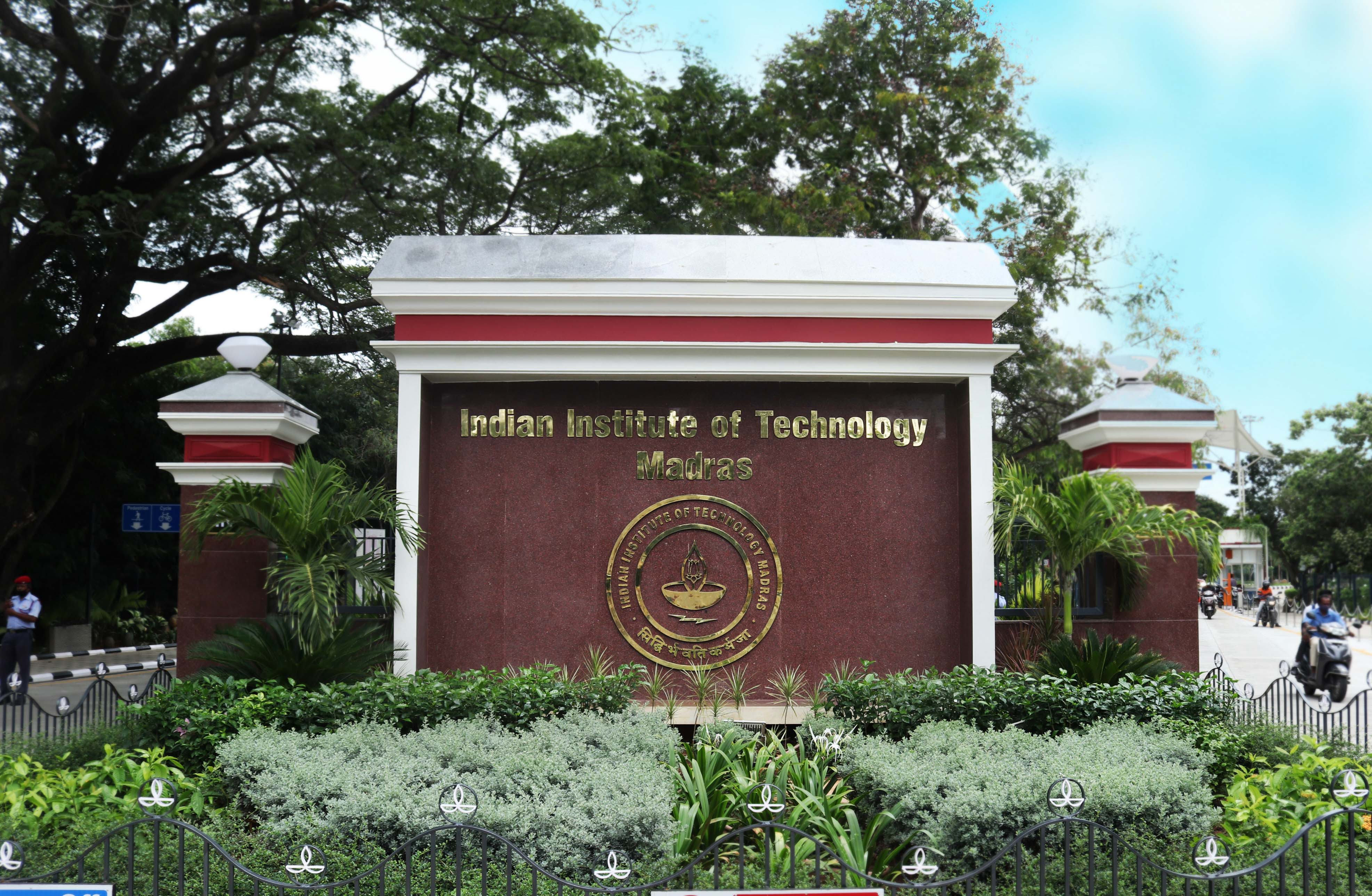
Titled ‘Bolstering India’s XR Startup and Innovation Ecosystem: TN AVGC-XR Policy 2026’, the report analyses the recently-announced Tamil Nadu AVGC-XR Policy 2026 and presents recommendations for both State and Central policymakers to build a sustainable and globally-competitive XR ecosystem.
Among its key recommendations is the call to recognise XR hardware manufacturing as a strategic sector. The researchers recommend leveraging Tamil Nadu’s existing electronics manufacturing corridors to build indigenous capabilities in Head-Mounted Displays, trackers and haptic interfaces, thereby reducing import dependence and strengthening India’s position in the global XR hardware value chain.
The report, brought out by Metaverse India Policy and Standards (MIPS) Committee of Experiential Technology Innovation Centre (XTIC), IIT Madras, comes at a time when India’s XR ecosystem is witnessing rapid growth, with more than 1,000 startups and 1,000 SMEs currently operating in the sector.
While appreciating Tamil Nadu’s ambition to capture 20 per cent of India’s XR market and generate 200,000 service-oriented jobs, the report cautions that relying solely on a “service provider” model could limit long-term value creation and global competitiveness.
Elaborating on the role of infrastructure as a critical enabler, Prof. M. Manivannan, Faculty Head, XTIC, IIT Madras, said,
“We propose the creation of a State-level compute infrastructure such as a ‘TN-XR Cloud’, which would provide subsidised access to high-end Graphics Processing Units (GPUs) for startups, researchers and academic institutions working on compute-intensive AI and XR applications.”
Prof. M. Manivannan, also a faculty in the Department of Applied Mechanics and Biomedical Engineering, IIT Madras, added,
“As a natural extension to the current AI wave, XR Wave is imminent, which is also called Physical AI and Embodied AI. We have also identified major Education Gap within the sector and have recommended making academia the anchor of the XR innovation ecosystem. Our key suggestions include introducing a State-wide XR Curriculum Framework along with AI and launching a dedicated ‘TN XR Fellowship’ to support MS and PhD researchers working in specialised domains such as haptics, spatial computing and sensor integration.”
One of the key recommendations of the report is the adoption of a “50-50 workforce design principle,” which advocates ensuring that at least half of the projected 2 million XR jobs by 2030 are focused on high-value areas such as original Intellectual Property (IP) creation, game engine development, AI-driven immersive technologies and advanced research and development.
The report also recommends establishing an integrated “XR Corridor” or “XR Superhighway” framework, combining XR Innovation Centres, Skill Development Centres and Manufacturing Hubs into a coordinated ecosystem capable of supporting long-term growth and technology leadership.
The analysis also highlights several policy “blind spots” that require urgent attention, including the absence of dedicated frameworks for AI-generated XR assets, generative immersive environments, metaverse governance and child safety standards.
Real-world applications
The report outlines several transformative real-world use cases for common people, ranging from enhanced medical access in rural areas to immersive educational tools even in online courses. These applications leverage XR (Extended Reality), haptics, and AI to solve practical challenges
Student and youth participation
The report shows clear pathways for students and youth. They need to learn not just XR application development but also the fundamentals of XR. The NPTEL Course “Foundations of Virtual Reality,” which is currently open for registrations, is one of the very few fundamental courses in XR globally, offered every fall semester. Every student and working professionals interested in a career in XR are encouraged to take the course.
Opportunities in the XR ecosystem
The XR ecosystem presents a massive opportunity for India to pivot from a service-oriented digital workshop to a global leader in deep-tech innovation. Key growth areas include developing high-value applications for healthcare (remote surgeries), defence (simulators), and manufacturing (digital twins), while leveraging AI-GenAI – AgenticAI pipelines to drastically compress production cycles. Additionally, there are significant prospects in treating XR hardware manufacturing as a strategic priority and establishing state-level compute infrastructure to anchor the next generation of immersive startups
Economic impact on ordinary citizens and MSMEs
For ordinary citizens, these technologies democratize access to high-quality services, such as reducing medical errors in rural clinics by 50% through remote diagnostics and slashing the time required to acquire new professional skills by 40–75%. MSMEs are poised to benefit from dedicated financial incentives, subsidized access to high-end GPU compute infrastructure, and participation in a strategic market aiming for a $1 trillion economy contribution.