


New Delhi, Nov 13: Prime Minister Narendra Modi has called for a technology-driven transformation of India’s agriculture sector, stressing that modern farming, crop diversification and greater economic opportunities for farmers will be essential to achieving the vision of a Viksit Bharat.
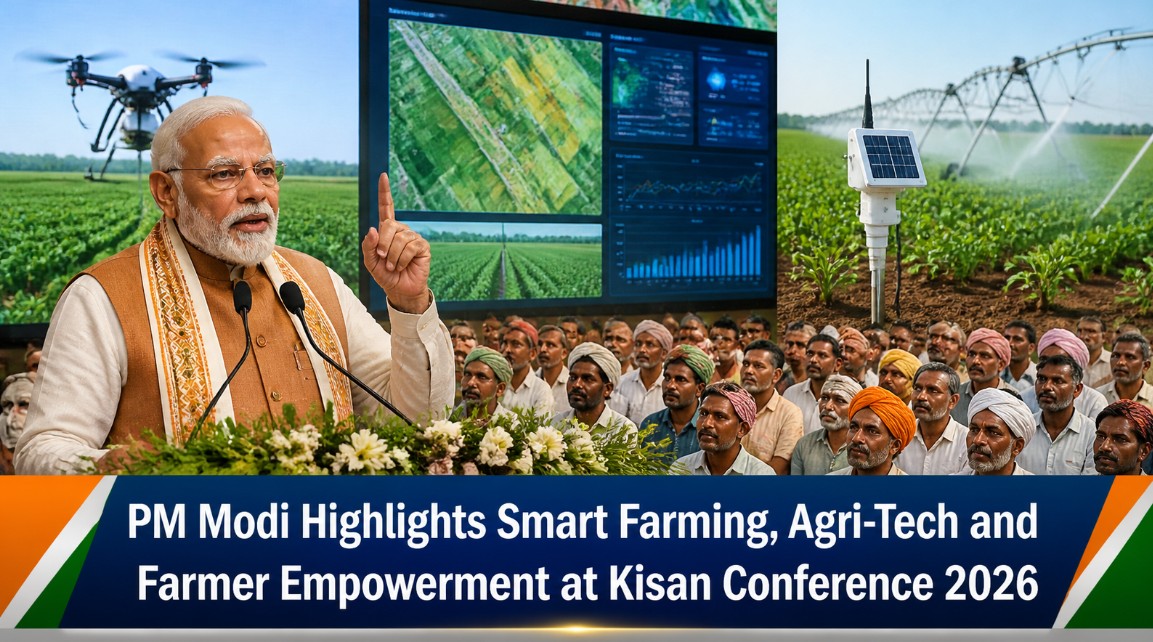
Representational Image
Addressing the Kisan Tak Bharat Agriculture Conference 2026 on November 12, the Prime Minister highlighted the growing role of technology, scientific research, renewable energy and agricultural entrepreneurship in strengthening rural India’s economy. The conference brought together farmers, agricultural scientists and agri-entrepreneurs from across the country.
Emphasising that agriculture remains central to India’s cultural and economic identity, Modi said the country’s development ambitions cannot be realised without improving agricultural productivity and ensuring greater prosperity for farmers. He noted that farming is deeply connected with India’s festivals, traditions and social life, making the sector much more than an economic activity.
Agricultural growth key to India’s development
Referring to India’s progress in poverty reduction and agricultural production, the Prime Minister highlighted the sector’s average annual growth rate of more than 4 per cent over the first decade of the period cited in his address. He also pointed to a reported decline in rural poverty and improvements in the economic conditions of small farmers and agricultural labourers.
Modi said India has strengthened its position in global agricultural production, emerging as the world’s largest producer of milk, pulses, jute, rice and millets, while ranking second in wheat, cotton, fruits, vegetables and fish.
He also highlighted agricultural exports exceeding Rs 4 lakh crore annually, describing the achievement as evidence of the growing capabilities of Indian farmers.
However, the Prime Minister stressed that future agricultural prosperity would require farmers to move beyond the traditional dependence on wheat, rice and sugarcane. He called for greater crop diversification and the expansion of allied sectors to create additional sources of income.
Dairy, fisheries and horticulture offer new income opportunities
Highlighting the expansion of India’s allied agricultural sectors, Modi cited significant growth in milk, egg, fish, honey and horticulture production over the past decade.
According to the figures shared by him, milk production has increased by nearly 70 per cent, while egg production has risen by around 90 per cent. Fish production has more than doubled, and honey output has grown from approximately 80,000 tonnes to 1.5 lakh tonnes.
Horticulture production has also increased from around 280 million tonnes to more than 350 million tonnes.
The Prime Minister said these developments reflect the importance of diversifying agricultural activities and integrating different sectors into a broader strategy for improving farmers’ incomes.
PM-KUSUM turns farmers into energy producers
Underscoring the growing connection between agriculture and renewable energy, Modi highlighted the contribution of the PM-KUSUM scheme in promoting solar power among farmers.
He said nearly 12 lakh solar pumps have been provided under the initiative, helping cultivators reduce electricity expenses while creating opportunities to generate additional income by producing and supplying solar energy.
Describing the development as a solar power revolution in rural India, the Prime Minister said the initiative was transforming farmers from Annadatas (food providers) into Urjadatas (energy providers).
‘Lab to Land’ approach to strengthen scientific farming
Recalling his experience as Gujarat Chief Minister, Modi spoke about the state’s Krishi Mahotsavs, through which agricultural scientists and experts visited villages to assess soil conditions, water availability and farming practices.
He said the initiative helped take scientific knowledge directly from laboratories to farmers’ fields, enabling cultivators to make informed decisions about crops and agricultural methods.
Extending this approach nationally, the Prime Minister highlighted the expansion of agricultural infrastructure. He said the number of soil testing laboratories had increased from a few hundred in 2014 to more than 8,400, while the country now has over 725 Krishi Vigyan Kendras.
He also highlighted efforts to protect livestock through vaccination programmes against Foot and Mouth Disease, stating that free vaccines had been administered to livestock belonging to more than eight crore farmers.
Namo Drone Didis demonstrate technology’s rural potential
The Prime Minister also highlighted the role of women in bringing advanced technology to agriculture, citing the work of Namo Drone Didis.
He said women operating agricultural drones are demonstrating how modern technology can be effectively deployed in villages, particularly for spraying fertilisers and pesticides.
Modi called for expanding the use of engineering, artificial intelligence and sensor-based technologies in agriculture. He noted that affordable machinery and smart farming tools could help reduce cultivation costs, improve efficiency and provide farmers with accurate information for better decision-making.
Focus on agri-startups and farmer entrepreneurship
Highlighting the emerging opportunities in agricultural engineering and innovation, the Prime Minister urged young people, scientists and entrepreneurs to explore solutions that address the practical challenges faced by farmers.
He stressed the need to move beyond agricultural production towards value addition, food processing and access to export markets.
In this context, he pointed to the development of a network of 10,000 Farmer Producer Organisations (FPOs), which brings small farmers together and helps them improve their collective bargaining power, create value-added products and access wider markets.
The Prime Minister said the government’s broader objective is to encourage farmers to become agricultural entrepreneurs rather than remain limited to conventional cultivation practices.
Government highlights support on fertiliser and fuel costs
Addressing concerns over rising agricultural input costs, Modi said the government had spent around Rs 16 lakh crore over the past 12 years to make fertilisers available to farmers at affordable prices.
He cited the example of DAP fertiliser, which he said costs approximately Rs 5,000 per bag in the international market but is supplied to Indian farmers at around Rs 1,300. Similarly, urea, valued at nearly Rs 3,000 per bag internationally, is being made available for less than Rs 300.
The Prime Minister also spoke about measures taken to protect farmers and consumers from international fluctuations in crude oil prices. Referring to the sharp rise in global oil prices amid tensions in West Asia, he said the government absorbed a substantial portion of the additional cost to limit the increase in domestic diesel prices.
According to Modi, the government absorbed Rs 43 per litre of the additional burden, while diesel prices were increased by only Rs 7 per litre. He added that this support was costing the government around Rs 14,000 crore per month.
Building a Viksit Bharat through prosperous farmers
Concluding his address, Modi called for collective efforts to build a modern and economically stronger agricultural sector, with prosperous farmers and thriving rural communities at its centre.
He expressed confidence that the ideas and recommendations emerging from the Kisan Tak Bharat Agriculture Conference would contribute to future policy initiatives and assured participants that the government would consider constructive suggestions.
The Prime Minister’s address placed the emphasis on a broader transformation of Indian agriculture — one that combines scientific research, digital technology, renewable energy, allied activities and entrepreneurship to improve farm incomes and strengthen the rural economy.