


Odisha is known for its rich cultural heritage, and Pattachitra is one of its oldest traditional art forms. The word Pattachitra comes from the words “Patta” meaning cloth or canvas and “Chitra” meaning picture. It is a unique style of painting created on specially prepared cloth using natural colors, fine detailing, and traditional storytelling techniques.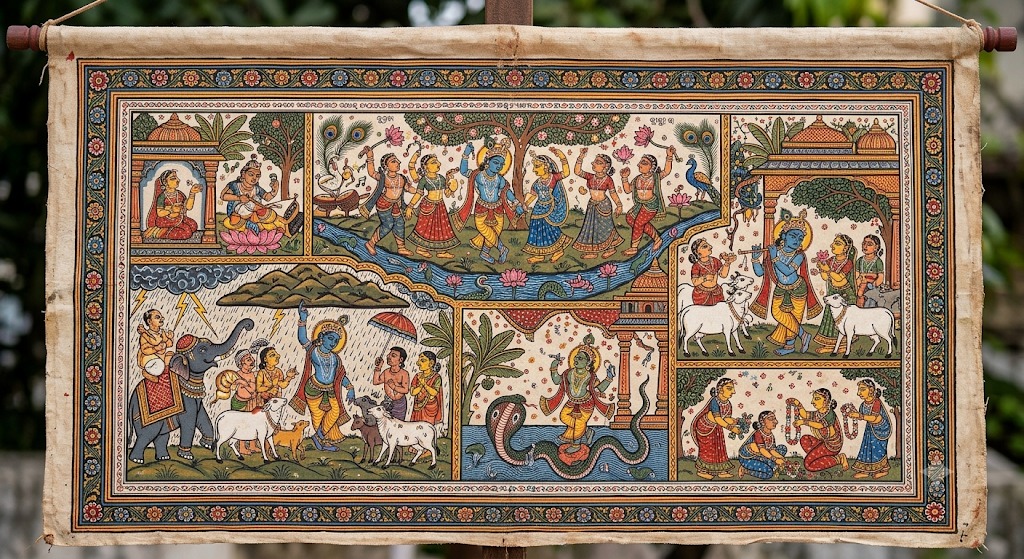
Raghurajpur: The Cultural Centre and Historical Roots of Pattachitra
Raghurajpur, located near Puri, is the main hub of Odisha’s Pattachitra tradition, where generations of Chitrakars have preserved this ancient cloth-based painting style. The village’s artist families continue to practice this craft, with many homes serving as traditional studios.
The origins of Pattachitra are closely linked with Odisha’s temple culture, especially the traditions of the Jagannath Temple. For centuries, these paintings have depicted stories of gods, goddesses, and mythological events, helping preserve the state’s religious beliefs, history, and cultural identity.
Themes of Pattachitra Paintings
Pattachitra paintings mainly focus on religious and mythological subjects. Some of the major themes include:
- Stories of Lord Jagannath – Paintings related to the rituals, festivals, and traditions of the Jagannath Temple.
- Krishna Leela – Scenes showing the life and activities of Lord Krishna.
- Ramayana and Mahabharata – Episodes from ancient Indian epics.
- Images of Gods and Goddesses – Representations of Hindu deities with symbolic meanings.
- Nature and Decorative Motifs – Designs featuring flowers, animals, trees, and traditional patterns.
Each painting works as a visual story, where every figure and symbol has cultural significance.
Process of Making Pattachitra
The making of a Pattachitra painting involves several traditional steps:
1. Preparation of the Canvas
- Artists prepare the canvas using cotton cloth.
- Two layers of cloth are joined together using a natural gum made from tamarind seeds.
- A mixture of chalk powder and gum is applied to make the surface smooth and strong.
2. Drying and Polishing
- The prepared cloth is dried naturally.
- The surface is polished with a smooth stone or wooden object to create a fine painting base.
3. Drawing the Outline
- Artists create the first sketch using fine brushes.
- Detailed outlines are drawn carefully before adding colors.
4. Applying Natural Colors
- Traditional colors are prepared from natural materials:
- White – made from powdered conch shells
- Black – made from lamp soot
- Red and yellow – obtained from natural minerals and plants
- Green and blue – created from natural sources
5. Detailing and Decoration
- Artists fill the painting with bright colors and add fine patterns.
- Decorative borders are created around the artwork, which are a special feature of Pattachitra.
6. Final Finishing
- The completed painting is coated to protect it and increase durability.
- The finished artwork is carefully checked for details and balance.
Unique Features of Pattachitra
- Use of Natural Colors: Traditional artists use colors made from natural materials instead of synthetic paints.
- Detailed Line Work: Fine outlines and precise designs give the paintings a distinctive appearance.
- Decorative Borders: Most paintings contain beautiful borders with traditional patterns.
- Full Use of Space: Artists usually fill the entire canvas without leaving empty areas.
- Mythological Storytelling: Every painting communicates a story, belief, or cultural idea.
- Traditional Techniques: The methods of preparation and painting have remained almost unchanged for centuries.
- Symbolic Representation: Figures, colors, and patterns often carry deeper religious meanings.
Cultural Importance
Pattachitra is an important part of Odisha’s cultural heritage. It preserves ancient stories, traditions, and religious practices through visual art. The dedication of Chitrakar families has helped keep this art form alive across generations.
Pattachitra in Modern Times
Today, Pattachitra continues to grow while maintaining its traditional roots. Artists create paintings on different materials such as palm leaves, silk, and decorative objects. Modern themes have also been introduced, allowing the art form to reach wider audiences.
Despite these changes, the traditional style, craftsmanship, and storytelling nature of Pattachitra remain preserved.
Conclusion
Pattachitra of Odisha is a beautiful combination of art, history, and spirituality. Its vibrant colors, detailed designs, and mythological themes make it one of India’s most valuable traditional art forms. It continues to connect the past with the present and represents the creativity and cultural pride of Odisha.