


Chennai, Nov 3 (UDN): The northeast monsoon has intensified across parts of southern India under the influence of Severe Cyclonic Storm Murasu, which crossed the southern Andhra Pradesh coast near Ongole early Tuesday, triggering heavy rainfall, strong winds and rough sea conditions across coastal areas.
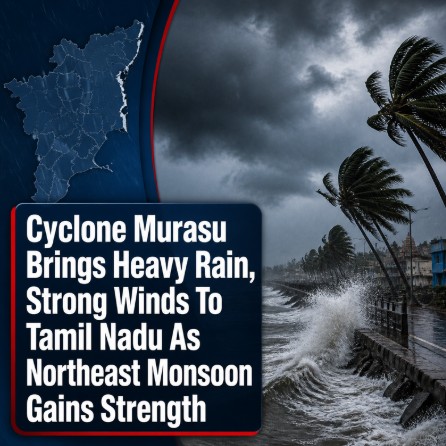
Representational Image
Although the storm moved inland over Andhra Pradesh, its impact was felt in neighbouring Tamil Nadu and Puducherry, where unsettled weather and continuous rainfall were reported.
According to the India Meteorological Department (IMD), Cyclone Murasu crossed the Andhra Pradesh coastline between Nellore and Narsapur, near Ongole, during the early hours of Tuesday, between 3:30 am and 5:30 am.
At the time of landfall, the system was packing sustained wind speeds of 100-110 kmph, with gusts reaching up to 120 kmph. The cyclone crossed the coast near latitude 15.53 degrees north and longitude 80.22 degrees east.
Cyclone Triggers Heavy Rainfall And Coastal Disruption
The storm had intensified into a severe cyclonic system over the Bay of Bengal early Monday before advancing towards the northwest. As it approached the Andhra Pradesh coast, its circulation influenced weather conditions across northern Tamil Nadu and adjoining regions.
Puducherry witnessed continuous rainfall from midnight, while several areas along the southern Andhra Pradesh coast experienced intense showers and powerful winds.
Ongole and nearby coastal settlements bore the brunt of the storm as it approached land. In Chirala, strong winds uprooted trees, while high waves battered stretches of the coastline, raising concerns over damage to property and disruption to normal activities.
Rough sea conditions were also reported along coastal areas as the cyclone’s circulation moved closer to land.
Storm’s Movement Influences Northeast Monsoon
Before making landfall, Cyclone Murasu was positioned over the west-central Bay of Bengal, approximately 160 km from Chennai and 180 km from Nellore.
Its movement towards the Andhra Pradesh coast contributed to intensified rainfall activity across parts of northern Tamil Nadu, where the northeast monsoon is currently active.
The cyclone’s influence highlights the significant role of weather systems developing over the Bay of Bengal in shaping rainfall patterns across India’s eastern and southeastern coastal regions during the northeast monsoon season.
Coastal Areas Remain Under Weather Watch
With the cyclone maintaining considerable intensity during landfall, heavy rainfall, strong winds and rough seas remained major concerns for coastal communities.
The storm’s impact has also raised concerns over possible waterlogging, damage to infrastructure and disruption to transportation and everyday activities in affected areas.
The northeast monsoon remains an important source of rainfall for Tamil Nadu and neighbouring regions. Weather developments associated with Cyclone Murasu are therefore being closely watched as the system moves inland and its influence extends across parts of southern India.