


Chennai, June 5 : As environmental education moves beyond awareness to action, Beyond 8 is reimagining how young people learn sustainability by embedding it in real-world systems. On World Environment Day, the alternative high school highlighted experiential learning initiatives in Chennai and Bengaluru that transformed everyday spaces into active learning environments for understanding consumption, waste, and civic responsibility.
“Environmental understanding becomes more meaningful when learners engage with the systems that shape everyday life. Whether it is observing how a marketplace functions or participating in the restoration of a public space, they begin to see the connection between individual behavior and larger environmental outcomes,” said Raaji Naveen, Co-founder, Beyond 8.
“Sustainability cannot remain a theoretical concept taught within classroom walls. When learners experience it firsthand, they develop a deeper sense of responsibility and ownership. These experiences help them understand that positive environmental change is driven by everyday actions and collective participation,” said Naveen Mahesh, Co-founder, Beyond 8.
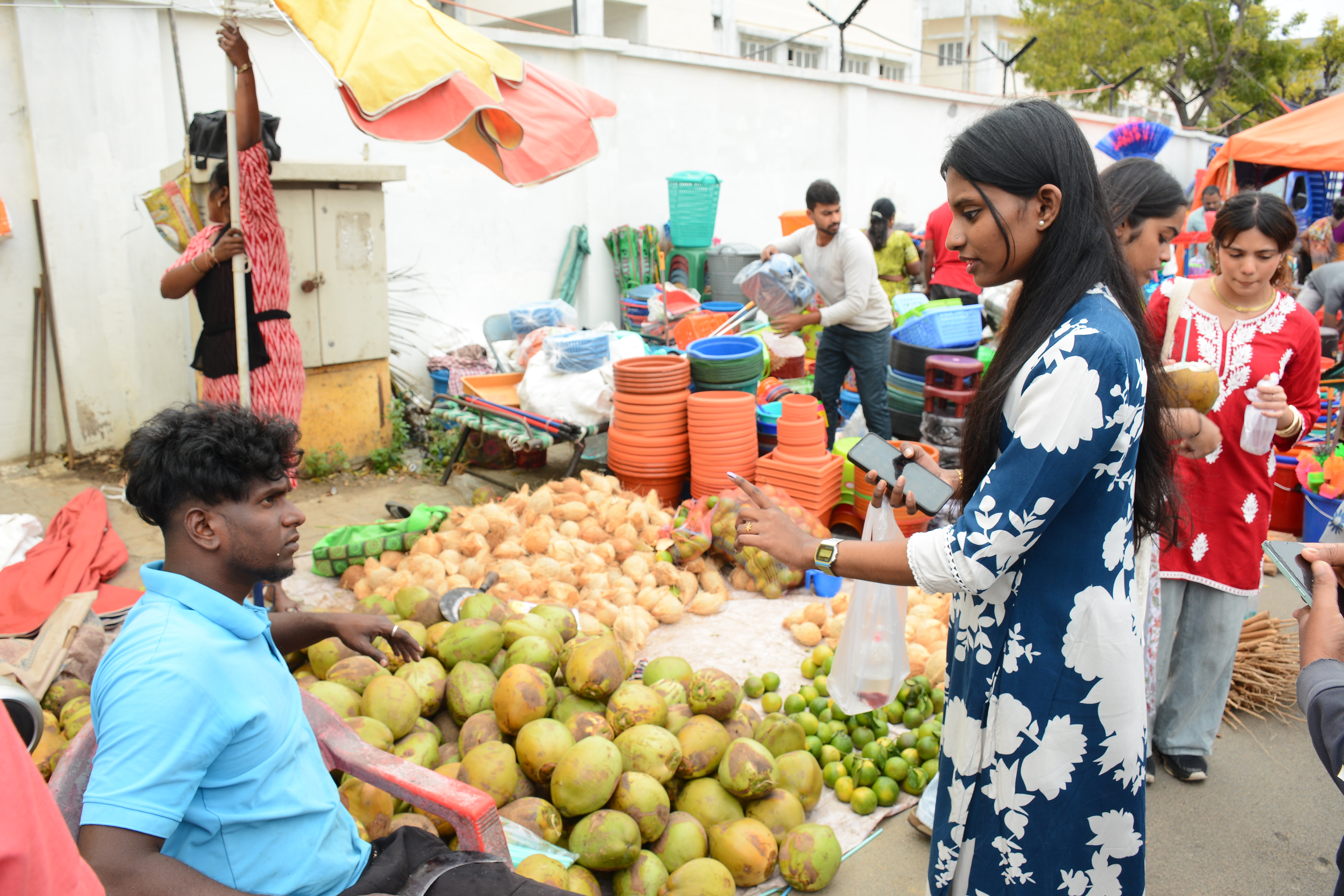
In Chennai, learners visited the historic Pallavaram Shandy, using the marketplace as a real-world learning environment to understand how local economic systems function. Through observation of vendor and consumer interactions, they explored pricing, demand and supply, and consumer behavior. The experience enabled learners to connect economic activity with environmental impact, particularly how consumption patterns and the movement of goods shape resource use and community ecosystems. The marketplace functioned as a living system where human behavior and environmental outcomes are closely linked.
In Bengaluru, learners participated in Kartavyam, a civic engagement programme focused on environmental responsibility, waste management, and community participation. The programme began with an orientation session introducing learners to its vision, purpose, and core values. Students were introduced to civic duties, personal responsibility, and the role of youth in driving social change, helping them understand how small actions collectively create meaningful impact in society.
The second session featured an interaction with Malini Parmar, Founder of Stonesoup.in, focused on waste segregation and sustainable living practices. Learners examined the growing challenge of waste generation and were encouraged to adopt responsible segregation practices in their daily lives. A key highlight of the programme was the completion of compost developed over a 40-day cycle, giving learners hands-on exposure to circular waste systems and demonstrating how organic waste can be converted into a usable resource.
The initiative culminated in a collaboration with The Ugly Indian, where learners participated in a public space improvement activity. The exercise reinforced civic ownership, collective responsibility, and the role of communities in restoring shared urban spaces.
Together, the Chennai and Bengaluru initiatives reflect Beyond 8’s experiential learning approach, where sustainability is taught not as a concept but as lived experience through markets, neighborhoods, and civic ecosystems that shape everyday life.