


India, Sep 10: Every psychiatrist and neurologist knows patients who have been on medication for months, are taking it as prescribed, and report feeling “better” but never treated. These patients are not the exception. Among people who seek treatment for depression and other psychiatric disorders, an estimated 50 to 55% only respond to medication partially or completely. Landmark trials such as STARD found that only about one in three patients achieve full remission on their first antidepressant, and each subsequent switch or augmentation returns smaller gains. Residual symptoms, even mild ones, are among the strongest predictors of relapse, functional impairment, and eventual dropout from care. The core problem in psychiatry today, then, is not only untreated illness – it is incomplete treatment: patients who are in care, on medication, and still carrying symptoms that the current standard of care cannot fully resolve. This is a limitation of the modality, not of the clinicians prescribing it.
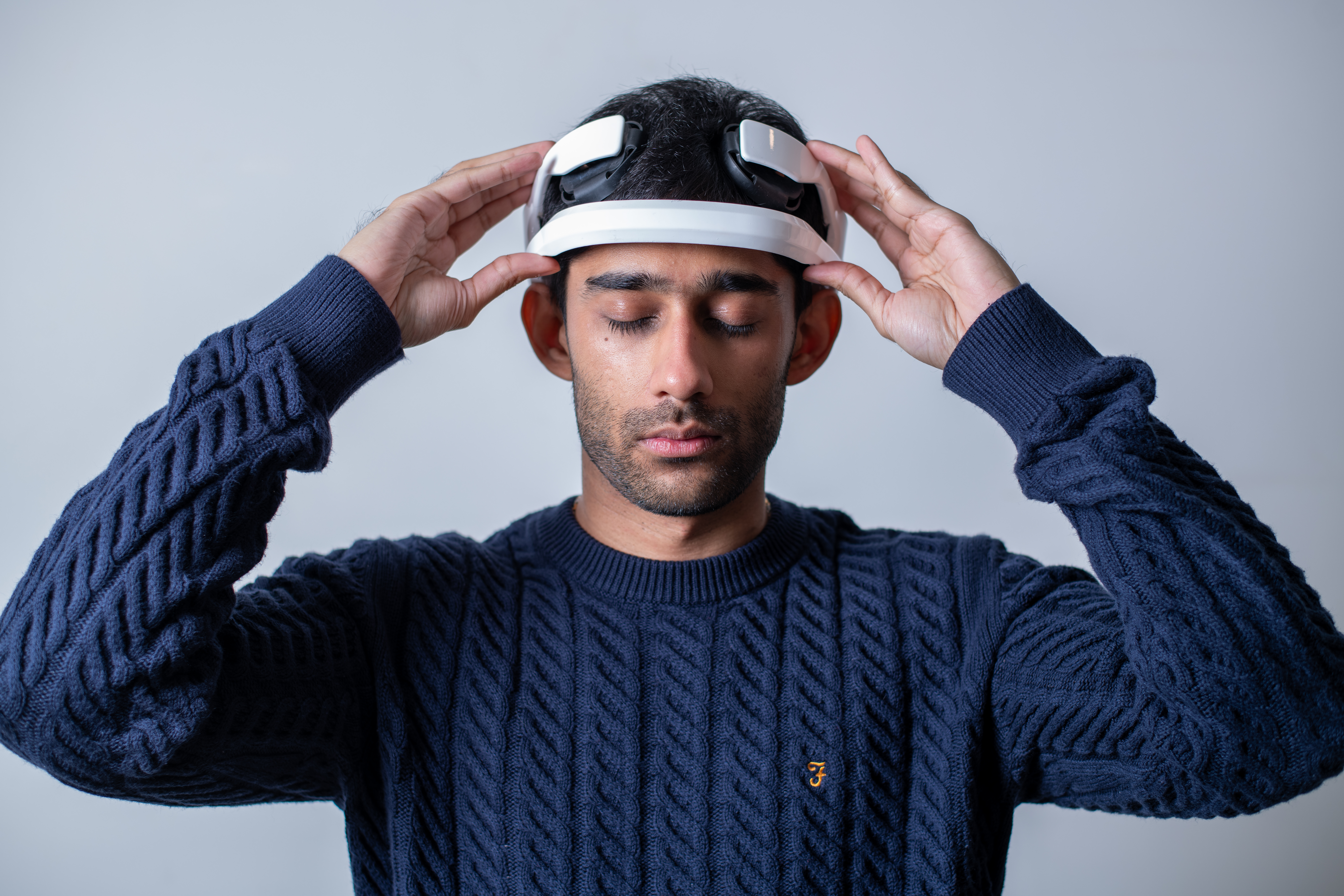
The profession is under pressure from two directions at once: a growing number of patients in need of care, and a standard of treatment that leaves roughly half of them short of remission. India’s psychiatric community is actively seeking adjunctive approaches that can complete treatment for more patients, more effectively, without adding further strain to an already overextended workforce. Against this backdrop, Marbles Health has announced the launch of EASE 2.0, the next generation of its portable neuromodulation and EEG treatment ecosystem. Priced at ₹5 lakh per unit, EASE 2.0 is designed to help psychiatrists, neurologists, and rehabilitation specialists deliver a more measurable, monitored, and data-informed approach to brain health.
Where medication acts on brain chemistry, EASE works on the brain’s electrical activity, rebalancing the dysregulated patterns that underlie depression, anxiety, OCD, and neuropsychiatric conditions. Its advantage lies in doing this in a way that is safe, affordable, and easy to use, which is what makes it scalable: the same treatment can run in a metro hospital, a district clinic, or a primary healthcare centre, operated by regular staff under clinician oversight. Unlike conventional brain stimulation devices that deliver stimulation without measuring how the brain responds, EASE 2.0 is a closed-loop ecosystem that combines treatment, measurement of brain activity, cognitive-emotional training, reporting, and clinician oversight within a single platform.
Completely designed and manufactured in India, EASE 2.0 has been built in accordance with more than eight ISO/IEC medical electrical standards and is backed by one granted patent and three filed patents. It is also the only CDSCO-approved integrated neuromodulation and EEG treatment ecosystem in India. EASE 2.0 is currently accessible across India through top hospitals and clinics, while clinician-supervised at-home services are being offered in select metro cities.
While EASE 1.0 established the foundation for portable neuromodulation, EASE 2.0 significantly expands the platform’s capabilities and clinical applications. The latest version is designed to support a broader range of conditions, including addiction, eating disorders, bipolar affective disorder, and ADHD-related impulsivity. The platform also introduces EEG reporting, giving clinicians & patients greater visibility into brain activity and the patient’s response during treatment.
“In psychiatry, treatment outcomes have been only partially successful for many patients. While medications help, complete remission is achieved in a limited number of cases. That is why adjunctive, monitored, and measurable brain-health treatments are becoming increasingly important. The platform is designed for conditions such as depression, anxiety, OCD, ADHD, addiction, and other neuropsychiatric disorders. It supports real-time monitoring, patient progress tracking, and data-informed clinical decisions. EASE has already been used across thousands of patient sessions and is being adopted by hospitals and clinics across India to make non-invasive brain-health treatment more accessible and more effective for patients,” said Dr. Sachin Arora, Consultant Psychiatrist and De-addiction Specialist practicing in Dwarka, and national faculty at DAMS.
Accessible all over the country, EASE 2.0 is the foundation of a broader platform. The delivery model is expanding from clinic-based to at-home care with clinician oversight in five metro cities, where a trained operator carries the device to the patient’s home and runs the session on site.
“We need more scalable adjunctive medical treatments today that can bridge the clinical treatment gap medically and safely. With the EASE line-up, in combination with medication, we are en route to providing a more complete treatment to a patient: improving efficacy with faster outcomes, in a scalable manner,” said Ramya Yellapragada, Co-Founder & CEO, Marbles Health.
EASE has been deployed in 25,000+ patient sessions, showing an average 65% decrease in symptom scores within two weeks without adverse side effects. Since its launch 15 months ago, EASE has been in use at 90+ leading hospitals and clinics across India, including Apollo Clinics, AIIMS, Sukoon, Asha Hospital, and Mind and Brain Hospital, with over 90 doctors actively engaged.