


Chennai, October 10, 2026: The 36th Annual International Conference of the Indian Society for Dental Research (ISDR), a three-day international event being held from October 9 to 11, 2026, began today. The event, hosted by Sree Balaji Dental College and Hospital (SBDCH), an institution of Bharath Institute of Higher Education and Research (BIHER), has attracted the participation of over 50 international speakers and 1,200 dental researchers, clinicians, academicians and healthcare professionals from across the world to discuss emerging research, scientific evidence and clinical innovations in dental, oral and craniofacial sciences.
Thiru. Rajendra Vishwanath Arlekar, Hon’ble Governor of Tamil Nadu and Keralam, inaugurated the conference, in the presence of Dr. Ritu Duggal, President, ISDR; Dr. J. Srinisha – Chairperson, SBDCH, and Organising Chairman of 36th ISDR Conference; Er. Elamaran, Managing Director, SBDCH; Dr. M. S. Kannan – Dean, SBDCH; Organising Co-Chairman, 36th ISDR Conference, and Dr. S. Bhuminathan, Registrar, BIHER; Organising Secretary, 36th ISDR Conference, Dr. S. M. Balaji, Secretary General, ISDR, and Director, Balaji Dental & Craniofacial Hospital, and Dr. Mahesh Verma, President-Elect, ISDR.
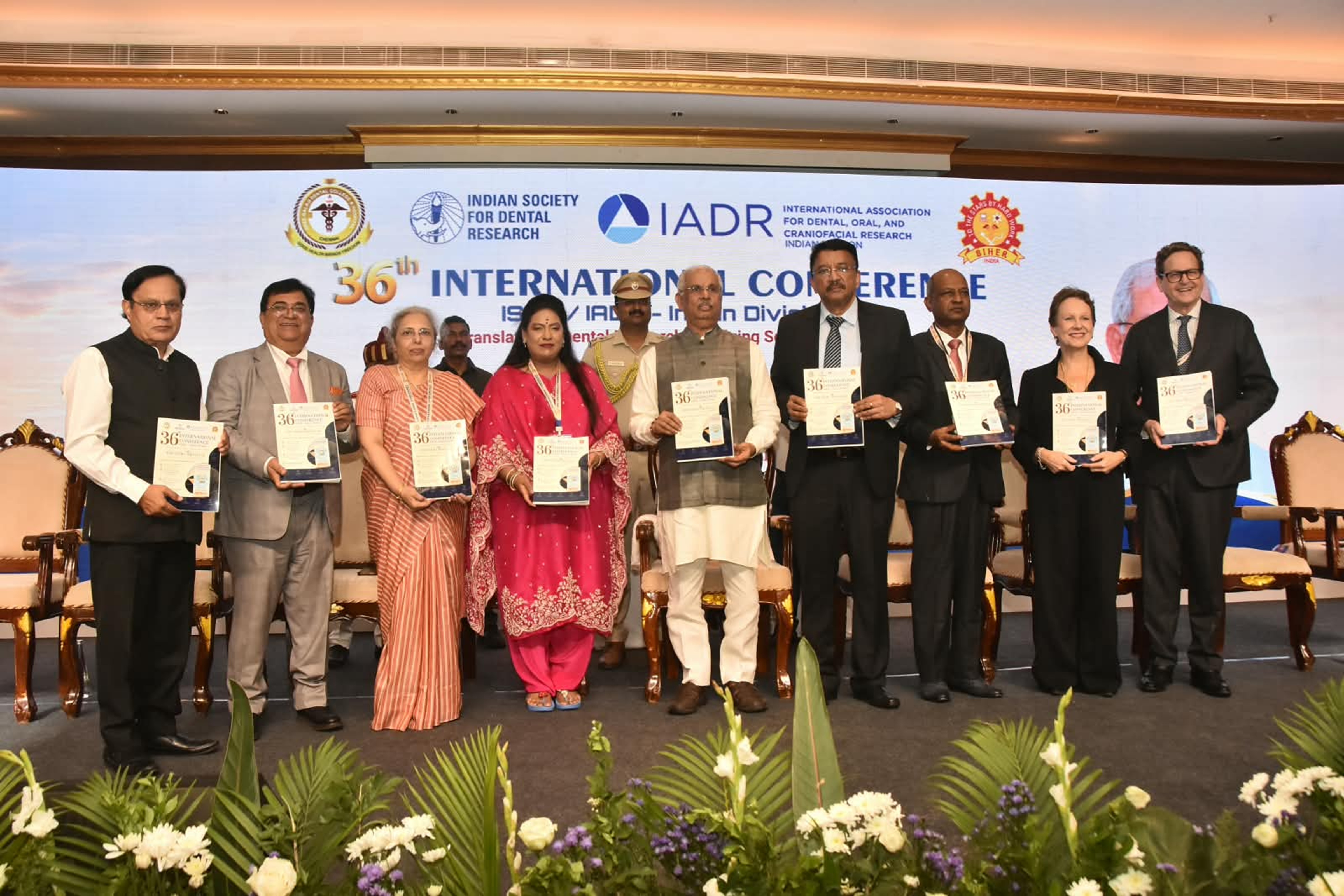
Being held with the theme “Translational Dental Research – Bridging Science and Care”, the conference features orations, guest lectures, symposiums, free paper presentations and awards. The deliberations will focus on several emerging areas shaping the future of dental and oral healthcare, including artificial intelligence and digital dentistry, stem cells and regenerative dentistry, personalised diagnostics and precision dentistry, oral cancer, cleft and craniofacial care, and equitable access to advanced dental care.
A key highlight is the National Special Symposium of the International Association for Dental, Oral and Craniofacial Research (IADR), the parent organisation of ISDR, to be held on October 10. The symposium will focus on strengthening the integration of research, critical thinking and scientific inquiry into dental education. The main conference was preceded by nine pre-conference courses held on October 7 and 8 at Sree Balaji Dental College and Hospital, Chennai, covering specialised areas including research methodology and biostatistics, biomarkers, evidence synthesis, regenerative dentistry, smart biomaterials and other emerging fields.
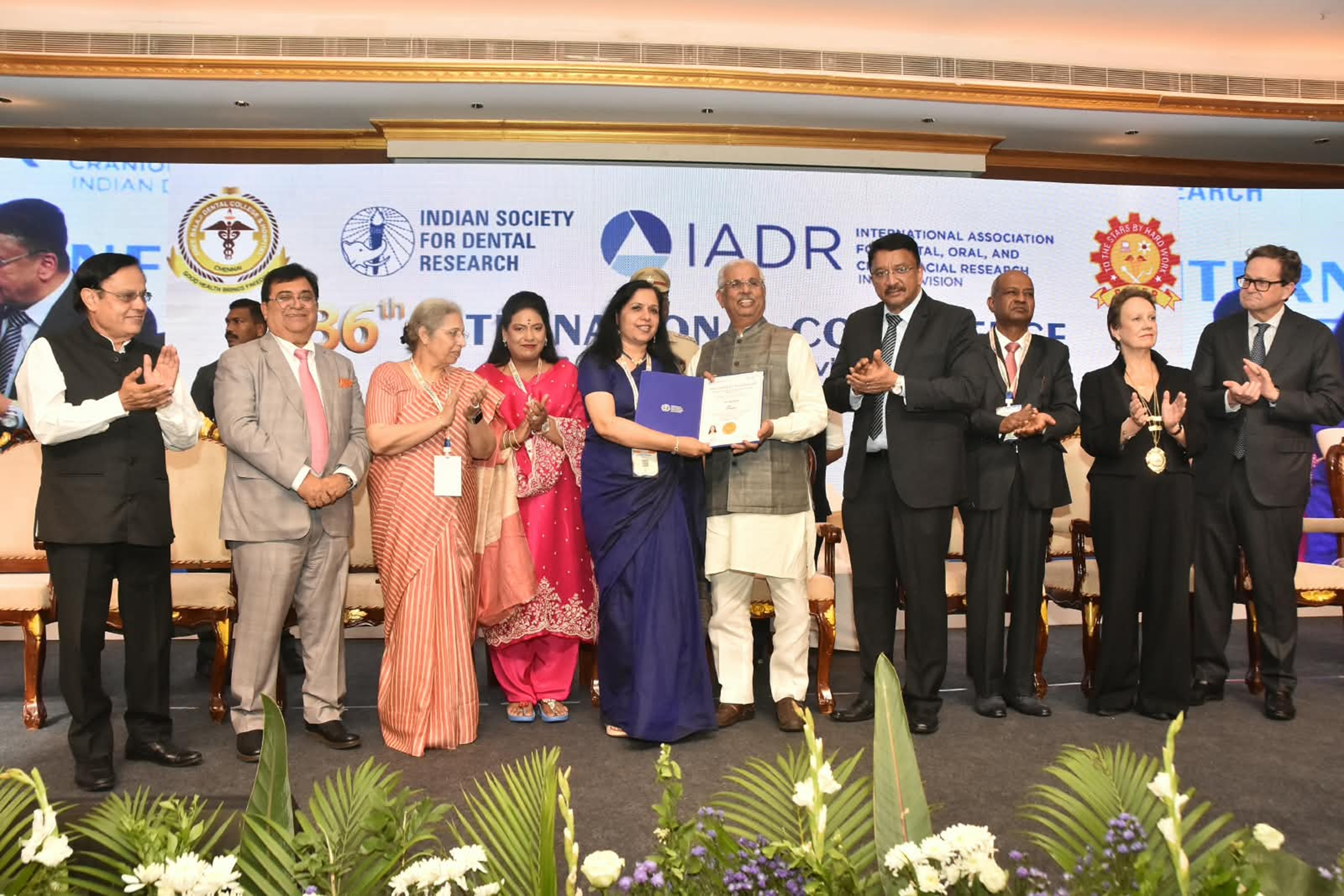
In his Inaugural Address, Tamil Nadu Governor Thiru. Rajendra Vishwanath Arlekar, said, ““India has around four lakh dentists, but we need many more to meet the healthcare needs of our vast population. I encourage young students to take up dentistry and contribute to the health and well-being of our fellow citizens. As we move towards Viksit Bharat by 2047, development must extend beyond economic growth to encompass medicine, education, art and social progress. Dentists have an important role in this national mission as custodians of the oral health of our people, ensuring that quality dental care is accessible and affordable. While urban areas have several dental facilities, countless people in remote villages still lack access to basic dental care. We cannot expect them to come to us; we must take our services to their doorsteps through outreach programmes, regular screening and effective rural healthcare mechanisms. Every Indian, irrespective of where they live or what they earn, deserves a healthy smile. Let us work together to make quality dental care accessible to all.”
In her comments, Dr. Ritu Duggal, President, ISDR, said, “Over nearly four decades, the ISDR Annual Conference has evolved into one of the country’s significant scientific gatherings, bringing together eminent national and international experts to present pioneering research, technological innovations and advances in clinical practice. The 36th ISDR International Conference 2026, hosted by SBDCH, marks another significant milestone in this journey. This year’s conference underscores the importance of translating laboratory discoveries into innovative clinical solutions that can improve patient outcomes and advance oral healthcare. It provides a platform to foster interdisciplinary collaboration and showcase cutting-edge developments in biomaterials, regenerative dentistry, artificial intelligence, precision dentistry, public health, digital technologies and other emerging areas that are shaping the future of dental science and practice.”
In her comments, Dr. J. Srinisha – Chairperson, SBDCH, and Organising Chairman of 36th ISDR Conference, said, “This conference represents an important milestone in our collective pursuit of excellence in dental, oral and craniofacial research, providing a unique platform for the exchange of scientific knowledge, innovative ideas and transformative research that can shape the future of oral healthcare. At SBDCH, we are committed to fostering a culture of academic excellence, scientific inquiry and innovation. Hosting the 36th ISDR International Conference reflects our commitment to advancing research that addresses contemporary healthcare challenges and contributes to improving the quality of life of people across the globe. The theme, ‘Translational Dental Research: Bridging Science and Care,’ aptly emphasises the importance of transforming scientific discoveries into meaningful clinical applications. I am confident that the scientific deliberations, keynote lectures, workshops and interactive sessions will stimulate new ideas, foster interdisciplinary collaborations and inspire future research endeavours.”
The nine pre-conference courses held at SBDCH were designed for undergraduate and postgraduate students, research scholars, faculty and clinicians. The courses covered key aspects of dental research, including research methodology, study design, ethics, biostatistics, data analysis, scientific writing, evidence synthesis, biomarkers, regenerative dentistry and smart biomaterials.
The conference also featured the prestigious ISDR Conference Research Awards, recognising excellence and achievement across various areas of dental research. The awards honoured outstanding contributions through Best Poster, Best Paper, Best Patent, Best Research Grant, Best Research Publication, Best Research Centre, Best Research Book and Best Research Collaboration awards, along with the Best Publication Grant Award.