


Bhubaneswar, 6th August 2026: A rare and highly challenging open-heart surgery at Manipal Hospital Bhubaneswar has given 32-year-old Ms. Susmita Sethi a new lease on life after doctors successfully treated two serious heart conditions despite the presence of sickle cell anemia, a hereditary blood disorder that significantly increased the risk of surgery. Led by Dr. Jitendra Nath Patnaik, Senior Consultant – Cardiothoracic Vascular Surgery (CTVS), the multidisciplinary team overcame multiple clinical challenges through careful planning, pre-operative preparation and coordinated care.
The patient had been living with severe breathlessness for several years. Over time, her condition worsened to the point where she struggled to perform routine daily activities. She developed swelling in her face and feet, frequently woke up at night feeling suffocated and had experienced several episodes of loss of consciousness due to her worsening heart condition. Concerned about her deteriorating health, she sought treatment at Manipal Hospital Bhubaneswar.
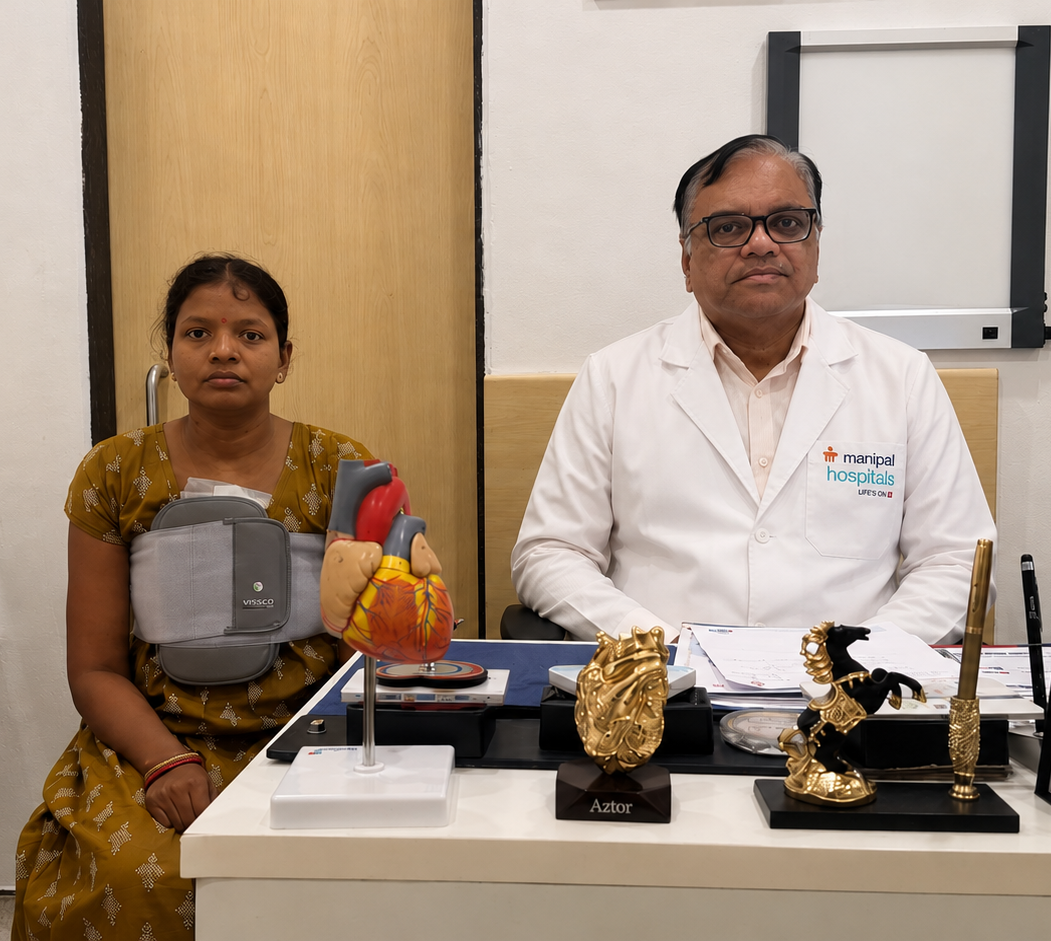
A comprehensive cardiac evaluation revealed that she had two major structural heart problems. She was born with a hole in her heart, known as an atrial septal defect (ASD), and had also developed severe leakage of her mitral valve. Both conditions had placed excessive strain on her heart, leading to heart failure symptoms and making open-heart surgery essential. The planned procedure involved closing the hole in the heart with a surgical patch and replacing the damaged mitral valve.
However, while preparing her for surgery, the medical team identified another serious challenge. Ms. Susmita was also suffering from sickle cell anemia, a genetic disorder in which red blood cells become hard and crescent-shaped instead of their normal biconcave shape. These abnormal cells are fragile and can break down easily during stress, infections or major surgery, triggering a sickle cell crisis that can become life-threatening. A review of her previous medical records confirmed that she had already suffered two such crises in the past, for which she had been treated at Berhampur Medical College, although her heart disease had not been diagnosed at that time.
Open-heart surgery in patients with sickle cell anemia is particularly complex because the procedure requires the use of a heart-lung machine, which temporarily performs the function of the heart and lungs while surgeons operate. During cardiopulmonary bypass, blood passes continuously through artificial tubing and pumps. In patients with sickle cell disease, this process can lead to rapid destruction of the abnormal red blood cells, resulting in severe hemolysis and potentially life-threatening complications.
Further investigations showed that nearly 69% of the patient’s circulating red blood cells were sickled. Since a much lower percentage of approximately 25% to 30% is considered safer before such surgery, the team decided to first reduce the number of sickled cells. Two days before surgery, Dr. Debi Prasad Acharya from the Department of Transfusion Medicine performed an exchange transfusion, replacing a significant portion of the patient’s sickled red blood cells with healthy donor blood. This critical step substantially reduced the risk of blood cell breakdown during surgery and made the procedure considerably safer.
Following meticulous planning by the cardiothoracic surgeons, anesthesiologists, perfusionists, transfusion medicine specialists and critical care team, the surgery was successfully performed. The hole in the heart was closed with a patch, and the damaged mitral valve was replaced. Ms. Susmita recovered well after surgery and continues to do well on regular follow-up. While her heart disease has been completely corrected, she has been referred to the hematology team for long-term management of her sickle cell anemia to reduce the risk of future crises.
Commenting on the case, Dr. Jitendra Nath Patnaik, Senior Consultant – Cardiothoracic Vascular Surgery (CTVS), Manipal Hospital Bhubaneswar, said, “This was one of the most challenging cardiac surgeries we have performed because the patient had severe structural heart disease along with sickle cell anemia, which greatly increased the surgical risk. Careful planning, pre-operative exchange transfusion and close coordination between multiple specialties enabled us to safely complete the surgery and give the patient a new lease on life.”
This successful case highlights the importance of early diagnosis, multidisciplinary collaboration and individualized treatment planning in managing patients with multiple complex medical conditions. It also demonstrates that inherited disorders such as sickle cell anemia need not prevent patients from undergoing life-saving heart surgery when managed with appropriate expertise and advanced perioperative care.