


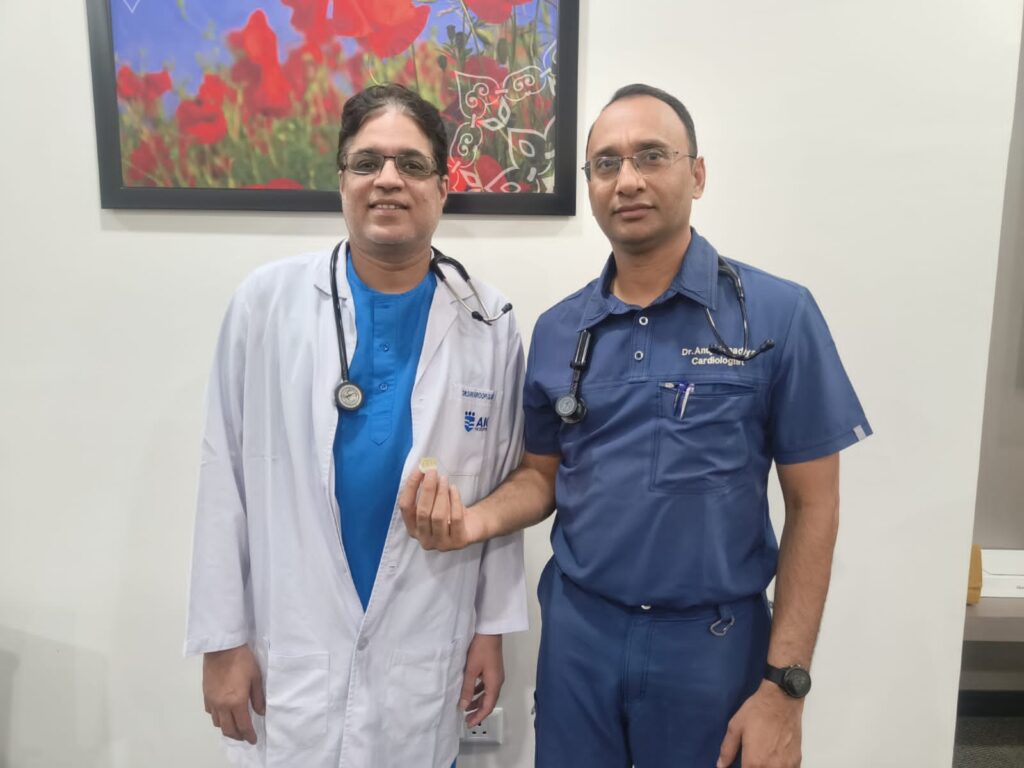
(Left-Right): Dr Swaroop Bharadi, Co-director (Cathlab) & Senior Consultant (Cardiologist), AIG Hospital, Dr Anuj Kapadiya, Director of Cathlab & Senior Consultant (Cardiologist), AIG Hospital, Gachibowli, Hyderabad.
Hyderabad, May 1: Hyderabad is witnessing a notable surge in advanced cardiac procedures, with Transcatheter Aortic Valve Replacement (TAVR) emerging as a preferred treatment for patients with severe aortic stenosis. The city now performs an estimated 350 to 400 TAVR procedures annually, marking a significant 34 % increase over the past year.
This growth underscores a broader shift in how complex heart valve diseases are being managed, with increasing reliance on minimally invasive techniques that offer improved safety and faster recovery.
Aortic stenosis, a condition caused by the narrowing of the aortic valve, is becoming increasingly prevalent among individuals aged 60 and above. Despite its seriousness, the disease often goes undetected in its early stages. Symptoms such as breathlessness, fatigue, chest discomfort, and dizziness are frequently overlooked or attributed to ageing.
Medical experts stress that both patients and family members must remain vigilant and actively monitor these warning signs. Early detection plays a critical role in improving treatment outcomes and preventing life-threatening complications, including heart failure.
Hyderabad Advancing Complex Cardiac Care
Hyderabad’s growing expertise in managing complex cardiac conditions is supported by advanced medical infrastructure and multidisciplinary “Heart Teams” that bring together interventional cardiologists, surgeons, imaging specialists, and anaesthesiologists. This collaborative approach ensures personalized treatment strategies and better clinical outcomes.
The city is also attracting patients from across India and international markets, driven by its ability to deliver high-quality, technology-driven care within a well-coordinated healthcare ecosystem.
“Hyderabad is seeing a strong and sustained shift towards minimally invasive cardiac interventions, particularly for valve diseases,” said Dr. Anuj Kapadiya, Director – Cardiac Cath Lab, Senior Consultant – Interventional Cardiology, AIG Hospital, Hyderabad. “TAVR is enabling us to treat patients who were earlier considered too high-risk for surgery, while also improving recovery time and overall patient experience. The increase in procedure volumes reflects growing awareness as well as confidence in these advanced treatment options.”
A long-term study published in The New England Journal of Medicine, which tracked nearly 1,000 patients over seven years, found that outcomes for TAVR were comparable to surgical valve replacement. More than 73 per cent of patients in both groups remained alive and free from valve failure, highlighting the effectiveness and durability of minimally invasive interventions.
The steady increase in TAVR procedures highlights a clear transformation in cardiac care delivery. As awareness improves and early diagnosis becomes a priority, minimally invasive therapies are expected to play a central role in treating structural heart diseases.
With continued focus on innovation, patient awareness, and timely intervention, Hyderabad is well positioned to lead the next phase of cardiac care advancements in India.
