


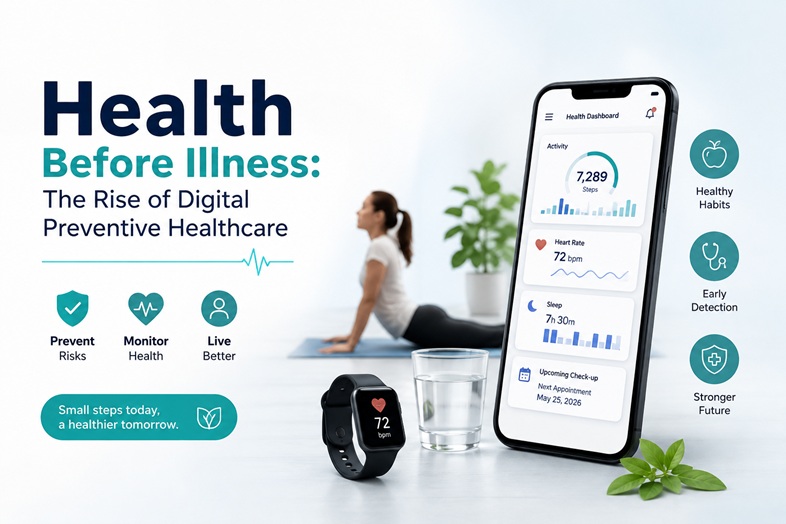
From Treatment to Prevention
For generations, healthcare largely began when something went wrong. A persistent headache, unexplained fatigue or a worrying symptom would send someone to a doctor, followed by tests and treatment. That approach is gradually being complemented by a more proactive model. Smartphones, wearables, health apps, teleconsultations and digital diagnostic platforms are encouraging consumers to pay attention to their health before a problem becomes serious. The shift is significant because healthcare is moving beyond the traditional doctor-visit model towards continuous health awareness, where prevention and early action become part of everyday life.
The New Health Habit
The rise of preventive healthcare is as much about changing consumer behaviour as it is about technology. People who once waited for symptoms are increasingly becoming curious about their health patterns—how well they sleep, how active they are, whether their lifestyle has changed and when they should consider a health check. Digital platforms make these questions easier to explore by providing reminders, tracking tools and convenient access to healthcare services. The technology does not necessarily provide all the answers, but it can encourage consumers to notice changes and take their health more seriously.
Wearables Are Making Health Visible
Smartwatches and fitness trackers have helped turn health monitoring into an everyday activity. Step counts were among the first widely adopted features, but today’s devices can provide information about activity, sleep and certain physiological indicators, depending on the device. The biggest impact may be the visibility they provide. A person may realise they have been inactive for most of the day or that their sleep routine has changed considerably. Such information is not a diagnosis, but it can prompt consumers to think about their habits and, where appropriate, seek professional advice.
Digital Prevention Has a Bigger Ambition
Digital preventive healthcare extends far beyond fitness tracking. It includes preventive health check-ups, digital diagnostics, teleconsultations, electronic health records, medication reminders, chronic-condition monitoring, nutrition services and health-risk assessments. Artificial intelligence is also entering this ecosystem by helping platforms analyse large volumes of information and deliver more personalised insights. The real opportunity lies in connecting these services rather than treating them as isolated tools. A fitness tracker may record activity, while a digital healthcare platform can potentially connect that information with screening, professional consultation and long-term health management.
The Global Case for Digital Healthcare
The potential of digital prevention is increasingly supported by global health research. A 2024 World Health Organization and International Telecommunication Union report, Going digital for noncommunicable diseases: The case for action, estimates that an additional investment of just US$0.24 per patient per year in evidence-based digital interventions could help save more than 2 million lives from noncommunicable diseases over the next decade and avert around 7 million acute events and hospitalisations. The report highlights digital tools such as telemedicine, mobile messaging and health chatbots as potential ways to strengthen prevention and long-term management, demonstrating that digital healthcare can become an important complement to traditional healthcare systems.
India’s Digital Health Moment
India is building a digital health ecosystem that could support this preventive shift. The Ayushman Bharat Digital Mission is aimed at creating a more connected and interoperable digital health infrastructure, potentially making health information easier to access and share across participating healthcare services. For consumers, this could reduce the fragmentation often associated with healthcare records, diagnostic reports and consultations. Preventive healthcare particularly benefits from continuity because health cannot always be understood through a single appointment. A connected digital health journey can potentially help consumers and professionals view information over a longer period.
AI Brings Personalisation—and New Questions
Artificial intelligence is adding another layer to digital healthcare by analysing information and identifying patterns that may otherwise be difficult to notice. In the future, consumers could receive more personalised reminders, wellness suggestions and alerts based on their individual behaviour and available health information. But the growing role of AI also requires caution. An AI-generated insight should not be mistaken for a medical diagnosis. Technology can flag information that deserves attention, while qualified healthcare professionals remain responsible for clinical interpretation and treatment decisions. As consumers increasingly use AI for health-related information, knowing this distinction will become essential.
The Fear of Knowing Too Much
Preventive healthcare has a curious contradiction: people want more information about their health, but too much information can sometimes create anxiety. A notification about an unusual reading may trigger unnecessary worry, while constantly checking sleep scores, heart rate, weight or calories can turn health awareness into an obsession. The challenge for digital health platforms is therefore not simply to collect more data but to provide useful context. Consumers need to understand that health indicators can fluctuate and that a single unusual reading does not necessarily signal a serious problem. The goal should be informed awareness rather than constant fear.
Privacy and Affordability Could Shape Adoption
Health data is among the most sensitive information consumers share, making privacy and security central to the future of digital healthcare. Users need clarity about what information platforms collect, how it is stored, who can access it and how it may be used. At the same time, digital preventive healthcare must address affordability and accessibility. Expensive wearables and subscription-based services may remain out of reach for many consumers, while differences in connectivity and digital literacy can create another barrier. India’s preventive health future cannot be limited to digitally connected urban consumers; simple mobile reminders, teleconsultations, affordable diagnostics and reliable health information can also play an important role.
Healthcare Businesses Are Moving Upstream
The preventive health movement is creating a new opportunity for the healthcare industry. Hospitals can offer digital follow-up programmes, diagnostic companies can make screening easier to book, insurers can develop wellness initiatives and health-tech companies can build personalised monitoring services. The workplace is also becoming part of this ecosystem as employers introduce health screenings and digital wellness programmes. The common shift is from waiting for consumers to become patients towards building relationships earlier. However, this model will work only if prevention remains supportive rather than intrusive, particularly when personal health data is involved.
The Future Is Earlier Action
Digital preventive healthcare will not eliminate disease, replace doctors or turn every consumer into a health expert. Its real promise is more practical: helping people become aware of their health, making preventive services easier to access and encouraging appropriate action before a concern becomes more serious. The next phase will depend on balancing technology with human expertise, convenience with privacy, personalisation with accuracy and innovation with affordability. The future of healthcare may therefore not simply be about treating illness faster. It could be about creating a culture in which people pay attention earlier, seek professional guidance when necessary and make prevention a natural part of everyday life.