


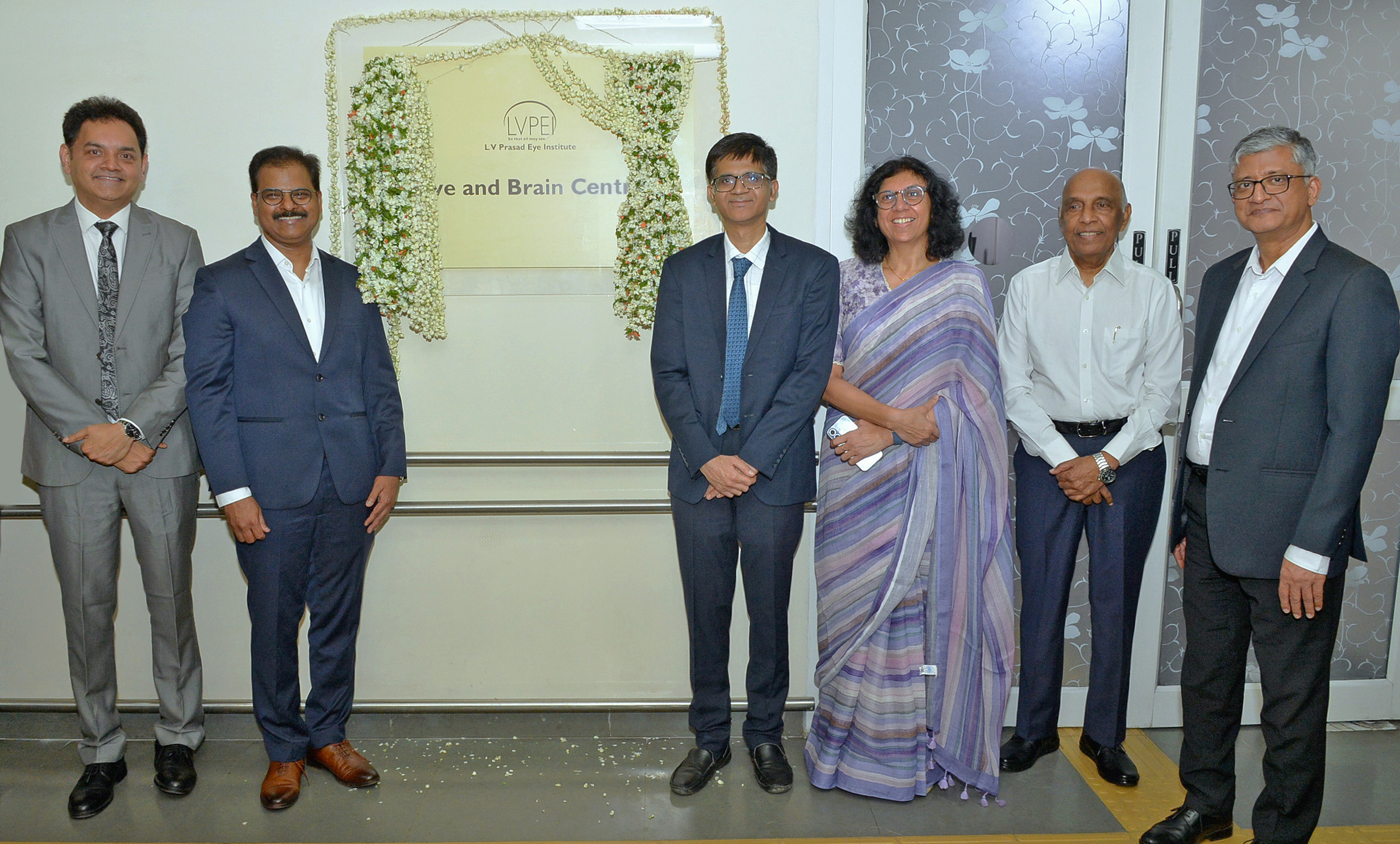
Hyderabad, Apr 27: The Eye and Brain Centre, established with support from D. E. Shaw India, was inaugurated at the L V Prasad Eye Institute (LVPEI), Kallam Anji Reddy Campus, Hyderabad, in the presence of leadership from LVPEI and D. E. Shaw India.
The Eye and Brain Centre is an interdisciplinary initiative of LVPEI focused on training, research, diagnostics, and integrated patient care for complex conditions spanning neuroscience and ophthalmology. It will include establishing a fully equipped neuro-ophthalmology diagnostic and clinical facility, a neuroscience laboratory with genetic testing, and AI‑enabled research and diagnostics for complex eye–brain disorders. The Centre also aims to strengthen India’s neuro‑ophthalmology ecosystem by offering structured short‑ and long‑term training programs and building referral networks with neurologists, neurosurgeons, and optometrists.
The support from D. E. Shaw India builds on a long‑standing partnership with LVPEI focused on improving access to high‑quality eye care.
Dr. Ramesh Kekunnaya, Head of the Eye and Brain Centre, LVPEI, expressed his gratitude for D. E. Shaw India’s support at the inauguration, and said, “The Eye and Brain Centre advances LVPEI’s mission of providing excellent and equitable eye care by addressing the critically important and underserved area of eye–brain health.”
Mr. Chaitanya Gorrepati, Managing Director and a member of the Operating Committee and Corporate Social Responsibility Committee at D. E. Shaw India, said, “Healthcare is one of our core social responsibility priorities at D. E. Shaw India, particularly for marginalized communities across urban and rural India. Through our support for the Eye and Brain Centre, we aim to help broaden access for those with complex and underserved eye–brain conditions. We hope this initiative assists with the development of a national resource that brings together patient care, training, and research to create meaningful and lasting impact.”
The Eye and Brain Centre will enable integrated patient care, capacity building, and research in neuro‑ophthalmology, while strengthening collaboration across clinical disciplines and advancing the development of genetic testing and therapy protocols for eye–brain disorders. It is expected to deliver over 10,000 patient services annually, including consultations, diagnostics, and follow-up care, and to contribute to expanding expertise and knowledge in this emerging field. It will conduct symposia to build regional capacity and help address the national knowledge gap in neuro-ophthalmology.