


Pune, July 28: Apollo Hospitals Pune has successfully performed its first robotic-assisted coronary artery bypass graft surgery using the da Vinci Xi Robotic Surgical System. The procedure adds a minimally invasive surgical option for patients requiring bypass surgery and reflects the hospital’s growing capabilities in advanced cardiac care.
In robotic-assisted bypass surgery, the surgeon operates through a few small incisions instead of opening the chest bone conventionally. The robotic system provides high-definition, three-dimensional visualization and precise instrument control, enabling complex procedures through a minimally invasive approach for carefully selected patients.
The da Vinci Xi Robotic Surgical System helps minimize surgical trauma and support improved clinical outcomes across a wide range of cardiac procedures.
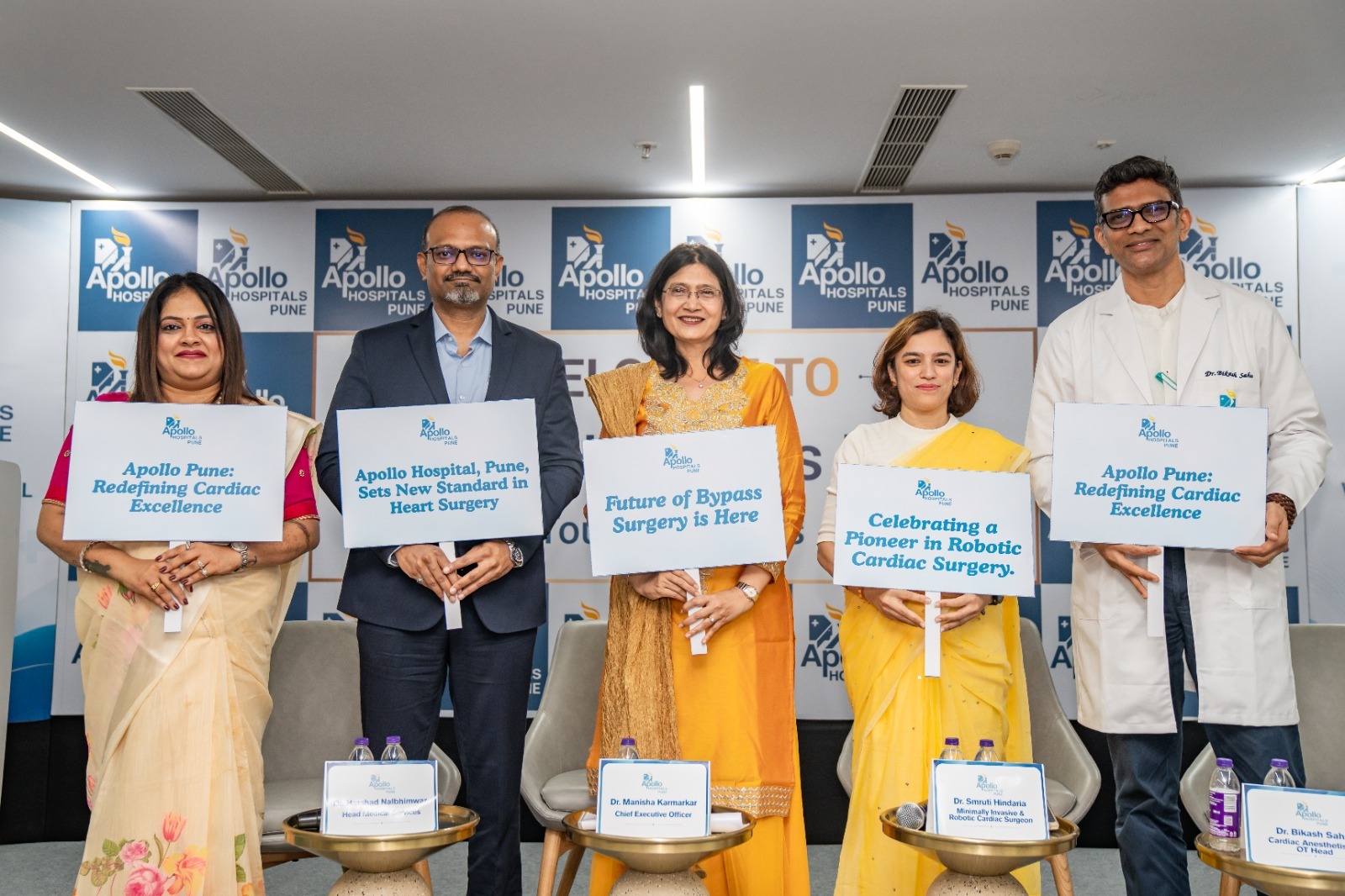
Commenting on the achievement and the hospital’s legacy, Dr. Manisha Karmarkar, CEO, Apollo Hospitals Pune, said:
“This milestone reflects the combined efforts of our surgeons, anaesthesia team, intensivists, nurses and rehabilitation specialists. Our focus has always been on bringing advanced treatment options closer to patients in Pune while maintaining the highest standards of clinical care.”
The surgery was performed by Dr. Smruti Hindaria, Senior Consultant – Robotic & Minimally Invasive Cardiac Surgery, Dr Bikash Sahu Cardiac Anesthesiologist along with the multidisciplinary Cardiac Sciences and ICU team at Apollo Hospitals Pune.
The first patient, a 67-year-old man, diagnosed with triple vessel coronary artery disease, underwent the surgery successfully. He was discharged on the fourth day following a smooth recovery. Since then, six more robotic-assisted bypass surgeries have been successfully completed at the hospital in a month.
According to the clinicians, patient eligibility is based on overall heart and lung health, suitable vessel size, and there should not be any major underlying illnesses. The procedure typically takes four to five hours to perform. In conventional open-heart surgeries, patient discharge usually takes eight to ten days. With robotic surgery, faster discharge is possible—typically on day fourth or fifth after the surgery—which represents a significant change for patients. This is achieved due to smaller incisions, faster recovery, minimal blood loss, an almost nil possibility of infection, and earlier mobilization.
Speaking about the procedure, Dr. Smruti Hindaria said:
“Robotic-assisted bypass surgery allows us to perform complex cardiac procedures with greater precision while reducing the impact of surgery on the patient. However, this approach is not suitable for everyone. Careful patient selection remains the most important part of the process. We are encouraged by the outcomes achieved so far and look forward to offering this option to more eligible patients.”
The success of robotic cardiac surgery depends on an experienced multidisciplinary team, advanced operation theatres and comprehensive post-operative care. Dr. Manisha Karmarkar says “AtApollo Hospitals Pune, the procedure is supported by dedicated cardiac anaesthesiologists, intensivists, perfusionists, nursing teams and rehabilitation experts working together throughout the patient’s treatment journey.”
Apollo Hospitals Pune is a 400-bed quaternary care hospital offering comprehensive cardiac services, including preventive cardiology, interventional cardiology, structural heart procedures and advanced cardiac surgery. The introduction of robotic-assisted bypass surgery further expands the treatment options available to patients in Pune and neighbouring regions.