


Bhubaneswar, Aug 26: Higher educational institutions in Odisha are moving towards a more technology-driven system of attendance management, with the state government introducing biometric attendance through the Higher Education Information Management System (HIMS).
The pilot initiative, which began on August 25, is being implemented in 10 higher educational institutions. It will allow student attendance to be recorded and verified digitally, with the data connected to the HIMS platform.
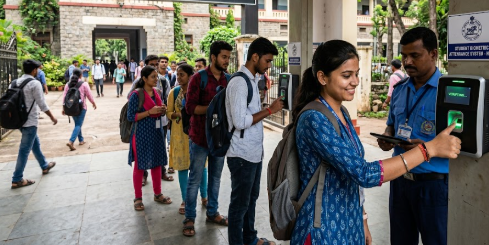
The system is expected to bring greater transparency to attendance records and make it easier for institutions to monitor students’ regular participation in classes. It will also be particularly relevant for beneficiaries of the Gyanodaya-Shiksharu Samruddhi scheme, under which students are required to maintain at least 75 per cent attendance.
As part of the new system, participating colleges will use biometric registration along with digital attendance tracking. Geo-tagging will ensure that attendance is marked from within the designated college premises.
The HIMS mobile application will also require a live photograph when attendance is recorded. Teachers and staff will be required to mark their own attendance before the attendance process for students begins.
The digital approach is aimed at making attendance monitoring simpler and more reliable while reducing the possibility of errors in maintaining manual records. It can also help institutions identify attendance-related issues at an early stage and take appropriate action.
The 10-institution pilot will be assessed based on practical experience and feedback from colleges, faculty members and other stakeholders. Any necessary changes will be made before the system is expanded further.
Following the pilot phase, the government plans to extend the biometric attendance system to other eligible higher educational institutions across Odisha.
The move marks another step towards the digitalisation of higher education administration in the state, with technology being used to improve monitoring, accountability and the delivery of student-focused schemes.