


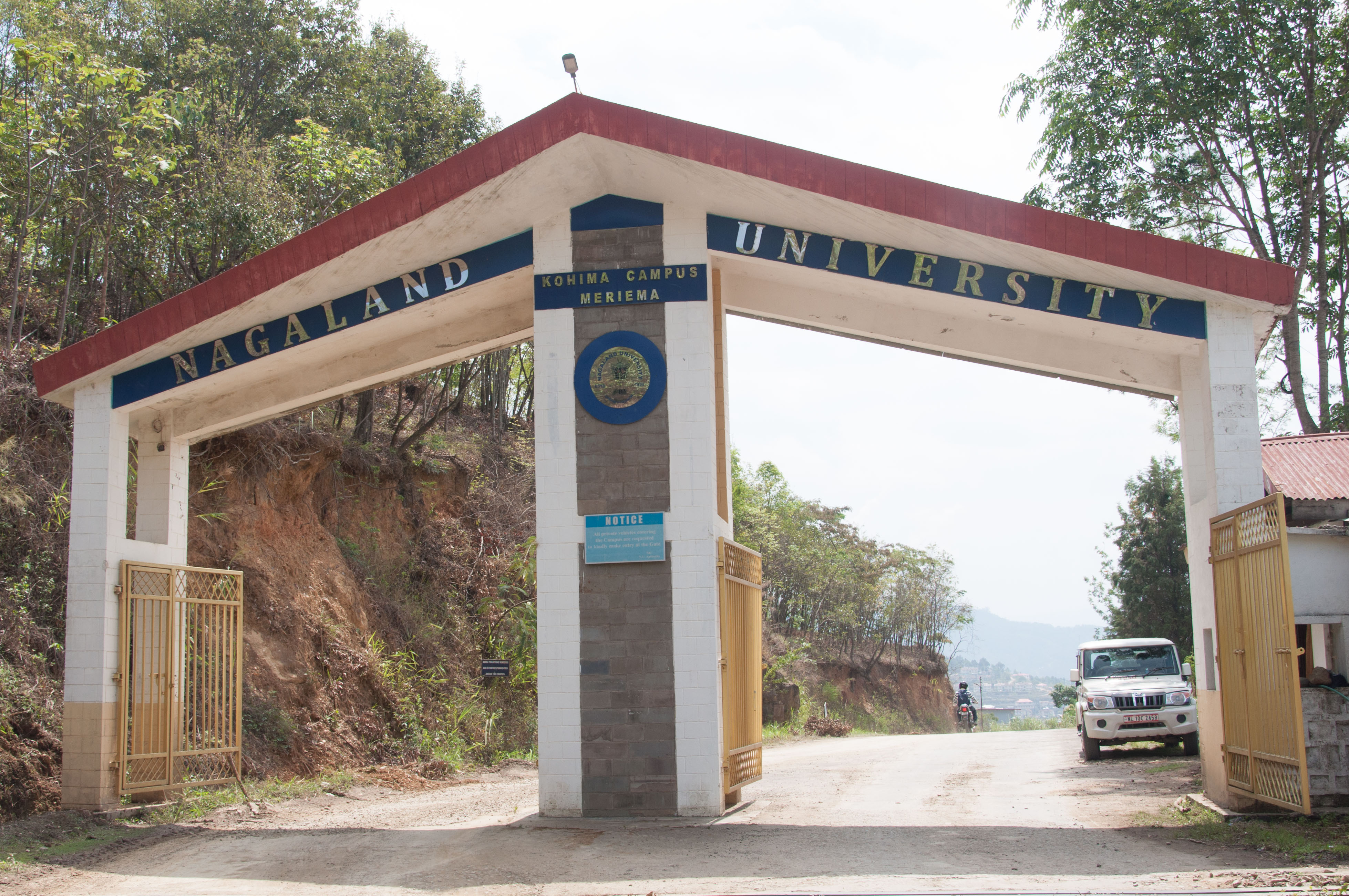
Lumami, Nagaland, 20th July: Nagaland University researchers have carried out a detailed geological investigation of ‘Sylhet Limestones’ found in Dillai Parbat area of Karbi Anglong district in Assam, and explained how these rocks were formed a long time ago, during the Eocene period in North-East India.
The study aids in better understanding of carbonate sedimentation and paleeoenvironmental reconstruction of Northeast India and can aid future studies of geological correlation and basin analysis in similar settings.
Further, the study helps researchers understand how the environment was in the past, including the sea, climate, and living conditions for micro marine organisms. While earlier studies on Sylhet Limestone largely relied on limited datasets including only field observations, the present research addresses this gap by adopting an integrated approach combining field observations, petrographic analysis, and micropaleontological investigations.
The researchers examined different types of rock layers such as limestone, shale and sandstone, along with sedimentary structures observed in the field, including both physical and biological features. They also analyzed microfossils (foraminifers) present in the rocks and studied the mineral composition through microscopic examination.
Based on these observations, the study indicates that the area was once part of a shallow, warm marine environment with sufficient oxygen and nutrients to support marine life. The conditions were similar to a lagoon or a near-shore shallow sea setting under a tropical to subtropical climate. The findings also suggest that the sea level kept going up and down over time and the depositional environment experienced varying energy conditions. There were also storms, which made special patterns in the rocks.
The findings were published in Journal of Geosciences Research (https://doi.org/10.56153/
Congratulating the team, the Vice-Chancellor of Nagaland University, Prof. Jagadish Kumar Patnaik, said, “I congratulate our researchers on this significant scientific contribution that enhances our understanding of the geological history of Northeast India. Such high-quality research reflects Nagaland University‘s commitment to advancing knowledge through rigorous scientific inquiry and interdisciplinary collaboration. I hope this achievement will inspire our faculty and students to pursue impactful research that addresses fundamental scientific questions while contributing to national and global scholarship.”
The findings contribute to improve scientific understanding of sedimentation processes, microfossil assemblages, and environmental conditions. The study shows that the observed changes were linked to movements of the Earth (tectonics).
Explaining the study, Dr. S. K. Srivastava said, “We attempted to understand the depositional conditions by combining field observations and laboratory analysis. The evidence indicates that the limestone was deposited in a shallow marine, warm-water environment with favorable ecological conditions for microfaunal growth”
Highlighting the research experience, Mr. Tsenchumo Lotha said, “Things are not always clear when we are in the midst of fieldwork. But when we connected the same with lab results, the overall picture started becoming clearer. That process was really important for understanding the environment of deposition.”
This research helps scientists:
- Understand how these rocks were formed
- Learn about the ancient environment of Northeast India
- Study how the Earth changed over time