


Chennai, Sep 03: Researchers from Indian Institute of Technology Madras and Christian Medical College, Vellore, have developed a set of Artificial Intelligence -based tools designed to assist in the early detection and assessment of kidney diseases, which affect millions of people worldwide.
The team has developed three technologies that complement each other.
1.The first is a machine learning model that uses clinical and laboratory information to predict the risk of chronic kidney disease.
2.The second is a deep learning system that automatically analyzes CT scans and classifies them into four categories: normal kidney, kidney cyst, kidney stone, and kidney tumour.
3.The third is a 3D imaging platform that recreates kidneys from CT scans to precisely assess tumour volume and the percentage of kidney involvement.
These technologies address a significant healthcare issue. Kidney diseases are often asymptomatic in their early stages and are not diagnosed until substantial damage has occurred. The AI tools aim to assist physicians by delivering consistent results quickly, especially in a fast-paced healthcare environment.
These tools can enable earlier diagnosis, which could help slow the disease process and reduce the need for expensive interventions like dialysis.
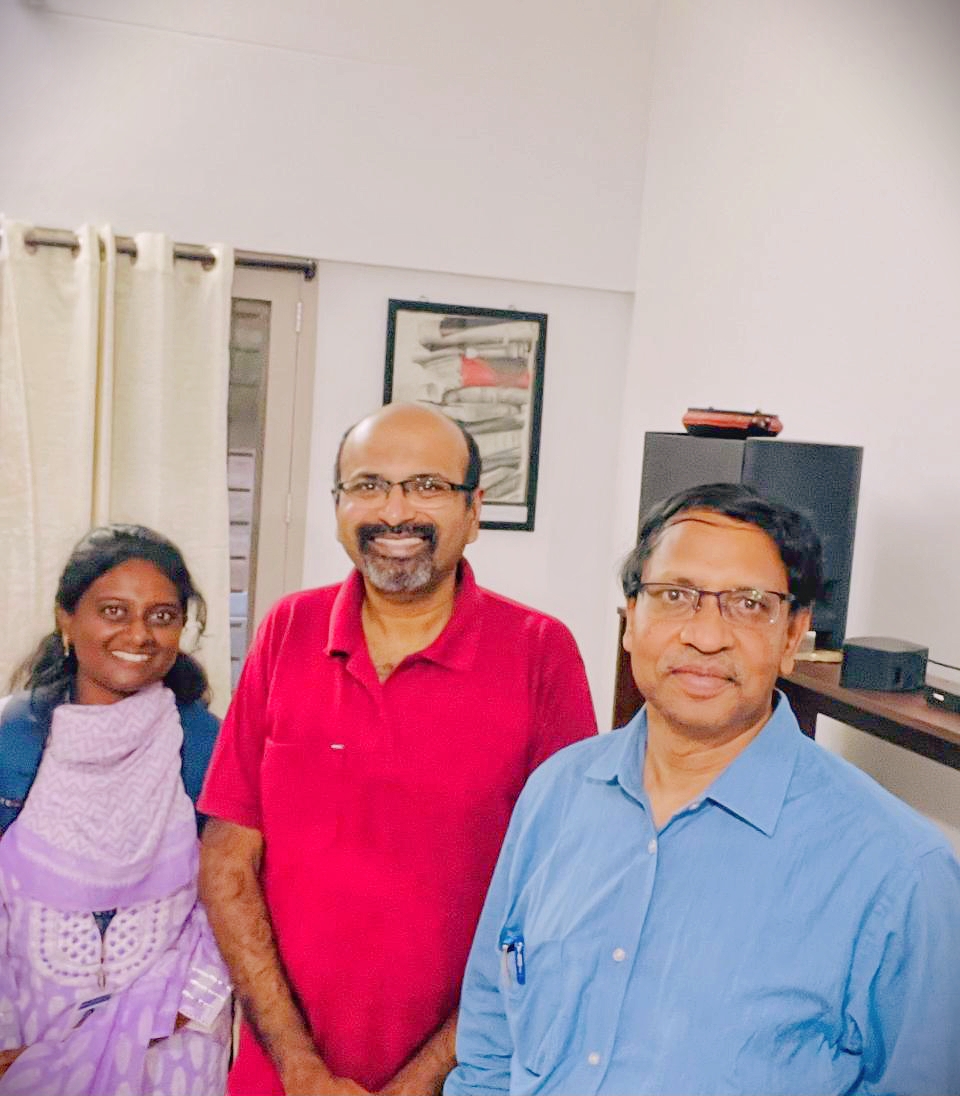
The research was led by Prof. G.L. Samuel, Department of Mechanical Engineering, IIT Madras and Ms. Jennifer Delighta, Research Scholar, IIT Madras, in collaboration with Prof. Santosh Varughese from the Department of Nephrology, CMC Vellore.
Explaining the research, Prof. G.L. Samuel, Department of Mechanical Engineering, IIT Madras, said,
“The team aimed to develop intelligent systems that would help clinicians make quicker and more informed decisions. We used machine learning along with clinical knowledge to develop tools that would assist in the earlier detection of kidney diseases and give more detailed information specific to the patient.”
The CT image classifier has been trained with over 12,000 images and can distinguish healthy kidneys from cysts, stones and tumors. The 3D imaging framework developed using open-source software provides an inexpensive and repeatable method for measuring tumor burden, which can provide valuable information to help guide treatment decisions.
Ms. Jennifer Delighta, Research Scholar, IIT Madras emphasized,
“Early detection is of paramount importance when dealing with kidney diseases; these AI tools can help detect at-risk patients early and plan their treatment more effectively. The patient-specific imaging framework is of significant promise as it goes beyond the standard measurements to give a more comprehensive picture of the extent of the disease.”
The CKD prediction model was implemented in a user-friendly prototype interface to facilitate future clinical translation. The team also worked on making it more accurate and more easily understood by the doctors who are using it to make their predictions.
The study represents an important step toward the development of a kidney Digital Twin, integrating AI-assisted image analysis with patient-specific 3D anatomical models for personalized clinical decision-making, where virtual twins of patients’ organs may be applied to monitor, forecast and plan individual therapy.
The research received institutional support from IIT Madras and the SPARC project.
Moreover, the team intends to test the models with more patient information sets to validate them and establish stronger partnerships with health care institutions for deployment in the real world. The researchers are also exploring the long-term integration of these AI technologies with minimally invasive wearable sensing systems and Digital Twin platforms to enable personalized kidney health monitoring.