


Goa, July 23: With an aim to apply modern management skills for societal welfare, Goa Institute of Management through its Give Goa project, has completed the pilot phase of DAKSH. This is an initiative designed to equip women-led micro-enterprises with practical digital skills for business growth.
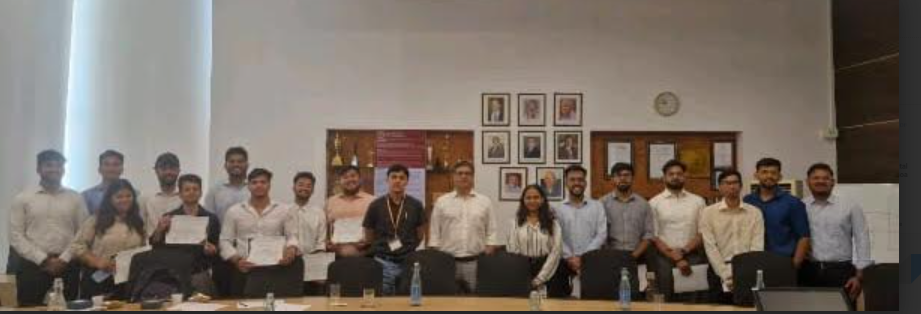
The Give Goa project of GIM is a compulsory service-learning initiative for its second-year Post Graduate Diploma in Management Banking Insurance and Financial Services students. It aims to develop a sense of social responsibility in future corporate leaders by connecting them directly with less privileged communities. Under this initiative, students are tasked with addressing local challenges aligned with the United Nations Sustainable Development Goals, covering environmental sustainability, public health awareness, rural entrepreneurship, and social equality.
Speaking about Give Goa project, Prof. Aanchal Singh, Give Goa Coordinator for PGDM BIFS program, GIM, said,
“At GIM, Give Goa is designed to help students become socially conscious leaders by engaging directly with real community challenges. DAKSH reflects this philosophy by combining management education with meaningful social impact, enabling students to co-create practical solutions that empower local women entrepreneurs while developing empathy, leadership, and problem-solving skills.”
In one such activity, a student group conducted a survey with women entrepreneurs in the Sanquelim, Madgaon, and Panjim localities who are active in food, tailoring, stationery and printing, mobile servicing, retail, and home-based enterprises. Based on the survey, the GIM student group found that the adoption of digital technologies was limited among these entrepreneurs due to limited digital confidence, fear of making mistakes, and dependence on traditional customer acquisition methods.
Based on these insights, the student team collaborated with Mr. Lalit Saraswat, Founder and CEO, Sancoale Technologies, who designed and developed a four-module curriculum to teach and establish a digital foundation for these entrepreneurs. The curriculum included practical learning modules covering:
· Establishing the digital foundation of the business – creating Google Business listings and developing digital catalogues
· WhatsApp Business – for digital promotion and communication
· Social media marketing – promotion through Instagram and Facebook for enhanced online discoverability
· Simple online selling – better revenue generation
The framework emphasised low-cost, easy-to-adopt digital solutions that fit naturally into existing business operations while minimising additional workload.
Based on the early insights, the initiative recorded improved customer enquiries, greater digital confidence among participants, and an increase in income for multiple entrepreneurs. As recorded by the student group, the initiative helped women entrepreneurs achieve –
· 1–5 new customers per business
· Rs. 1,000–3,000 in incremental income
· 5–15 catalogue items digitised
· 100% shift to structured messaging
Speaking about the initiative, Prof. Vikram Singh, Assistant Professor, GIM, said,
“The gap is not merely technological but behavioral. The pilot research revealed that psychological readiness is fundamental to digital empowerment. Our students identified and worked closely with 10 women-led enterprises through sustained field engagement and interestingly leveraging GIM’s goodwill to overcome their initial psychological reluctance towards digital adoption. Together, they co-created practical solutions that enhanced business visibility and strengthened customer engagement potentially leading to incremental income growth for participating women entrepreneurs.”
Other than building a digital literacy model for small-scale business promotion, this initiative has also generated key insights for policymakers and development practitioners. It suggests that improving digital capability and business processes can deliver meaningful improvements without requiring significant financial investment.
The initiative was undertaken by second-year students of the PGDM program, including Mr. Prakhar Mishra, Mr. Shivin Santu, Mr. Puneet Saluja, Mr. Vaibhav Mittal, Ms. Udita Agarwal, Mr. Aayush Lalit Jain, Mr. Yerra Kumar Raja, Mr. Anthony Joseph, Mr. Maurya Bhatt, Ms. Lucky Garg, Mr. Mohit Sultania, Mr. Vansh Mehndiratta, Mr. Anmol Bapat, Mr. Aditya Deelip Phadte, Mr. Soham Kalgaonkar, and Mr. Kanwar Devaansh Singh, under the guidance of Prof. Vikram Singh.