


Stockholm, Oct 6: A discovery that began with the study of a tiny, light-sensitive alga has now transformed the way scientists explore the human brain.
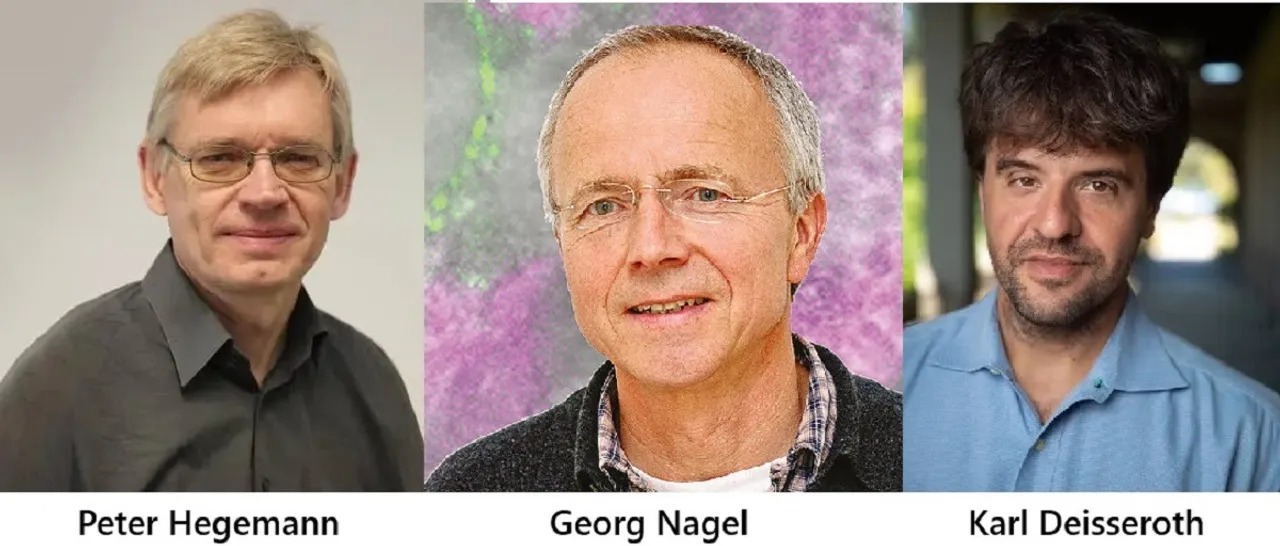
Scientists Karl Deisseroth, Peter Hegemann and Georg Nagel have been awarded the 2026 Nobel Prize in Physiology or Medicine for discoveries that led to the development of optogenetics, a powerful technique that allows researchers to control the activity of individual nerve cells using light.
The achievement marks an important milestone in neuroscience, where researchers have spent decades trying to understand how billions of interconnected neurons produce memories, emotions, movements and behaviour.
When light became a tool for studying the brain
The roots of this breakthrough can be traced to research on microscopic algae. Scientists studying how these organisms respond to light discovered proteins that can act as tiny channels in a cell’s membrane.
These proteins, known as light-sensitive ion channels, respond when exposed to light and allow electrically charged particles called ions to move across the cell membrane.
That basic biological mechanism eventually opened the door to a much bigger idea: could light be used to control the electrical activity of nerve cells?
The answer was yes.
What exactly is optogenetics?
Optogenetics is a technique that combines genetics with light-based control.
Researchers introduce specific genes into selected neurons so that the cells produce light-sensitive proteins. Scientists can then use carefully controlled light to activate or suppress those neurons.
In simple terms, it gives researchers something similar to a precision switch for individual brain cells.
Instead of simply watching neural activity, scientists can manipulate particular cells and observe what changes. This makes it easier to investigate how different neural circuits influence memory, movement, emotions and behaviour.
From algae research to neuroscience
Peter Hegemann and Georg Nagel played a crucial role in identifying and understanding the light-sensitive proteins that made this approach possible. Their research on the green alga Chlamydomonas helped reveal how light could trigger electrical changes inside cells.
Karl Deisseroth subsequently helped establish optogenetics as a practical tool for neuroscience, demonstrating how light-sensitive proteins could be used to control neurons and investigate the functioning of brain circuits.
What began as research into how a microscopic organism senses light eventually became a technology capable of answering much more complicated questions about the brain.
Why this breakthrough matters
The brain contains an extraordinary network of neurons that communicate through electrical and chemical signals. Understanding which cells are responsible for particular functions has always been a major challenge for researchers.
Optogenetics offers a way to examine these circuits with exceptional precision.
For example, researchers can investigate what happens when a specific group of neurons is switched on or off. This can help reveal how particular circuits contribute to learning, memory, movement and behaviour.
The technique has become an important research tool in laboratories around the world and is also helping scientists explore potential approaches to neurological and sensory disorders.
A remarkable scientific journey
The story behind the 2026 Nobel Prize is as fascinating as the technology itself.
A biological mechanism found in a tiny organism has evolved into a sophisticated research tool for investigating the most complex organ in the human body.
The work of Hegemann, Nagel and Deisseroth has given scientists a new way to move beyond simply observing the brain. By controlling selected nerve cells with light, researchers can begin to understand which neural circuits do what — and why.
Their achievement is a striking example of how fundamental science can lead to unexpected advances in medicine. What started with a simple question about how algae respond to light has helped open a new window into the mysteries of the human brain.