


Paris, France, Apr 27: ESCP Business School successfully concluded the AI in Higher Education Summit 2026, bringing together academic leaders and industry experts from over 27 countries, 67 universities, and leading global organisations to examine the evolving role of artificial intelligence in education.
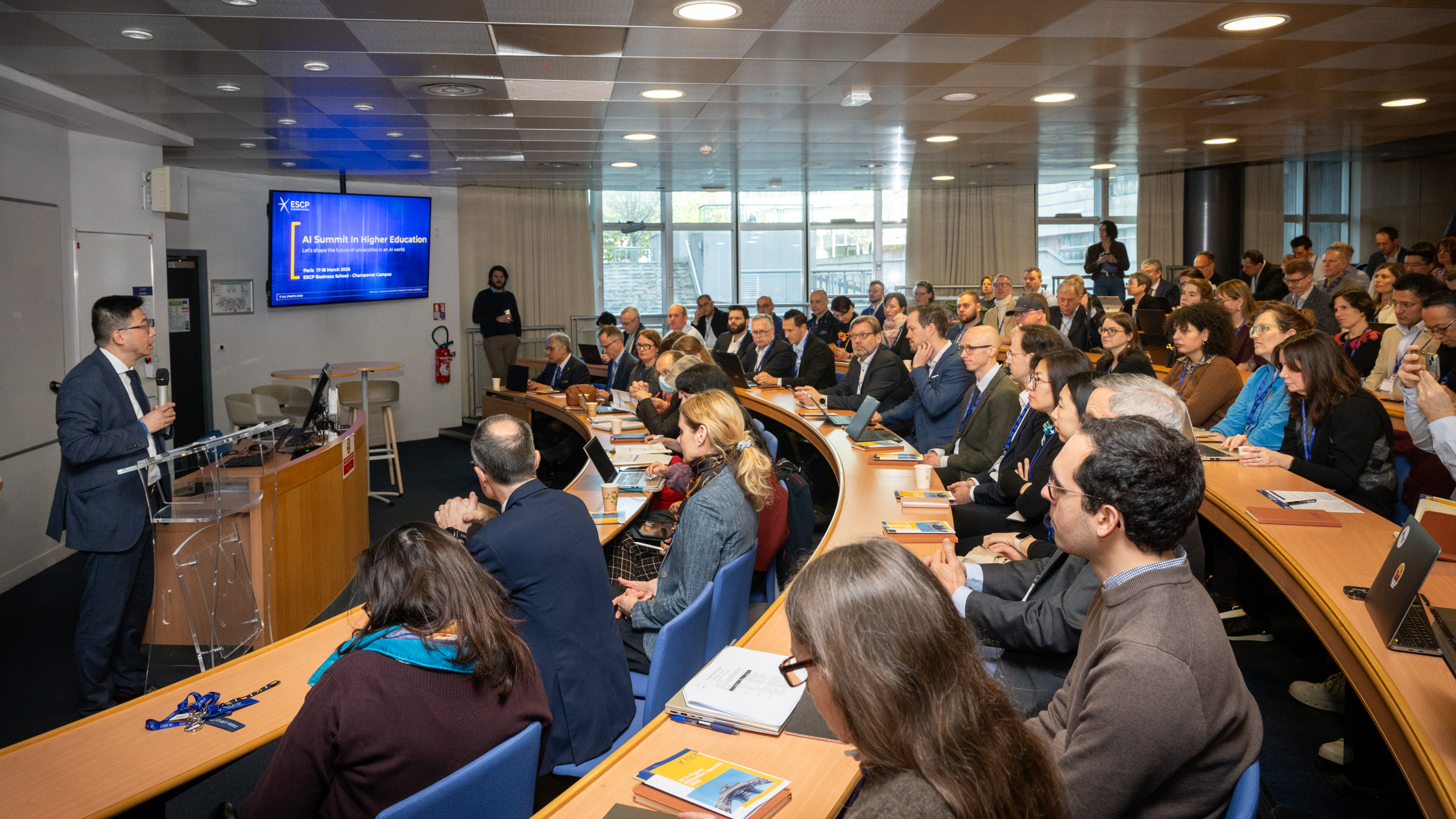
The summit highlighted a growing disconnect between higher education systems and workforce readiness in an AI-driven world. While AI adoption across institutions is accelerating, experts noted that universities are struggling to equip students with the skills required for the future of work.
A key theme emerging from the discussions was the need to move beyond traditional skill-building toward critical thinking, problem-solving, and human judgment capabilities—skills that remain essential in an AI-augmented environment.
Léon Laulusa, Dean and Executive President of ESCP, emphasised the human dimension of transformation, stating, “Adoption is a human challenge, and organizations move at the speed of trust,” underscoring the importance of institutional readiness alongside technological integration.
The summit also drew attention to the urgent need for robust governance frameworks. While AI tools are increasingly being used in classrooms, experts observed that policies around ethics, transparency, and accountability remain fragmented. Strengthening these frameworks was identified as critical to ensuring responsible AI adoption in education.
For countries like India, with one of the world’s largest student populations, these insights carry significant relevance. As industries place increasing emphasis on AI literacy combined with human-centric skills such as creativity, empathy, and strategic thinking, higher education institutions will need to rapidly evolve curricula, teaching methodologies, and assessment models.
A key outcome of the summit was the introduction of the ABC Framework (Accountability, Experimentation, Creativity), offering institutions a structured roadmap to become AI-ready and future-focused.
Insights from a report by CarringtonCrisp further reinforced the urgency:
- 58% of employers believe universities are not adequately preparing graduates with AI skills
- 77% of employers expect incoming talent to have AI experience
- 44% of faculty acknowledge that students are more knowledgeable about AI than educators themselves
These findings highlight a widening capability gap that institutions must address to remain relevant.
As AI continues to redefine the nature of work, the summit concluded with a clear message: the future of education will be defined not by how students use AI tools, but by how effectively they think, question, and lead alongside them.
