


Education is entering a new era in India, where technology is changing the way students learn, teachers teach and educational institutions operate. Traditional classrooms that once depended mainly on textbooks, blackboards and printed study materials are gradually embracing digital tools and intelligent learning systems. Artificial Intelligence (AI) is becoming an important part of this transformation, offering new possibilities for personalised learning, interactive teaching and improved educational access.
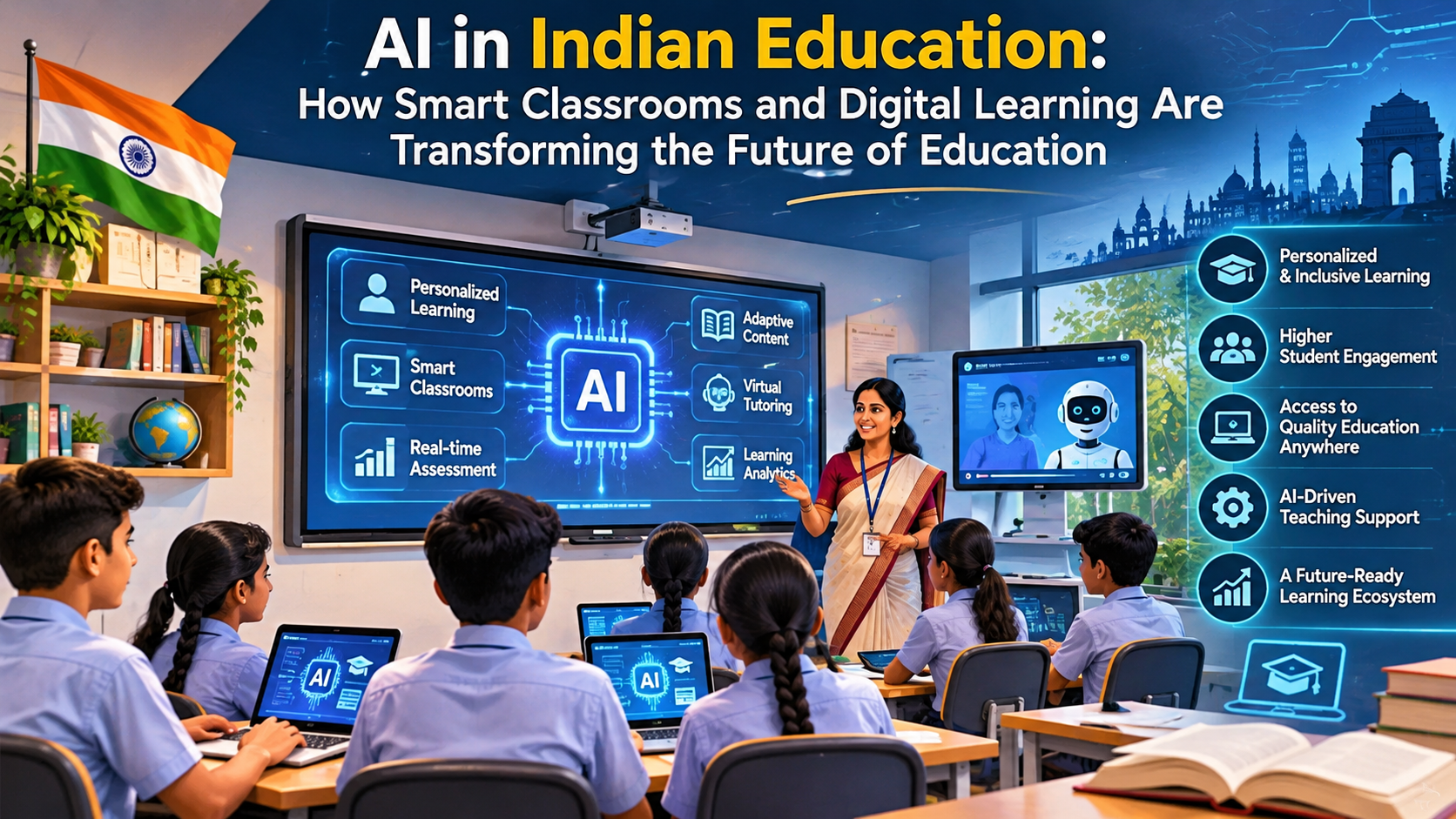
From AI-powered virtual tutors to smart classrooms and digital learning platforms, technology is creating opportunities to make education more flexible, engaging and student-focused. As India continues to strengthen its digital infrastructure, the integration of AI could play a significant role in preparing the next generation for a technology-driven future.
Smart Classrooms: A New Experience of Learning
The traditional classroom experience is gradually evolving with the introduction of smart educational technologies. Digital boards, interactive screens, educational videos, virtual simulations and AI-powered applications are making lessons more engaging and easier to understand.
Instead of relying entirely on textbooks, teachers can now explain complicated subjects through visual presentations, animations and interactive demonstrations. For example, science students can explore virtual experiments, while geography lessons can use digital maps and three-dimensional models to explain different concepts.
These technologies encourage greater classroom participation and allow students to experience learning beyond conventional teaching methods.
Personalised Learning: Education According to Every Student’s Needs
Every student has a different learning ability, understanding level and academic interest. However, traditional classroom teaching often follows a common learning pattern for everyone.
AI is helping change this approach through personalised learning systems. These platforms can analyse students’ performance, identify learning gaps and recommend educational materials according to individual requirements.
Students who struggle with mathematics can receive additional practice questions and simplified explanations, while advanced learners can explore more challenging subjects. This makes learning more flexible and gives students the opportunity to improve at their own pace.
AI Tutors: Learning Beyond Classroom Hours
One of the most promising developments in digital education is the growing use of AI-powered learning assistants. Students can use tools such as ChatGPT and Google Gemini to understand difficult concepts, prepare study notes, practise questions and explore new subjects.
Unlike traditional learning methods, AI assistants can provide explanations whenever students need additional support. They can also help learners organise their study schedules and revise important topics before examinations.
However, AI should be treated as a learning assistant rather than a replacement for textbooks, teachers or independent research. Students must also develop the ability to verify information and think critically.
Digital Education Is Reaching Beyond Metropolitan Cities
One of the biggest opportunities offered by digital education is its potential to connect students from different geographical backgrounds with learning resources.
Students living in rural areas and smaller towns may not always have access to specialised teachers, advanced educational facilities or quality coaching institutions. Online learning platforms can help reduce some of these barriers by providing recorded lectures, digital study materials and interactive educational content.
Government initiatives such as DIKSHA and PM eVIDYA are supporting the expansion of technology-enabled education in India.
Furthermore, multilingual digital learning tools can help students access educational resources in regional languages, making learning more inclusive and accessible.
How AI Is Making Teachers More Effective
Artificial Intelligence is not only changing how students learn but also helping teachers improve their teaching methods.
AI tools can assist educators in preparing lesson plans, creating assignments, developing practice questions and organising educational materials. Some digital platforms can also analyse assessment results and identify subjects where students require additional guidance.
This can reduce repetitive administrative responsibilities and allow teachers to spend more time interacting with students.
However, teaching is much more than delivering information. Teachers play an important role in developing discipline, confidence, creativity, emotional intelligence and critical thinking. AI can support these responsibilities, but human guidance remains essential.
AI in Examinations and Student Performance Analysis
The use of AI in educational assessment is creating new possibilities for understanding student performance.
AI-powered assessment platforms can analyse answers, identify common mistakes and provide feedback on areas that require improvement. Adaptive testing systems can also adjust question difficulty according to a student’s performance.
These technologies can help educators understand individual learning progress rather than depending entirely on examination scores.
However, AI-based evaluation must be implemented carefully. Human supervision, transparency and fairness are necessary to ensure that students are assessed accurately.
Preparing Indian Students for Future Career Opportunities
As AI becomes increasingly important across industries, students need to develop skills that prepare them for future employment opportunities.
Educational institutions can introduce students to emerging subjects such as artificial intelligence, robotics, machine learning, programming, data science and cybersecurity.
Along with technical knowledge, communication, problem-solving, creativity and analytical thinking will remain important professional skills.
The growing integration of AI into education can help students understand emerging technologies at an early stage and explore career opportunities in developing industries.
Challenges of AI Adoption in Indian Education
Despite its advantages, introducing Artificial Intelligence into India’s education system involves several challenges.
Digital Divide: Many students still lack access to computers, smartphones, reliable internet connections and modern educational facilities.
Data Privacy: Educational platforms may collect personal information and student performance records, making data protection essential.
Accuracy of Information: AI tools can sometimes generate incorrect answers, so students must learn to verify information through reliable sources.
Teacher Training: Educators need proper training to understand and use AI technologies effectively.
Overdependence on Technology: Excessive reliance on AI may affect independent thinking, creativity and problem-solving abilities.
Addressing these concerns will require better digital infrastructure, responsible AI policies, affordable technology and awareness among teachers, parents and students.
The Future of AI-Powered Education in India
The future of education in India is likely to combine traditional classroom experiences with intelligent digital learning systems.
AI-powered virtual tutors, interactive educational applications, virtual laboratories and personalised learning platforms could make education more accessible and engaging. Schools and colleges may increasingly adopt technology to support academic development and improve the overall learning experience.
Another important development could be the expansion of AI-powered multilingual education, helping students learn complex subjects in languages they understand comfortably.
However, the success of this transformation will depend on ensuring that technology reaches students from all economic and geographical backgrounds.
Conclusion: Building a Smarter Future Through AI and Education
Artificial Intelligence is creating new opportunities for India’s education sector by transforming traditional classrooms into more interactive, flexible and technology-driven learning environments. From personalised study materials and virtual tutors to smart classrooms and digital assessments, AI has the potential to improve how students access and understand knowledge.
Nevertheless, technology alone cannot create a successful education system. Experienced teachers, human interaction, creativity, independent thinking and practical learning will continue to be essential.
The real future of Indian education lies in bringing together human intelligence and artificial intelligence. With responsible implementation, equal digital access and continuous innovation, India can build an education system that prepares students not only for today’s opportunities but also for the challenges of tomorrow.