


Buying a pre-owned vehicle can be a practical and cost-effective option, but the right choice should begin with understanding the buyer’s requirements. A daily commuter may prioritise mileage, reliability and low maintenance, while a family may look for space, comfort and safety. Someone buying a second vehicle may have different priorities altogether.
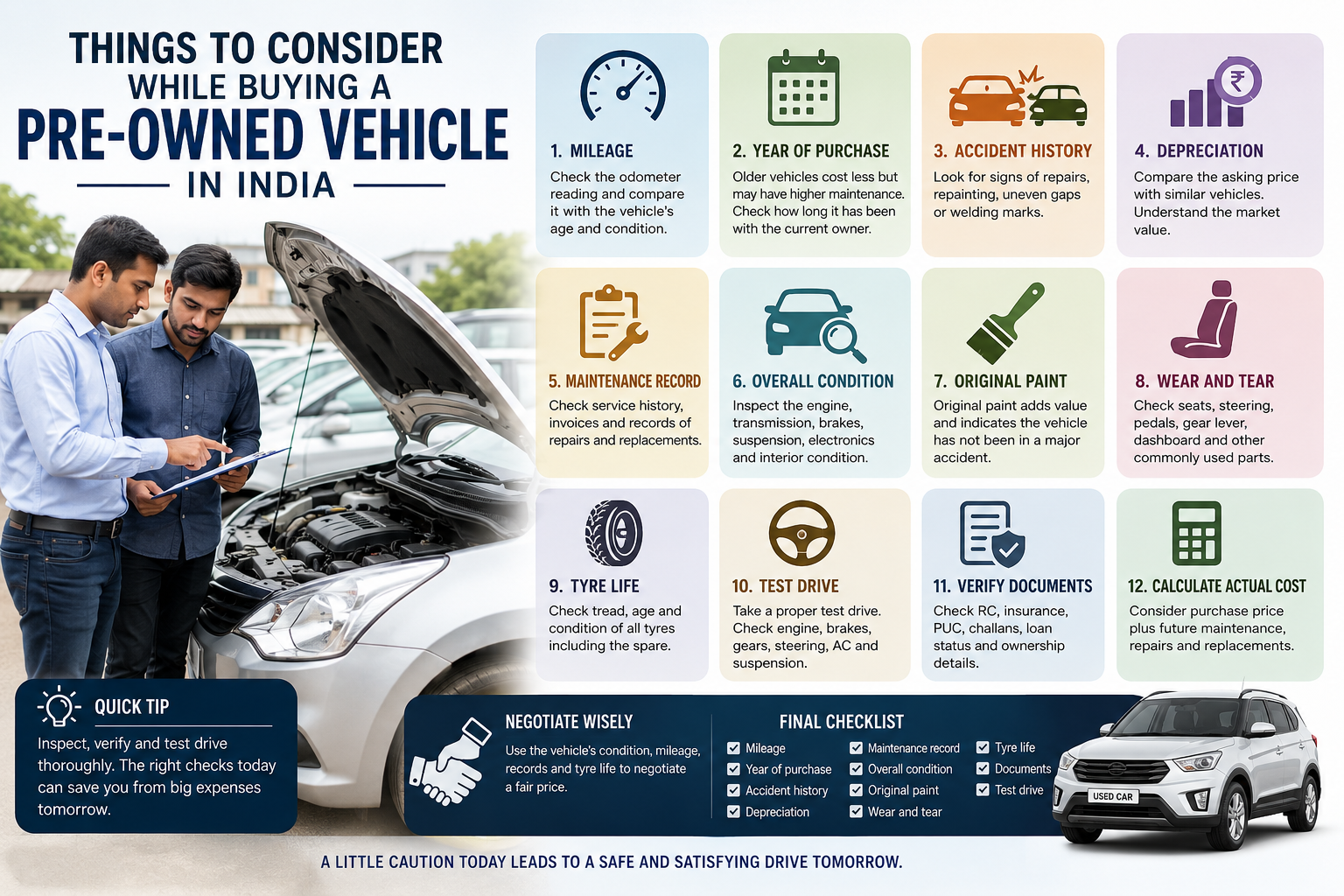
Once the requirements and budget are clear, buyers should look beyond the asking price and assess mileage, year of purchase, accident history, depreciation, maintenance records, paint condition, wear and tear, tyre life and overall condition. These factors can significantly influence the vehicle’s actual value and future ownership cost.
Check the Mileage
Mileage is one of the first things buyers look at, but it should not be considered in isolation. Compare the odometer reading with the vehicle’s age, service records and physical condition.
A higher-mileage vehicle with a good maintenance history can sometimes be a better choice than a low-mileage vehicle that has not been properly maintained.
Consider the Year of Purchase
Find out when the vehicle was purchased and how many owners it has had. The age of the vehicle affects its depreciation as well as the likelihood of maintenance and replacement costs.
Always consider the age, mileage and condition together when comparing vehicles.
Check the Accident History
Accident history can have a major impact on a vehicle’s value and reliability. Look for signs such as:
- Repainted panels
- Uneven panel gaps
- Different paint shades
- Welding or structural repairs
- Replaced lights or bumpers
Minor cosmetic repairs may not be a concern, but major structural damage deserves careful consideration. An independent inspection can help identify repairs that are not immediately visible.
Understand Depreciation
A vehicle loses value over time, but depreciation varies depending on the model, age, mileage, condition and market demand.
Before negotiating, compare the asking price with similar vehicles of the same make, model, variant and year.
Check the Maintenance Record
Ask the seller for service records and invoices. Look for regular servicing, oil changes, brake work, battery and tyre replacements, major repairs and accident-related work.
A vehicle with a consistent and verifiable maintenance history can offer greater peace of mind.
Assess the Overall Condition
Don’t judge a used vehicle only by its appearance. Check the engine, transmission, suspension, brakes, steering, air conditioning, electrical systems and interior.
A professional inspection is advisable because some mechanical problems may not be obvious during a quick visual check.
Check Whether the Paint Is Original
A vehicle with largely original factory paint may command a higher price, particularly when it also has a clean history and has been well maintained.
Repainting does not necessarily mean the vehicle has been in a major accident. Panels can be repainted because of scratches or dents. However, buyers should ask why a panel was repainted and look for differences in colour, texture or finish.
Look at Wear and Tear
Some wear is normal in a pre-owned vehicle. Check the condition of the:
- Seats and upholstery
- Steering wheel
- Gear lever
- Pedals
- Door handles
- Dashboard
- Switches and controls
The wear should be reasonable for the vehicle’s age and mileage. Excessive wear in a supposedly low-mileage vehicle warrants further investigation.
Check Tyre Life
Inspect the tread, age and condition of all tyres, including the spare. Uneven tyre wear may indicate alignment, suspension or steering issues.
If the tyres are nearing the end of their life, include the cost of replacement when negotiating the price.
Take a Proper Test Drive
A test drive can reveal problems that may not be visible when the vehicle is parked. Check:
- Engine performance
- Gear shifts and clutch
- Braking
- Steering
- Suspension
- Vibrations or unusual sounds
- Air conditioning
- Dashboard warning lights
Where possible, drive on different road surfaces rather than limiting the test to a short stretch.
Buying from a Pre-Owned Vehicle Dealer
A reputed pre-owned vehicle dealer may offer inspection reports, warranties, financing and documentation support. However, buyers should still carry out their own checks.
Check the dealer’s reputation, service records, inspection report, warranty terms and any additional charges. An independent inspection is still advisable, even when buying from an established dealer.
Verify the Documents
Before completing the purchase, check the:
- Registration Certificate
- Insurance
- PUC certificate, where applicable
- Service records
- Ownership details
- Loan or hypothecation status
- Pending traffic challans
Make sure the vehicle identification details match the documents.
Calculate the Actual Cost
The asking price is only part of the expense. A cheaper vehicle may immediately require new tyres, battery replacement, servicing or repairs.
Compare the purchase price plus likely immediate maintenance costs before deciding which vehicle offers better value.
Negotiate Based on Condition
Mileage, accident repairs, poor maintenance, significant wear and tear, old tyres and upcoming repairs can provide grounds for negotiating a lower price.
At the same time, original paint, a clean history, regular maintenance, good tyre life and excellent overall condition can justify a higher price.
Final Checklist
Before buying a pre-owned vehicle, check:
- Mileage
- Year of purchase
- Accident history
- Depreciation
- Maintenance record
- Overall condition
- Original paint
- Wear and tear
- Tyre life
- Dealer reputation
- Documents
- Test drive
- Total ownership cost
Conclusion
Buying a pre-owned vehicle requires more than comparing prices. Mileage, age, depreciation, accident history, maintenance records, original paint, wear and tear, tyre life and overall condition all contribute to the vehicle’s real value.
A vehicle that costs slightly more but has a clean history, original paint, good maintenance records and better overall condition could prove to be a much better purchase in the long run.
The best deal is not necessarily the cheapest vehicle—it is the vehicle whose condition, history and price make sense.