


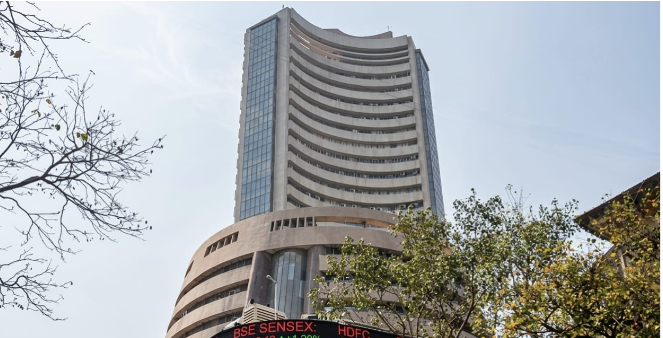
New Delhi, Sep 11: Indian equity markets ended the week on a weak note as rising crude oil prices, escalating tensions in the Middle East and cautious global sentiment kept investors away from aggressive buying.
The Sensex and Nifty remained under pressure through most of the week, with sharp daily swings reflecting the uncertainty in global markets. By Friday, the Sensex closed at 74,781.76, down 120.83 points, while the Nifty 50 ended at 23,398.10, lower by 79.25 points. Both benchmarks declined more than 2 per cent during the week, extending their losing streak to five consecutive weeks.
The week started with investors already cautious after several weeks of weakness. The market initially struggled to find direction as concerns over the Middle East and a rise in crude prices weighed on sentiment. Selling pressure then increased as oil prices moved above the $100-a-barrel level.
The biggest setback came on Wednesday when the Sensex dropped more than 800 points and the Nifty declined nearly 1 per cent. IT stocks were among the major losers, while selling also spread across other sectors. The fall pushed both benchmarks to their lowest levels in around three months.
Thursday provided some relief as the Sensex and Nifty recovered modestly and ended a three-session losing run. However, the rebound lacked broad-based strength and came amid significant volatility in the closing auction session. Rising Brent crude, which remained above $100 a barrel, continued to keep investors cautious.
Friday again brought pressure to the market. Although the indices recovered from their early lows, the overall trend remained weak. The broader market also faced selling, showing that the concerns were not limited to a few large-cap stocks.
Crude oil becomes the biggest market concern
The sharp rise in crude oil prices was one of the biggest factors affecting Indian equities during the week. Brent crude moved above $100 a barrel and remained elevated as tensions in the Middle East raised concerns over supply and shipping routes.
For India, expensive crude is particularly important because the country depends heavily on imports to meet its oil requirements. A prolonged increase in prices could raise the import bill, put pressure on the rupee and increase costs for companies across transportation, manufacturing and other energy-intensive sectors.
Higher oil prices can also create inflationary pressure, making investors more cautious about the outlook for interest rates and economic growth.
IT stocks remain under pressure
The technology sector was another major drag on the market. IT stocks witnessed significant selling during the week as investors remained concerned about global demand, valuations and the outlook for US interest rates.
The Nifty IT index was among the weaker sectoral performers, contributing to the broader decline in benchmark indices. The pressure on IT stocks also reflects the importance of global economic conditions for Indian technology companies, which earn a large share of their revenue from overseas markets.
Foreign selling adds to market weakness
Foreign investor activity remained another important factor for the market. Overseas investors continued to reduce exposure to Indian equities, adding to the pressure created by global uncertainty. Domestic institutional investors provided some support, but this was not enough to completely offset foreign selling.
The rupee also weakened during the week, adding another layer of concern for investors as higher oil prices and capital outflows can increase pressure on India’s external accounts.
Domestic fundamentals provide some support
Despite the difficult week, India’s underlying economic story remains an important source of support. Strong domestic consumption, infrastructure spending, digitalisation and corporate investment continue to provide a relatively stable foundation for the economy.
The growing participation of domestic investors has also helped reduce the market’s dependence on foreign capital. This has provided some cushion whenever global investors turn cautious.
However, the immediate market environment remains challenging. Fourteen of 16 major sectoral indices recorded losses during Friday’s session, while small- and mid-cap stocks also came under pressure.
Outlook for the coming week
The market is likely to remain sensitive to developments in crude oil prices, the Middle East situation, foreign fund flows and global interest-rate expectations.
A sustained decline in oil prices or easing of geopolitical tensions could provide relief to Indian equities. On the other hand, another sharp rise in crude could increase concerns about inflation, the rupee and corporate profitability.
For investors, the week’s performance highlights the importance of selective buying rather than broad-based risk-taking. Companies with strong balance sheets, steady earnings and greater exposure to domestic demand may remain relatively better placed while global uncertainty persists.
The Indian market therefore enters the next week on a cautious footing. After five consecutive weekly declines, investors will be looking for stability in crude prices and global markets before sentiment can improve meaningfully.