


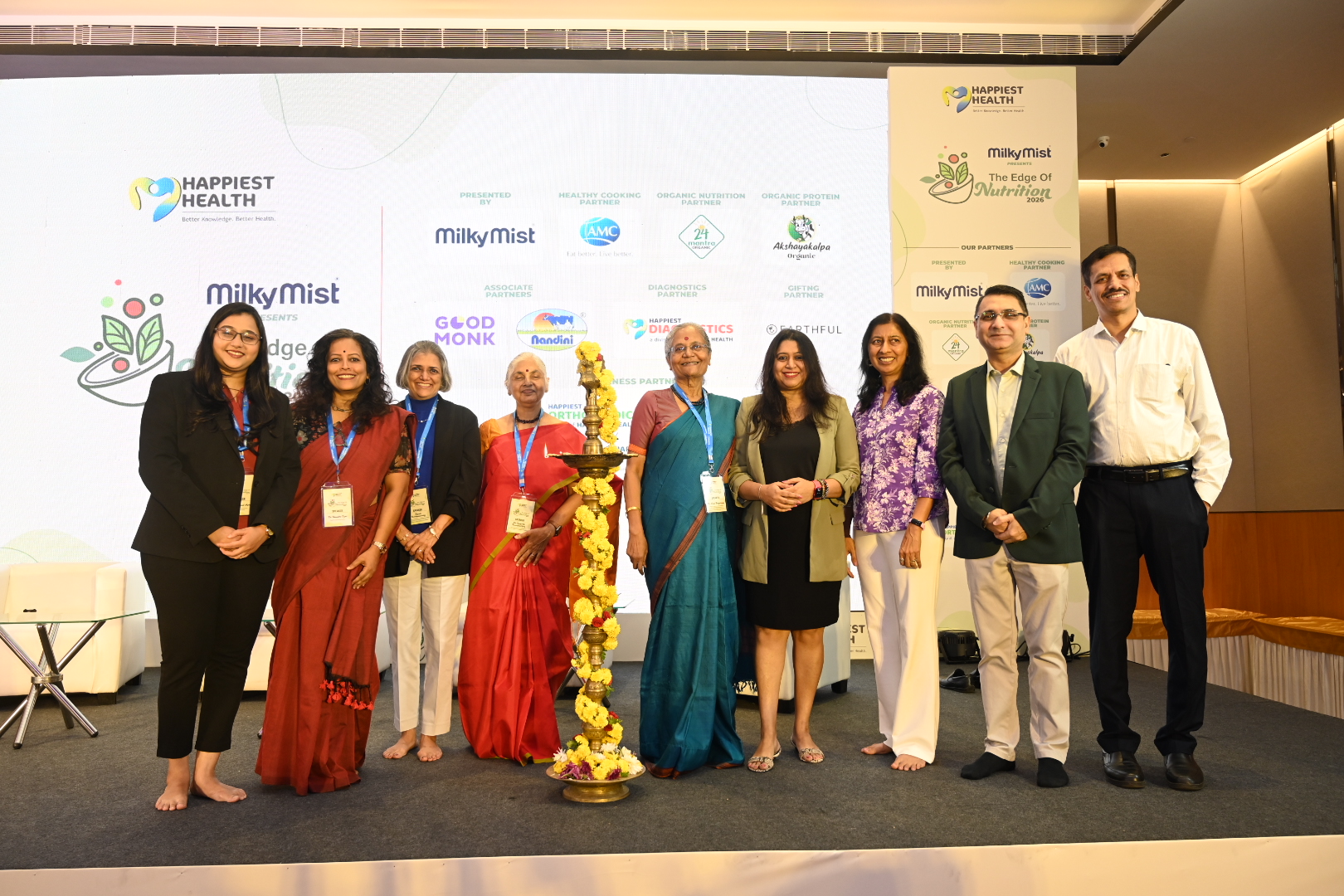
Bengaluru, Aug 10: The human milk microbiome could offer new insights into how nutrition in the earliest stages of life influences health well beyond infancy, experts said at The Edge of Nutrition 2026, the annual nutrition summit hosted by Happiest Health in Bengaluru.
Bringing together leading nutrition experts, clinicians, researchers and wellness practitioners, the summit explored the evolving science of nutrition and its role in preventive health. Experts highlighted that human milk is more than a source of nourishment for a growing baby, pointing to the role of human milk oligosaccharides (HMOs), which act as prebiotics that help nourish the developing gut microbiome. Emerging research into the human milk microbiome and the gut-brain axis could further deepen understanding of how early-life nutrition influences health and development.
Held on Saturday, Happiest Health’s The Edge of Nutrition 2026 brought together experts across nutrition, paediatrics and precision health to examine how nutrition science is evolving across the life course. The summit featured a keynote by Dr. Sumathi Swaminathan, Associate Professor of Nutrition, St. John’s Research Institute, a panel discussion titled “Nutrition in the Age of Precision Health – Personalised Diets, Gut Genomics & Beyond”, and a session by Dr. Asha Benakappa, Head of Department, Pediatrics, Dr Chandramma Dayananda Sagar Institute of Medical Education and Research, Dayananda Sagar University, titled “The First 1000 Days, and Beyond.”
From breast milk to the microbiome: why the first 1,000 days matter
A key insight emerging from the summit was that the first 1,000 days represent a critical window for building the foundations of lifelong health, beginning with maternal nutrition during pregnancy and extending through breastfeeding and the introduction of complementary foods. Experts highlighted that human milk oligosaccharides help nourish the developing gut microbiome, while research into the human milk microbiome and the gut-brain axis is opening up new areas of scientific inquiry. The discussion also emphasised that early nutrition can influence physical growth, brain development and long-term health, making breastfeeding and appropriate complementary feeding important components of preventive health. Experts stressed that supporting mothers cannot be the responsibility of mothers alone, with families, fathers, healthcare professionals, workplaces and communities all having a role in creating an environment that enables mothers and babies to thrive.
Panel on Nutrition in the Age of Precision Health – Personalised Diets, Gut Genomics & Beyond, featuring Sheela Krishnaswamy, Registered Dietitian, Independent Nutrition & Wellness Consultant and Former National President, Indian Dietetic Association; Dr. Nandita Iyer, Health Coach and Author; and Aditi Prasad Apte, Senior Clinical Nutritionist, Aster RV Hospital, explored the evolving role of personalised nutrition. The panel emphasised that personalised nutrition should not be reduced to a battery of tests or an overload of health data, but should begin with understanding an individual’s diet, physical activity, sleep, medical and family history, body composition, cultural food habits and health goals. Advanced tools such as genomics, continuous glucose monitoring and microbiome analysis can play a role where relevant, but should complement—not replace—qualified nutrition professionals and clinical judgement. The panel also cautioned against treating direct-to-consumer microbiome testing as definitive, given the evolving evidence and dynamic nature of the microbiome.Dr. Asha Benakappa, Head of Department, Pediatrics, Dr Chandramma Dayananda Sagar Institute of Medical Education and Research, Dayananda Sagar University, said “The first thousand days are not simply a window for nutrition—they are an opportunity to build the foundation for a lifetime of health. From conception and maternal nutrition to breastfeeding and the transition to complementary foods, what happens during this period can influence physical growth, brain development and long-term health. Human milk is particularly fascinating because it contains human milk oligosaccharides that help nourish the developing gut microbiome, and we are now beginning to study the human milk microbiome and its relationship with the gut-brain axis. There is still much to learn, but this is an exciting area of research. At the same time, we must remember that science has to be supported by action—mothers need the right nutrition, breastfeeding support and mental health support, while families, fathers, workplaces and communities must come together to create an environment in which both mother and baby can thrive.”
Benakappa’s team is doing research on the world’s human milk microbiome research project.
Commenting on the summit, Raghu Krishnan, CEO – Knowledge Business and Chief Editor, Happiest Health, said “Nutrition is one of the most powerful tools we have to improve health outcomes, yet it is also one of the most misunderstood. Through The Edge of Nutrition 2026, our objective was to bring together leading experts to simplify the science, challenge misconceptions and share practical, evidence-based insights that people can apply in their everyday lives. The conversations reinforced that better health does not necessarily come from more information or more testing, but from better understanding, context and action. The enthusiastic participation and quality of discussions reaffirm the growing need for credible platforms that bridge research and real-world healthcare. At Happiest Health, we remain committed to fostering informed conversations that empower individuals to make better choices and embrace preventive health as a way of life.”
The summit also featured Dr. Umesh Wadhavani’s “Dieting Ka Mazaak”, which used humour to challenge common misconceptions around dieting and encouraged audiences to adopt more balanced and sustainable approaches to healthy living.
The Edge of Nutrition 2026 reaffirmed Happiest Health’s commitment to advancing credible, evidence-based conversations on health and wellness by bringing together experts across disciplines to simplify emerging science, challenge misconceptions and inspire healthier lifestyles.