


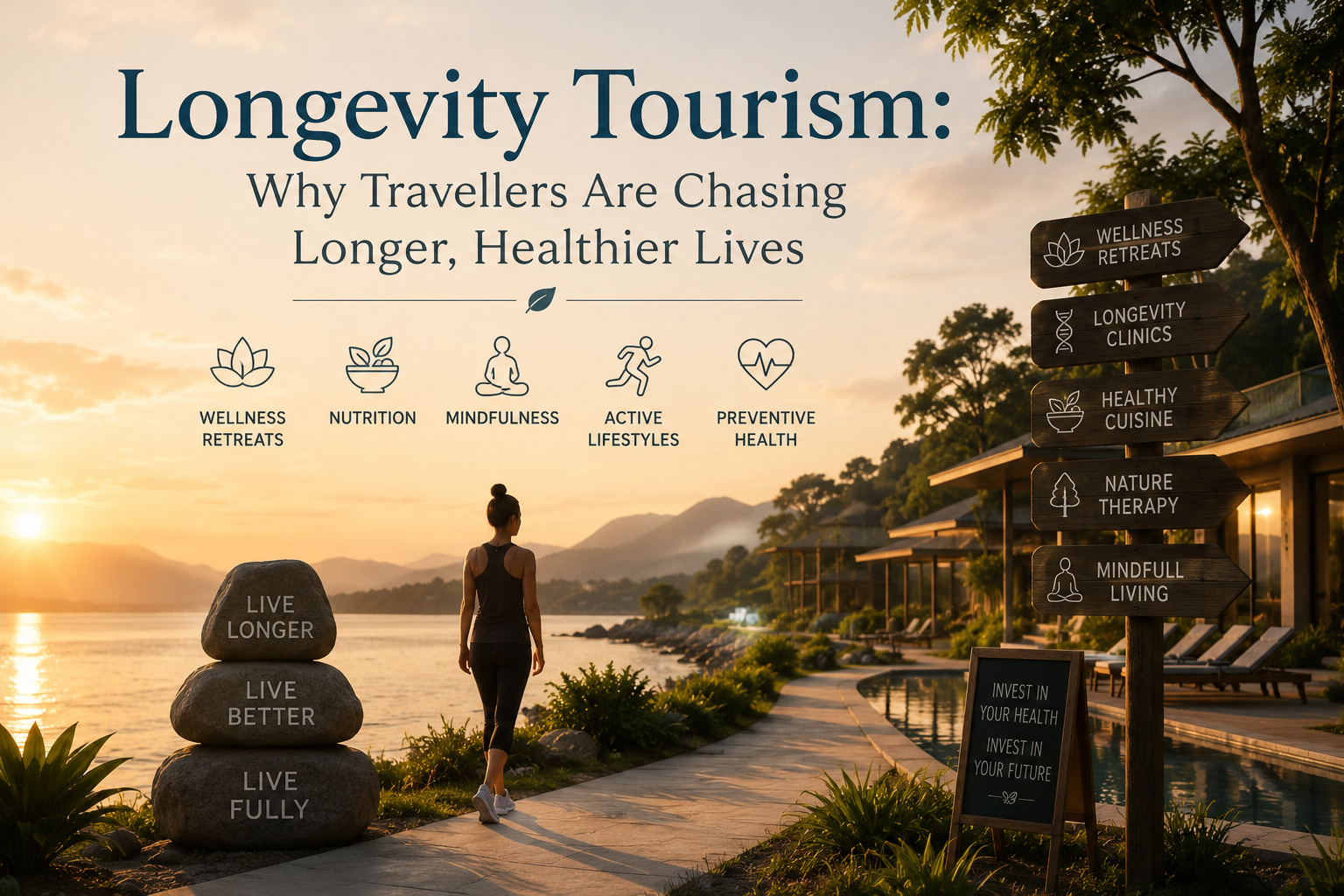
Aug 21: Longevity tourism is emerging as one of the most interesting trends in wellness travel, as travellers increasingly look beyond traditional holidays for experiences that support healthier ageing, better sleep, fitness and long-term wellbeing.
A holiday was once about sightseeing, relaxing and returning home with photographs and memories. Today, a growing number of travellers want something more from their trips: better health, deeper rest and habits that can help them live healthier lives for longer.
Instead of simply booking a spa break, travellers are exploring experiences that focus on fitness, nutrition, sleep, stress management, preventive wellness and personalised health programmes.
The idea is simple: travel not just to escape everyday life, but to invest in a healthier life beyond the holiday.
What Is Longevity Tourism?
Longevity tourism refers to travel experiences focused on healthy ageing and extending healthspan—the years of life spent in good health and wellbeing.
A longevity-focused trip could include fitness programmes, nutrition consultations, sleep and stress-management activities, mindfulness, outdoor experiences or personalised wellness assessments.
The focus is therefore broader than simply trying to “live longer”.
It is about living better for longer.
The trend is gaining recognition across the wellness industry. The Global Wellness Institute’s 2026 Wellness Tourism Initiative Trends identifies “Longevity Travel – Credibility Matters” as one of the key trends shaping wellness tourism. The report points to growing demand for trusted, evidence-led programmes and experiences that can encourage healthier habits beyond the trip.
Wellness Tourism Is Becoming a Major Travel Economy
Longevity tourism is developing within the much larger wellness travel market.
According to the Global Wellness Institute’s 2025 Global Wellness Economy Monitor, wellness tourism generated approximately $893.9 billion in spending in 2024. The sector is projected to grow at an average annual rate of 9.1% between 2024 and 2029.
The scale of wellness travel is equally significant. The report estimates that wellness travellers made approximately 1.24 billion domestic and international wellness trips in 2024.
These figures help explain why hotels, resorts and destinations are increasingly creating experiences centred on health and wellbeing.
The 2026 Global Wellness Institute trends report also highlights a shift from traditional “anti-ageing” messaging towards healthspan—helping people feel healthier, stronger and more active for longer.
Why Are Travellers Interested in Longevity?
Modern lifestyles have encouraged people to think more seriously about long-term wellbeing.
Long working hours, sedentary routines, stress, poor sleep and excessive screen time can make healthy living difficult.
Travel offers an opportunity to temporarily step away from these routines.
A traveller may use a holiday to sleep better, spend more time outdoors, exercise, eat healthier food or simply slow down.
Longevity tourism takes that idea a step further by creating structured experiences around these lifestyle choices.
From Relaxation to Prevention
Traditional wellness tourism often focused on relaxation.
Longevity tourism puts greater emphasis on prevention and long-term lifestyle changes.
Some wellness destinations combine fitness, nutrition, sleep and recovery programmes with personalised assessments.
The appeal is that travellers are not simply looking for a temporary break. They want to return home with habits that can become part of everyday life.
However, travellers should understand the difference between wellness services and medical care. A wellness retreat should not automatically be considered a substitute for professional medical treatment.
Technology Is Changing Longevity Travel
Technology is becoming an important part of personalised wellness.
Wearable devices can monitor activity and sleep, while digital platforms can help travellers track lifestyle habits.
Artificial intelligence could make these experiences even more personalised. The Global Wellness Institute’s 2026 wellness tourism trends identify AI-designed wellness travel as an emerging development.
Instead of offering every guest the same programme, hotels and wellness centres could increasingly create experiences based on individual goals and preferences.
For one traveller, that might mean a sleep-focused programme. For another, it could involve fitness, nutrition or stress management.
Nature Is Part of the Longevity Experience
Longevity tourism is not necessarily about expensive treatments or sophisticated health assessments.
Nature can be just as important.
Walking, hiking, cycling, swimming and spending time outdoors can encourage movement and provide a break from sedentary urban routines.
This is one reason destinations with mountains, forests, beaches and open spaces are attractive to wellness travellers.
A healthy holiday does not always need complicated interventions. Sometimes, it can begin with something as simple as moving more and slowing down.
Blue Zones Are Inspiring Travellers
Interest in Blue Zones has also contributed to the popularity of longevity-focused travel.
These regions have attracted attention because of the longevity of some populations and the lifestyle habits associated with them.
Travellers are curious about traditional diets, physical activity, community connections, social relationships and a sense of purpose.
The attraction is not necessarily the belief that visiting a particular destination will automatically make someone live longer.
Instead, travellers are interested in understanding lifestyle habits that they can potentially bring back home.
Asia Could Benefit From the Longevity Tourism Boom
Asia has significant potential in wellness and longevity tourism.
The region can combine modern wellness facilities with traditional practices, local food, nature and cultural experiences.
Thailand, for example, has been actively promoting itself as a destination for longevity tourism, combining wellness, medical innovation, nutrition, exercise and traditional practices.
For Asian destinations, the opportunity lies in creating experiences that feel authentic while maintaining strong standards of credibility and transparency.
India Has a Natural Advantage
India’s long association with yoga, Ayurveda, meditation and traditional wellness practices gives it a strong foundation for longevity tourism.
Destinations such as Kerala, Uttarakhand and Goa could potentially combine these traditions with modern wellness hospitality.
India can also offer something increasingly valuable to wellness travellers: a combination of nature, culture, food and holistic experiences.
But credibility will be crucial.
Longevity tourism cannot simply involve adding the word “longevity” to an expensive holiday package. Travellers increasingly want transparency about what a programme offers, who provides it and what evidence supports its claims.
Credibility Will Define the Next Phase
The Global Wellness Institute’s decision to highlight “Longevity Travel – Credibility Matters” is significant.
As longevity tourism grows, travellers will encounter a wide range of claims about anti-ageing, wellness and health optimisation.
The strongest operators are likely to be those that provide transparent information, qualified professionals and evidence-based services.
Travellers should be cautious about exaggerated promises.
The objective of longevity tourism should be to encourage sustainable lifestyle improvements—not to promise unrealistic results.
Longevity Tourism May Become More Accessible
Today, many advanced longevity programmes are associated with luxury resorts and high-end wellness centres.
That could change.
A wellness-focused holiday built around walking, nutritious food, outdoor activities, good sleep and stress reduction does not necessarily require luxury accommodation.
This could create different levels of longevity tourism, from premium health retreats to affordable wellness and nature holidays.
The underlying idea remains the same:
Return home with healthier habits, not just souvenirs.
The Future Will Be More Personalised
Wellness travel is becoming increasingly personal.
One traveller may want better sleep. Another may want to improve fitness. Someone else may want to reduce stress or spend less time on digital devices.
The traditional one-size-fits-all wellness retreat may therefore give way to more personalised experiences.
Technology can help create these programmes, but human guidance and credible expertise will remain important.
What Does the Future of Longevity Tourism Look Like?
The next generation of wellness travel could focus less on pampering and more on personal transformation.
Hotels and resorts may offer personalised wellness itineraries. Destinations could develop tourism experiences around healthy living. Technology could help travellers monitor their progress, while nature and local culture provide the setting.
The strongest longevity destinations may combine:
- Fitness and movement
- Healthy nutrition
- Sleep and recovery
- Stress management
- Nature
- Culture
- Personalised wellness
- Credible professional guidance
- Continued support after the trip
A Holiday That Comes Home With You
Perhaps the most interesting thing about longevity tourism is that its value does not necessarily end when the holiday is over.
A spa treatment may provide temporary relaxation. But learning to sleep better, exercise regularly, eat more thoughtfully, manage stress or spend more time outdoors can influence everyday life long after the trip.
That is what makes longevity tourism different.
The goal is not simply to add more years to life. It is to make those years healthier, more active and more fulfilling.
With wellness tourism generating approximately $893.9 billion in spending in 2024, according to the Global Wellness Institute, and longevity travel emerging as a major 2026 trend, this is becoming more than a niche travel concept.
The traveller of the future may not simply ask:
“Where can I go to relax?”
Increasingly, the question could be:
“Where can I go to come back healthier than when I left?”
And that could make longevity tourism one of the most interesting developments in the future of travel—where the best souvenir is not something bought at the airport, but a healthier way of living brought home.