


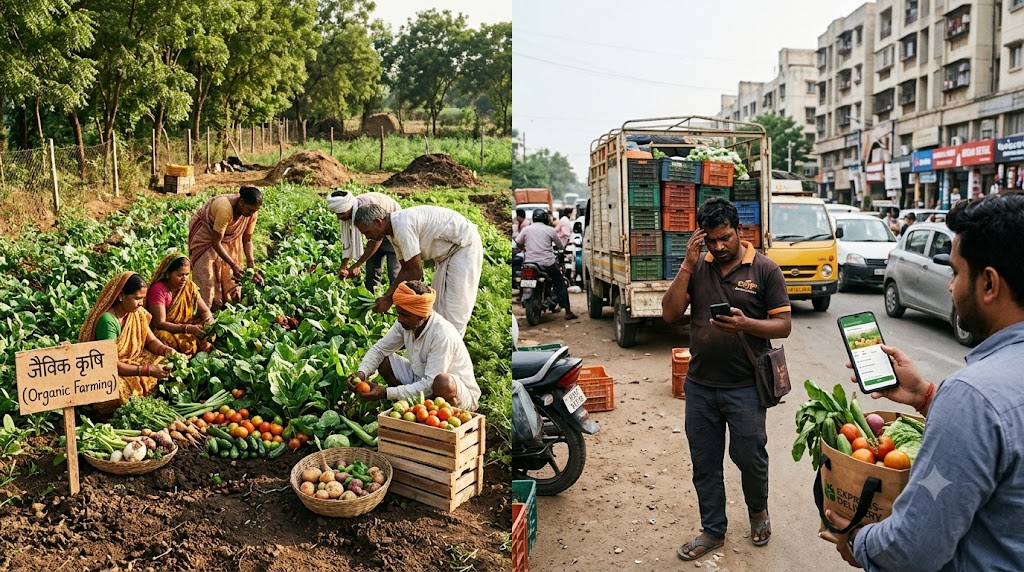
India’s organic agriculture sector has a strong production base, a growing network of farmers and rising consumer interest in healthier food choices. Yet, turning this potential into a reliable business opportunity remains a complex task. While organic farming creates opportunities for premium food products and sustainable agriculture, connecting small farmers directly with households at affordable prices is still difficult. The next stage of growth will depend on building efficient supply chains, improving consumer trust and making organic food more accessible beyond a limited group of high-income buyers.
India’s Organic Food Market Offers Significant Growth Potential
India has emerged as a major participant in global organic agriculture, supported by its large farming community, diverse agro-climatic conditions and established traditional farming practices. The country ranks first globally in the number of organic producers and is among the leading nations in organic agricultural land.
The domestic organic food market is also expanding as consumers pay greater attention to food quality, sourcing and production methods. This creates opportunities across fresh produce, grains, pulses, spices, packaged foods and other agricultural products.
For farmers, organic cultivation can provide access to differentiated markets when production quality, certification and demand align. For food businesses, the sector offers opportunities in procurement, processing, packaging, distribution and digital retail.
However, market growth alone does not guarantee higher earnings for farmers. Producers need dependable buyers, fair prices and efficient routes to market to turn rising demand into sustainable income.
Farm-to-Consumer Models Aim to Strengthen Market Access
Farm-to-consumer, or F2C, models seek to shorten the distance between agricultural producers and buyers. By reducing unnecessary intermediaries, these models can improve price transparency, strengthen farmer relationships and give consumers better visibility into how their food is sourced.
Digital platforms, subscription services, farmer collectives and community-based distribution networks can help bring organic produce to urban households. They can also give smaller producers access to customers who might otherwise be difficult to reach.
However, removing intermediaries does not remove the work they perform. Collection, grading, quality checks, storage, transportation, packaging, customer service and delivery still require investment and coordination.
For F2C businesses, the commercial challenge is to manage these activities efficiently while ensuring that farmers receive reasonable returns and consumers are not burdened with excessive prices.
Fragmented Farms Make Consistent Supply Difficult
A large proportion of India’s farmers operate on small or marginal landholdings. Although these farms contribute significantly to agricultural production, their limited individual output can make it difficult for businesses to procure consistent quantities throughout the year.
Organic food companies often need predictable volumes, uniform quality and dependable delivery schedules to serve retail customers. When supply comes from many small farms with different harvesting cycles and production practices, coordination becomes more complicated.
Farmer producer organisations, cooperatives and local aggregation centres can help address this problem. By pooling produce, coordinating harvests and sharing infrastructure, these networks can improve bargaining power and reduce procurement costs.
For businesses, investing in strong relationships with farmer groups can create a more dependable supply base. For farmers, collective marketing can improve access to larger markets without requiring each producer to manage distribution independently.
Storage and Logistics Remain Major Cost Pressures
Fresh organic produce can be highly perishable, making efficient post-harvest management essential. Inadequate storage, limited sorting facilities and weak cold-chain access can lead to spoilage, inconsistent quality and financial losses.
These challenges are particularly important for F2C businesses, which must deliver fresh produce over relatively short timeframes while managing the cost of individual orders. Transporting small quantities over long distances can make each delivery expensive, especially when demand is spread across multiple locations.
Local collection hubs, better packaging, demand forecasting and strategically located storage facilities can help improve efficiency. Grouping orders by neighbourhood and coordinating deliveries can also reduce transportation costs.
Businesses that strengthen these operations may be better positioned to expand beyond a small customer base. However, investment decisions must reflect local demand, product shelf life and the economics of each delivery route.
Certification and Traceability Are Essential for Consumer Trust
Consumer confidence is central to the organic food business. Buyers need to know whether products meet recognised organic standards and whether the claims made on packaging are reliable.
India’s organic certification framework includes the National Programme for Organic Production (NPOP) and Participatory Guarantee System (PGS-India). The appropriate system depends on the market, certification requirements and applicable rules. The Jaivik Bharat identity also helps consumers recognise food products represented as organic under the relevant regulatory framework.
For small farmers, certification and documentation can involve time, administrative effort and additional costs. These requirements may be difficult to manage independently, particularly when producers have limited access to technical guidance.
Farmer groups, producer organisations and supply-chain partners can help share compliance responsibilities and improve record-keeping. Digital traceability tools may also help businesses communicate information about sourcing, certification and product handling.
Clear, verifiable claims are important because terms such as natural, chemical-free and residue-free do not automatically mean that a product is certified organic. Stronger transparency can help reduce confusion and encourage repeat purchases.
Price Sensitivity Limits Wider Adoption
Organic food often carries a higher retail price because of production practices, certification, labour requirements, handling and distribution costs. During the conversion to organic farming, some producers may also experience changes in yields and income, making the transition financially demanding.
For price-conscious Indian households, a significant premium can limit regular purchases, even when interest in organic food is growing. Consumers may be willing to buy selected organic products but hesitate to shift their entire grocery basket.
This creates a challenge for businesses seeking to move organic food from a niche category into everyday consumption.
Improving farm-level productivity, reducing post-harvest losses, aggregating supply and streamlining delivery can help control costs. Offering a wider range of pack sizes and making product information easier to understand can also help customers make informed purchasing decisions.
Long-term growth will depend on balancing fair returns for farmers with prices that consumers can afford to pay regularly.
Digital Platforms Create New Opportunities for Organic Businesses
E-commerce and direct-selling platforms give organic producers additional ways to reach customers and communicate the value of their products. Digital channels can support advance ordering, recurring deliveries, customer feedback and demand planning.
For small and medium-sized businesses, this creates opportunities in online grocery retail, farm sourcing, organic food processing, subscription management and last-mile logistics.
However, online visibility alone is not enough to build a profitable business. Companies must maintain product quality, manage fulfilment costs and provide consistent service. Customer acquisition can become expensive if buyers make only occasional purchases or discontinue subscriptions after an initial trial.
A stronger model combines digital access with reliable local procurement and distribution. Businesses that understand neighbourhood demand and coordinate supply accordingly may be able to reduce waste while improving customer retention.
Farmer Income and Business Efficiency Must Grow Together
The long-term success of India’s organic agriculture market depends on whether value is shared across the supply chain. Farmers need commercially viable prices and predictable demand, while businesses need enough operating efficiency to cover procurement, storage, compliance and delivery costs.
Transparent pricing arrangements, long-term purchasing relationships and collective marketing can help create more stable partnerships. Processing surplus produce into products with a longer shelf life may also reduce waste and open additional revenue channels, depending on market demand and food safety requirements.
Government support, farmer training and investment in rural infrastructure can strengthen this ecosystem. Businesses also have a role to play by helping producers meet quality standards, plan production and understand customer requirements.
The Road Ahead for India’s Organic Agriculture Market
India’s organic agriculture sector has considerable potential, but scaling farm-to-consumer models requires more than growing consumer awareness or launching new digital platforms. Reliable aggregation, affordable certification pathways, efficient logistics and transparent product claims are essential to building a stronger market.
The most promising opportunities lie in connecting small farmers with dependable demand while reducing the costs that make organic food difficult to distribute at scale. Better coordination between producers, technology providers, retailers and logistics companies can help create a more resilient supply chain.
Ultimately, the future of India’s organic food business will depend on making sustainable farming commercially viable for producers and practical for consumers. When trust, affordability and operational efficiency improve together, farm-to-consumer models can become a stronger route to market for India’s organic farmers.