


India’s passenger vehicle market is undergoing a fundamental shift, with consumers increasingly seeking a combination of design, technology, safety, comfort and efficient mobility rather than focusing only on price and fuel economy.
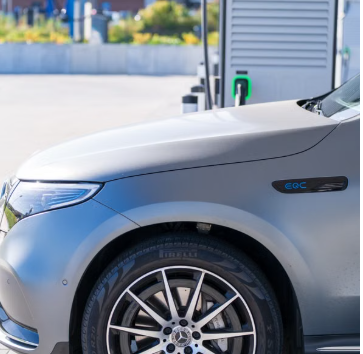
The transformation is particularly visible in electric cars. India’s electric passenger vehicle market grew 102 per cent year-on-year in the second quarter of 2026, substantially faster than the 26 per cent expansion recorded by the overall passenger vehicle market, according to CyberMedia Research (CMR).
The pace of growth indicates that electric mobility is moving beyond a niche category. A wider selection of models, improving availability and the potential for lower ownership costs are making EVs increasingly relevant to mainstream buyers.
A market driven by changing aspirations
The Indian car buyer is becoming more demanding. A vehicle is increasingly expected to provide not only dependable transportation but also a modern ownership experience.
SUVs have emerged as a major beneficiary of this trend. Their combination of road presence, spacious cabins, higher ground clearance and increasingly sophisticated features has made them particularly attractive to consumers.
Technology is strengthening that appeal. Connected services, digital instrument clusters, large touchscreens, advanced infotainment and driver-assistance features are becoming increasingly important in vehicle selection.
This evolution is effectively turning the car into a technology product, with the cabin experience becoming almost as important as the mechanical performance.
EV growth gathers momentum
Recent retail data reinforces the acceleration in electric mobility. India recorded 3,27,901 EV retail sales in July 2026, the highest monthly figure on record and a 66 per cent increase from a year earlier. Electric passenger vehicle registrations rose 83.1 per cent to 32,928 units during the month.
The wider passenger vehicle market is also showing considerable strength. FADA data showed passenger vehicle retail sales reached 4,16,555 units in July, crossing the four-lakh mark for the first time in a July and rising 19.13 per cent year-on-year.
Together, these figures point to a market where conventional vehicles continue to grow while alternative powertrains are gaining ground at a faster pace.
Technology becomes part of everyday driving
The transformation is not limited to electric power.
Connected vehicles are becoming more common as consumers seek features such as remote vehicle monitoring, over-the-air software updates, real-time diagnostics and integrated digital services. CMR expects connected vehicles to account for 40–45 per cent of the passenger vehicle market by the end of 2026.
Safety technology is also becoming more visible. Advanced driver-assistance systems, digital displays and connected safety functions are gradually moving from premium models towards more mainstream vehicles.
This creates a new competitive environment for manufacturers. Vehicle makers increasingly need to deliver an integrated package of design, software, safety and convenience, rather than competing only on engine performance or exterior styling.
Affordability remains the key test
Despite the premiumisation of India’s car market, affordability continues to shape consumer decisions. CMR estimates that 98 per cent of passenger vehicle volumes remain concentrated below Rs 30 lakh.
This makes cost an important factor in the future of EV adoption. Manufacturers will need to make electric technology and advanced features accessible to a much larger section of the market if the current momentum is to translate into sustained mass adoption.
The issue is particularly important beyond major urban centres, where charging availability, service networks and consumer awareness can influence purchasing decisions.
The festive season adds another layer
The second half of 2026 could become an important period for the industry. Strong July sales, a pipeline of new launches and the approaching festive season are creating favourable conditions for manufacturers.
CMR expects India’s passenger vehicle market to maintain steady growth in the second half of the year, supported by festive demand, new models and continued consumer interest in SUVs and feature-rich vehicles.
For consumers, the result is a rapidly expanding range of choices across petrol, hybrid and electric powertrains.
A broader transformation
India’s automotive story is therefore no longer simply about increasing car ownership. It is about changing expectations.
The modern buyer increasingly wants a vehicle that looks distinctive, costs less to operate, keeps passengers connected and provides greater safety. EVs are benefiting from this shift because they naturally combine several of these trends with the larger movement towards cleaner mobility.
The industry’s next phase will depend on how effectively manufacturers balance innovation with affordability. If electric powertrains, connectivity and advanced safety features become accessible across a wider range of price points, the transformation could reach far beyond India’s premium urban market.
The rapid growth recorded in 2026 suggests that India’s automobile industry is moving towards a future where mobility, technology and lifestyle are increasingly intertwined. The car is evolving from a traditional transport product into a connected and increasingly personalised part of everyday life.