


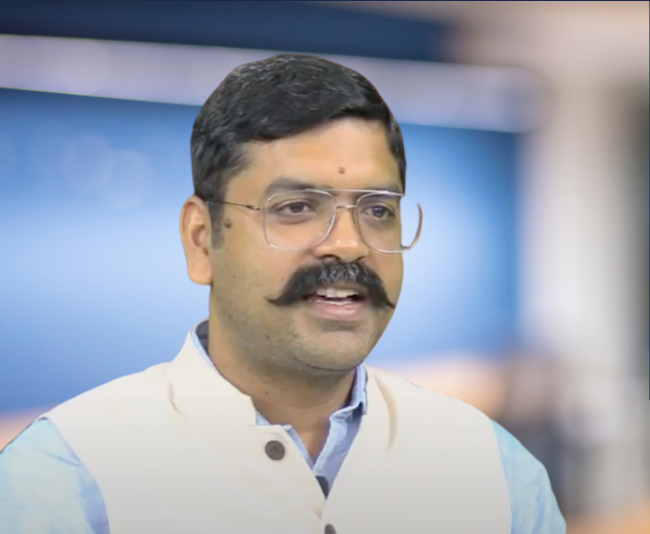
New Delhi, Aug 01: Serial entrepreneur and governance researcher Amit Shukla appeared on the “Flirting With a Fish” podcast hosted by Sonia Swaroop Choksi this month and made a pointed observation that has gone largely unnoticed in mainstream career conversations: India has 32 lakh ward member including 2.7 lacs panchayat president positions across 7 lakh Villages, with roughly 6 lakh of these seats opening every year on a rolling basis, a minimum candidacy age of 21, and collective constitutional authority over ₹25 lakh crore in annual public expenditure — while crores of young Indians spend years competing for a fraction of that many UPSC, SSC, and Railways seats.
Shukla, co-founder of Empower Panchayat and Simpler Today AI and a doctoral researcher at IIT Mandi, used the conversation to argue that the Gram Panchayat tier of government remains India’s most underleveraged career opportunity and its most consequential and world’s largest democratic institution — and that the two problems are the same problem.
“If you divide 32 lakh positions across five-year cycles, you get roughly 6 lakh vacancies every year. These positions carry authority over agriculture, fisheries, primary education, housing, water, and rural roads. The 29 subjects under Gram Panchayat jurisdiction account for approximately ₹25 lakh crore in annual public expenditure i.e. 1-5 Crore per year per village panchayat. A ward member at 21 has more direct constitutional authority over daily life in their village than most gazetted officers will exercise in their entire careers.”
— Amit Shukla, Co-founder, Empower Panchayat & Simpler Today AI; Doctoral Researcher, IIT Mandi
Shukla categorised the 29 Eleventh Schedule subjects into four practical brackets: earning opportunities, which include agriculture, animal husbandry, fisheries, food processing, forest produce and cottage industries; basic amenities, covering primary health, education, housing, water, and sanitation; foundational infrastructure, encompassing land, roads, water, and electricity; and social protection for marginalised communities. He noted that agriculture alone — a Gram Panchayat subject — is India’s largest employer, making the Panchayat tier the single institution with the most direct constitutional authority over where the majority of Indians work and live.
He drew particular attention to the Agniveer pipeline, arguing that returning defence personnel with discipline, leadership exposure, and nationalist orientation are well-positioned to contest Gram Pradhan elections in their home villages, and that this represents an underexplored reintegration pathway that benefits both the individual and the village.
“Whether your ambition is political or entirely outside politics, the Gram Panchayat is a career foundation very few other roles can match at that age. There is a young woman who appeared on my podcast who became Gram Pradhan at 21. That is not an exception to celebrate in isolation. That provision exists for every eligible young Indian right now. Six lakh positions open every year. The question is not whether the opportunity exists. The question is why nobody is telling young people that it does.”
— Amit Shukla, speaking on Flirting With a Fish Podcast, hosted by Sonia Swaroop Choksi
The podcast episode also addressed the devolution gap that keeps these positions from exercising their full constitutional authority, with Shukla arguing that the entry of motivated and informed young leaders is the most direct path to unlocking the ₹25 lakh crore that currently remains concentrated at the state and district level rather than devolving to elected Village Panchayats as the 73rd Amendment intended.
The full episode is available on the Flirting With a Fish YouTube channel. The series, hosted by Sonia Swaroop Choksi, covers careers, governance, and social issues with practitioners and policymakers.