



For most Indian families, a home is never just a financial asset. It is a space built slowly over time—layered with memories, relationships, and routines. This emotional value often makes any decision to modify a house far more complex than simple construction planning.
Yet homes, like lives, evolve. As families grow and lifestyles change, living spaces often begin to feel either outdated or insufficient. At this crossroads, homeowners usually face a key decision: should the home be renovated or extended?
While both approaches aim to improve comfort and usability, they differ fundamentally in intent, scale, and outcome.
Rejuvenating the Familiar: Understanding Home Renovation
Home renovation refers to the process of upgrading or improving an existing structure without altering its overall size or built-up area. It is essentially about transforming what already exists—making it more functional, modern, and visually appealing.
Renovation is often chosen when homeowners wish to:
- Refresh outdated interiors and finishes
- Repair ageing infrastructure such as plumbing, wiring, or flooring
- Improve ventilation, lighting, and overall functionality
- Reconfigure internal layouts for better space utilisation
- Modernise kitchens, bathrooms, and living areas
At its core, renovation is about reviving a home’s character while preserving its foundation. It allows families to stay rooted in the same space while still experiencing a renewed sense of living.
Expanding Possibilities: Understanding Home Extension
Home extension involves increasing the physical size of an existing house by adding new built-up space. This may include additional rooms, floors, or independent structures within the same property.
Extensions are typically considered when:
- Family size increases and space becomes insufficient
- Additional functional areas are required (study, office, guest rooms)
- Relocation is not preferred despite space constraints
- The property has scope for structural expansion
Unlike renovation, extension fundamentally changes the scale of the home. It is not just an upgrade—it is an expansion of living capacity and long-term utility.
Core Distinction: Refinement vs Expansion
Although often discussed together, renovation and extension represent two different philosophies of home improvement.
Renovation focuses on refinement within existing boundaries, enhancing comfort and aesthetics without altering size. Extension, in contrast, focuses on growth beyond existing boundaries, increasing usable space and structural footprint.
In simple terms, renovation improves how a home feels; extension changes how big it is.

Pic Credit: Pexel
Categories of Renovation Work
Renovation projects generally fall into three broad categories:
1. Aesthetic Enhancements
These include surface-level improvements such as repainting, lighting upgrades, flooring replacement, and interior design updates that refresh the visual appeal of the home.
2. Functional Adjustments
These involve improving usability by modifying internal layouts, upgrading plumbing systems, electrical wiring, or improving ventilation and storage solutions.
3. Comprehensive Redesigns
These are large-scale transformations of specific areas such as kitchens or bathrooms, often involving complete redesigns to improve efficiency and modernisation.
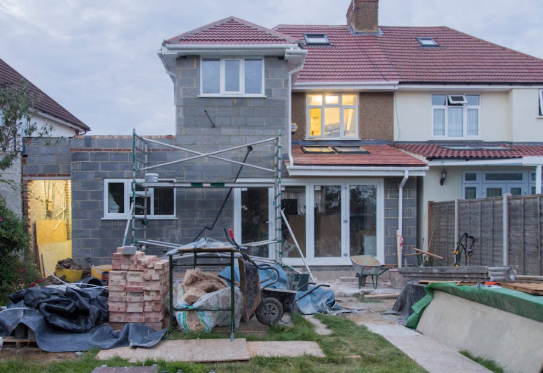
Types of Home Extensions
Home extensions vary depending on space availability and structural feasibility:
1. Vertical Expansion
Adding one or more floors to the existing structure, significantly increasing usable area without expanding land use.
2. Horizontal Expansion
Extending rooms outward—towards the front, side, or rear—often requiring new structural foundations.
3. Independent Additions
Creating separate but connected structures within the property, such as garages, studios, or utility spaces.
Each type demands careful structural planning to ensure safety and long-term stability.
Timeframe and Execution Reality
Renovation projects generally vary in duration depending on complexity. Simple cosmetic upgrades are relatively quick, while structural or full-home transformations naturally require more time and coordination.
Extensions, however, are typically longer in execution due to construction intensity, structural reinforcements, and mandatory approval processes. When new foundations are involved, timelines extend further due to engineering and regulatory requirements.
Financial Considerations and Planning Approach
Renovation is usually more flexible in terms of budgeting, allowing homeowners to prioritise upgrades in phases based on necessity.
Extension projects require higher investment due to construction costs, materials, and structural work. In both cases, financial planning plays a critical role in determining feasibility and scale.
Homeowners often rely on bank financing options:
- Renovation loans are typically smaller and suited for incremental improvements
- Extension loans are larger and structured for long-term repayment
Regulatory and Approval Requirements
Renovation work generally requires minimal permissions unless structural modifications affect building safety or compliance norms.
Extensions, however, usually require formal approvals from local municipal authorities, structural safety clearances, and in some cases, housing society permissions. Compliance ensures that the expanded structure remains legally and structurally sound.
Conclusion: Choosing Between Continuity and Growth
The decision between renovation and extension ultimately depends on a homeowner’s priorities.
Renovation is ideal for those who value continuity—enhancing their current home while staying within familiar surroundings. Extension suits those who need growth—more space, more functionality, and long-term scalability.
Both approaches serve the same purpose: creating a home that aligns with evolving needs. The right choice lies in understanding whether your home needs a renewed identity within its walls or an expanded horizon beyond them.