


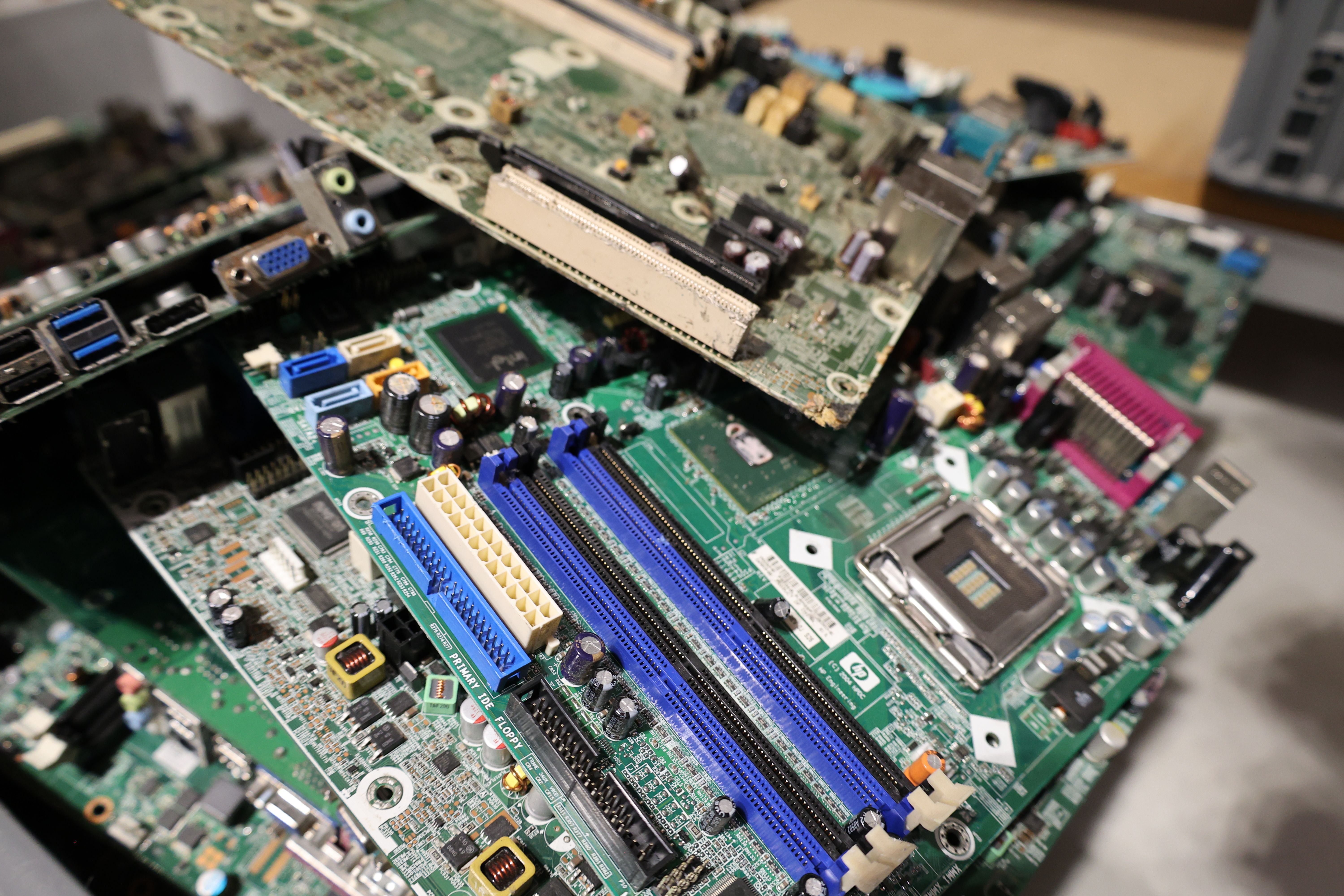
Sept 01: Gold is usually the metal that gets people interested in electronic waste. There is something naturally compelling about the idea that an old smartphone or discarded computer could contain a tiny amount of a precious metal. But gold is only part of the story. Another metal, far less glamorous but far more deeply embedded in modern infrastructure, is sitting in those same devices: copper.
Copper is everywhere in the electronic economy. It carries electricity through cables, connects components on circuit boards and powers motors, transformers and other electrical systems. As electric vehicles, renewable energy, data centres and digital infrastructure expand, demand for the metal is expected to rise. At the same time, millions of tonnes of electronic products are being discarded every year. That creates an interesting contradiction: the world is looking for more copper while throwing away products that already contain it.
For India, this contradiction is becoming particularly relevant. The country is simultaneously expanding electronics manufacturing, electric mobility, renewable energy and digital infrastructure while generating an increasingly large stream of electronic waste. The question is whether some of yesterday’s discarded technology can become part of tomorrow’s resource supply.
There Is More Copper in E-Waste Than Most People Realise
The scale is significant. The Global E-waste Monitor 2024, published by the United Nations Institute for Training and Research (UNITAR) and the International Telecommunication Union (ITU), estimates that the world’s electronic waste contained around 2.1 billion kilograms of copper in 2022. Around 1 billion kilograms of that copper was found in small equipment, including cables and printed circuit boards.
Those figures put the familiar “gold in your phone” story into perspective. Gold may be worth considerably more by weight, but copper exists in much larger quantities across the electronic waste stream. And unlike gold, copper is needed in enormous volumes to build the infrastructure of an increasingly electrified world. That makes its recovery an important part of the e-waste conversation.
Why Copper Matters So Much
Copper has been used for centuries, but its importance has hardly diminished. Its excellent electrical conductivity makes it one of the most useful materials for moving electricity. The U.S. Geological Survey estimates that electrical applications account for roughly three-quarters of copper use, covering areas such as power generation and transmission, building wiring, telecommunications, and electrical and electronic products.
The next phase of the global economy could make that demand even more important. Electric vehicles require copper, as do charging networks, renewable-energy projects, expanding power grids, data centres and telecommunications infrastructure. The metal sits quietly underneath many of the technologies that consumers associate with the future.
The Copper Supply Challenge Is Getting Harder
The argument for recycling becomes stronger when future demand is considered. The International Energy Agency’s Global Critical Minerals Outlook 2025 estimates that global copper demand could increase from about 26.7 million tonnes in 2024 to 31.3 million tonnes by 2030 under its Stated Policies Scenario.
At the same time, the IEA has warned that the current pipeline of mining projects may not be enough to meet projected demand in the longer term. Its analysis points to a potential 30% copper supply shortfall by 2035 under current policy settings if announced projects proceed as expected.
This is not a prediction that copper will suddenly disappear. The issue is that developing new mines takes years, while ore grades are declining in some established mining regions and new projects can face significant financial, environmental and permitting challenges. That makes every additional source of copper more valuable, including the copper that has already been mined and is sitting inside discarded products.
E-Waste Is an Above-Ground Resource
The world produced 62 million tonnes of e-waste in 2022, according to the Global E-waste Monitor. Only 22.3% was documented as formally collected and recycled in an environmentally sound manner. By 2030, annual e-waste generation is expected to reach 82 million tonnes.
It is easy to look at those numbers purely as a waste-management crisis. There is another way to look at them. The same report estimates that e-waste generated in 2022 contained about 31 billion kilograms of metals, including the 2.1 billion kilograms of copper.
These metals have already gone through the expensive processes of extraction, refining, manufacturing and distribution. When a discarded device ends up in a landfill or is handled through an inefficient recycling chain, some of that embedded resource is effectively lost. Urban mining is about changing that equation by treating discarded products as potential sources of secondary raw materials.
The Gold Story Is Useful, but It Can Be Misleading
Gold has become almost synonymous with the idea of valuable e-waste, and for good reason. Its high value means that even relatively small quantities can make recovery economically interesting. But focusing too much on gold can give consumers the wrong impression.
The opportunity in electronic waste is not about finding a tiny fortune inside every smartphone. It is about recovering a mix of materials at scale. Copper, aluminium, silver, palladium and other metals all contribute to the overall value of an electronic waste stream.
Copper is particularly interesting because it combines significant quantities with widespread industrial demand. Gold may make the headline, but copper helps make the business case.
The Problem Starts Before the Recycling Plant
Technology is only part of the e-waste equation. Consider the number of old smartphones sitting in household drawers. Add unused laptops, broken chargers, outdated routers, old televisions and office computers that have been replaced but never properly disposed of. All of those products may contain recoverable materials.
But a recycling facility cannot recover copper from a device that never reaches the recycling facility. Collection is therefore one of the industry’s biggest challenges. Consumers need convenient ways to return old electronics, while businesses need reliable channels for disposing of obsolete equipment. Manufacturers and retailers can also help by making take-back systems easier to use.
The simplest urban mine to access may be the one sitting in someone’s cupboard.
Recycling Does Not Mean Destroying Everything
There is another important point. Not every old electronic product should be sent straight to a recycling plant. A functioning laptop may have more value as a refurbished computer than as a source of copper. A repairable smartphone can remain useful for years, while components can sometimes be recovered and reused before the remaining material is recycled.
The priority should therefore be to repair what can be repaired, reuse what can be reused, refurbish what can be refurbished and recycle what has genuinely reached the end of its useful life. The goal is to preserve value for as long as possible before recovering the underlying materials.
India’s E-Waste Challenge Is Also a Copper Opportunity
India’s position in this story deserves particular attention. The country generated approximately 1.40 million tonnes of e-waste in FY2024-25, according to government data, compared with around 1.25 million tonnes in FY2023-24.
At the same time, India is expanding industries that depend heavily on electrical infrastructure and copper. The country is investing in electric mobility, renewable energy, power transmission, electronics manufacturing, telecommunications and data infrastructure. That creates an unusual economic overlap: India is generating more electronic waste at the same time that its economy is becoming more dependent on copper-intensive technologies.
The opportunity is to connect the two. Rather than allowing obsolete electronics to become a growing disposal problem, India can develop stronger systems for collecting, refurbishing, dismantling and recovering the materials inside them. That could create a domestic secondary-resource stream while supporting the broader circular economy.
Regulation Is Making E-Waste a Business Issue
India’s E-Waste (Management) Rules, 2022 have also changed the conversation. The Extended Producer Responsibility framework places greater responsibility on producers and other participants in the electronics value chain to ensure that e-waste enters formal collection and recycling systems.
This matters because recycling becomes more effective when collection, compliance and material recovery operate as part of the same ecosystem. For Indian businesses, the opportunity extends beyond conventional scrap processing. There is room for companies involved in e-waste collection, reverse logistics, electronics refurbishment, component recovery, dismantling, metal recycling, recycling technology, producer take-back programmes and circular supply-chain management.
The industry is gradually moving from an informal disposal model towards a more structured resource-recovery market.
India’s Electronics Growth Makes the Issue More Important
India’s electronics ambitions add another layer to the story. As domestic electronics manufacturing expands, the country is not only importing and consuming more electronic products; it is also building a larger manufacturing ecosystem around them.
That creates a long-term opportunity to develop closed-loop material flows. Copper recovered from end-of-life electronics could potentially re-enter industrial supply chains after appropriate processing. Components that remain usable can be refurbished or reused, while materials that cannot be recovered economically can be handled through responsible disposal channels.
The objective is not to create a system where every discarded smartphone becomes a new smartphone. It is to ensure that as little useful material as possible is lost.
EVs, Renewable Energy and E-Waste Could Become Part of the Same Story
The connection between e-waste and India’s energy transition is particularly interesting. Electric vehicles need copper, as does charging infrastructure. Solar and wind installations require extensive electrical connections, while power-grid expansion requires conductors and electrical equipment. Data centres and digital infrastructure also require significant electrical capacity.
Meanwhile, old electronics are accumulating as consumers and businesses upgrade their devices. These may appear to be separate industries, but increasingly they are connected by the same material. Copper sits at the intersection of India’s digital transition and its energy transition.
That makes recovering copper from discarded products more strategically interesting than simply viewing e-waste as a waste-management issue.
The Business Model Is Changing
The traditional electronics model has been straightforward: make it, sell it, use it and throw it away. That model is becoming increasingly difficult to sustain.
A more circular model is beginning to emerge, in which products are made, used, repaired, reused, recovered and eventually recycled. For manufacturers, this can mean designing products that are easier to repair and dismantle. For retailers, it can mean take-back programmes. For recyclers, it means investing in better material recovery. For startups, it creates opportunities in collection, logistics, tracking and refurbishment.
For large businesses, circularity can also become part of supply-chain and sustainability planning. The companies that can connect these pieces may find themselves sitting at an important point in the future resource economy.
Recycling Can Take Pressure Off Mining
Traditional mining will remain essential. Recycling cannot replace primary copper production, particularly while demand continues to increase. But recycling can take some pressure off the mining industry.
The IEA estimates that scaling up recycling across critical minerals could reduce the need for new mining activity by 5–30% by 2040 under its Stated Policies Scenario. For copper and cobalt, the agency estimates that recycling could reduce the need for new mine development by around 35% by 2050 as more end-of-life material becomes available.
That is why recycling is increasingly being considered a supply-security issue. For countries that depend on imports of raw materials, recovering resources domestically can also improve resilience against supply disruptions and international market volatility.
The Next Copper Mine May Not Look Like a Mine
Traditional mining will continue to supply most of the world’s copper. But the definition of a resource is changing.
A discarded circuit board is no longer simply a piece of electronic waste. It can also be viewed as a small collection of recoverable materials. A warehouse full of obsolete computers represents more than outdated equipment. A pile of old cables represents more than scrap.
Together, these products form an above-ground stock of resources that has already been extracted and processed once. The challenge is developing the collection, technology and economics needed to recover those resources efficiently.
Designing Electronics for Their Second Life
The copper story also begins much earlier than the recycling plant. It begins at the design table.
Electronics designed to be repaired, upgraded and eventually dismantled can be easier to recover at the end of their useful life. Manufacturers that consider repairability, component replacement and material recovery during product development can potentially make the recycling process more efficient.
That requires a shift in thinking. A product should not necessarily be considered finished when its first owner is finished with it. Its components and materials may still have several lives ahead.
Copper Could Be the Real E-Waste Workhorse
Gold will continue to attract attention whenever the conversation turns to valuable materials in electronic waste. But copper deserves a much larger place in that conversation.
The Global E-waste Monitor estimates that 2.1 billion kilograms of copper were contained in global e-waste in 2022. At the same time, the IEA expects global copper demand to rise significantly as economies electrify and digital infrastructure expands.
The two trends are moving in opposite directions. More electronics are becoming waste, while more industries need copper. Connecting those two realities is where the opportunity lies.
For India, the opportunity is particularly relevant. A country expanding electronics manufacturing, EV adoption, renewable-energy capacity, power infrastructure and digital services will need increasing amounts of copper. At the same time, it is generating an expanding pool of electronic products that eventually reach the end of their useful lives.
The answer will not be found in recycling alone. It will require better product design, stronger collection networks, more refurbishment, efficient reverse logistics and sophisticated material recovery.
Traditional mines will remain essential. But alongside them, a new kind of mine is emerging — one made up of the electronics already sitting in homes, offices, factories, warehouses and recycling centres.
Gold may get the headlines. Copper may be what keeps the electric and digital economy running. And increasingly, some of tomorrow’s copper could come from yesterday’s electronics.