


Mumbai, Sep 01: As India’s hospitality sector experiences unprecedented growth, building a robust and highly capable workforce has become a top priority for the industry. Chalet Hotels Limited today announced a major scale-up of its ESG platform, Parivartan by Chalet, moving beyond traditional CSR to build a sustainable, industry-wide talent pipeline.
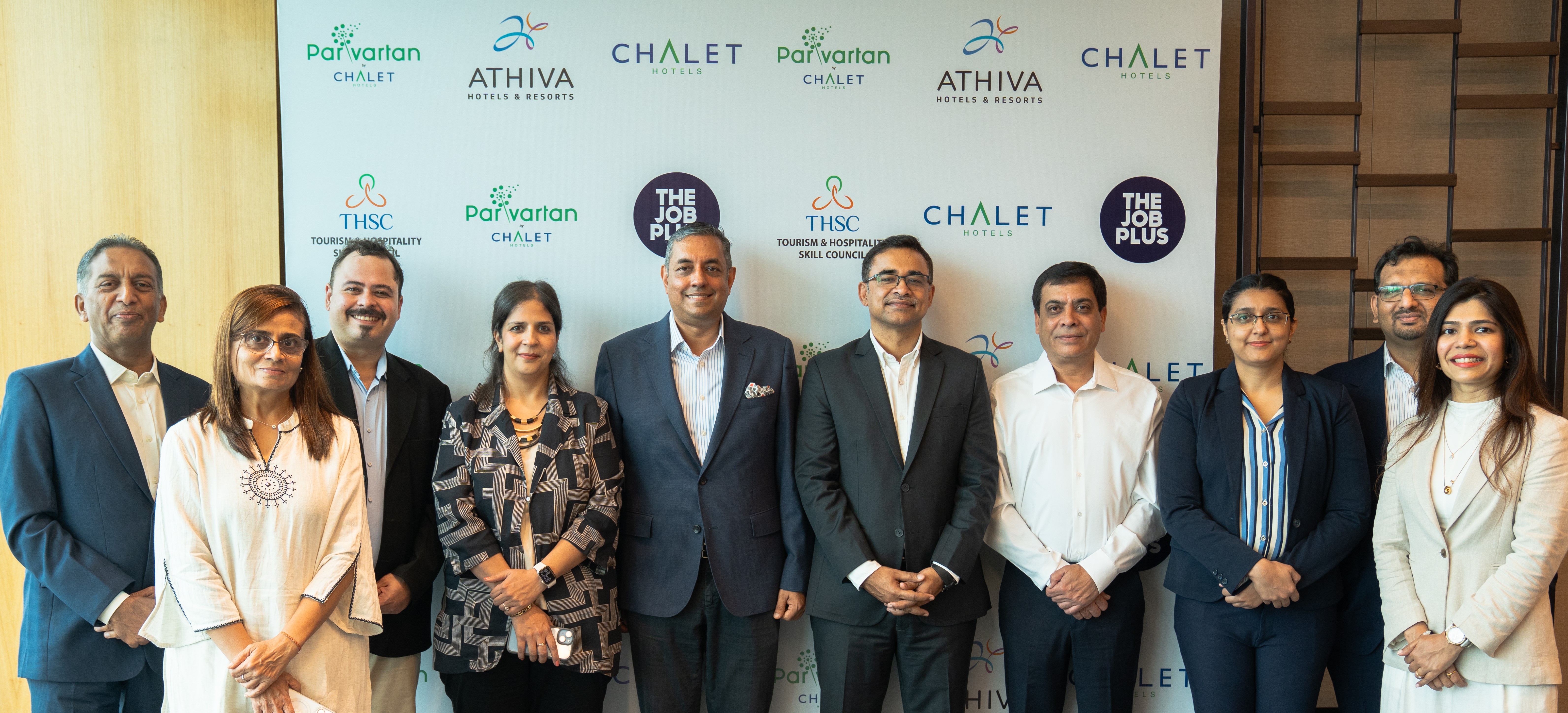
Launching the next phase of its strategic partnership with The Job Plus and the Tourism and Hospitality Skill Council, Chalet Hotels has set an ambitious target to enable 5,000 sustainable livelihoods by 2030. The initiative connects surging industry demand with untapped talent from underserved communities, with a particular focus on sourcing and skilling youth from Maharashtra and Uttarakhand through structured training and formal employment pathways.
Over the past three years, the first phase of this collaboration successfully transitioned 330 young people into the formal workforce with certifications aligned to the National Skills Qualifications Framework. The newly expanded program will scale this impact exponentially.
Driving Tangible Social Impact
For the hospitality industry, this initiative represents an opportunity to build a more diverse, inclusive and job-ready talent pool by connecting industry demand with talent from communities that have traditionally had limited access to formal employment:
Democratizing Access: 60% of the talent pool hails from rural or semi-urban locations across 8 states and 30+ cities, bringing premium career opportunities to India’s heartland.
Doubling Household Incomes: Graduates report an average 2X increase in their household income post-placement.
Championing Gender Diversity: Women account for 76% of the beneficiaries, significantly boosting their participation in front-line and operational roles.
For many candidates, they are first-generation professionals entering the formal workforce, transforming their own and their families’ economic trajectories.
Gaurav Singh, COO, Chalet Hotels Limited, stated:
“The future growth of Indian hospitality relies entirely on our ability to look beyond traditional talent pools. At Chalet Hotels, we view livelihood creation not just as a social responsibility, but as a strategic business imperative. Through Parivartan, our collaboration with The Job Plus and THSC proves that aligning industry demand with targeted skilling creates genuine social mobility. Scaling this to 5,000 livelihoods by 2030 ensures we are making hospitality careers accessible to young people by equipping them to be future-ready professionals.”
Natwar Nagar, Founder & CEO, The Job Plus, added:
“The Indian hospitality sector is at a pivotal juncture where rapid expansion must be met with an equally robust supply of skilled talent. By launching the next phase of this initiative, Chalet Hotels is demonstrating what true industry leadership looks like. Together, we are not just training youth; we are reaching into India’s heartland to unlock raw potential and build a future-ready workforce that drives both business growth and social equity.”
Rajan Bahadur, CEO, Tourism and Hospitality Skill Council, commented:
“Creating a sustainable talent pipeline requires strong alignment between industry leaders, training partners, and standard-setting bodies. Chalet Hotels’ commitment to scaling Parivartan perfectly aligns with our mission at THSC. By anchoring this program in National Skills Qualifications Framework (NSQF) standards, we ensure that the youth entering the workforce are equipped with world-class, globally recognized competencies. This partnership is a testament to how corporate India can drive high-impact, scalable employment.”
The next phase will continue to bring together industry demand, structured skilling and employment pathways, ensuring that young people are equipped with the skills, workplace readiness and exposure required to build sustainable careers in hospitality.
The partnership will also maintain a strong focus on women and youth from underserved communities, creating pathways for those who may otherwise have limited access to formal employment and professional careers.